 BURR
BURR
BURR
BURR
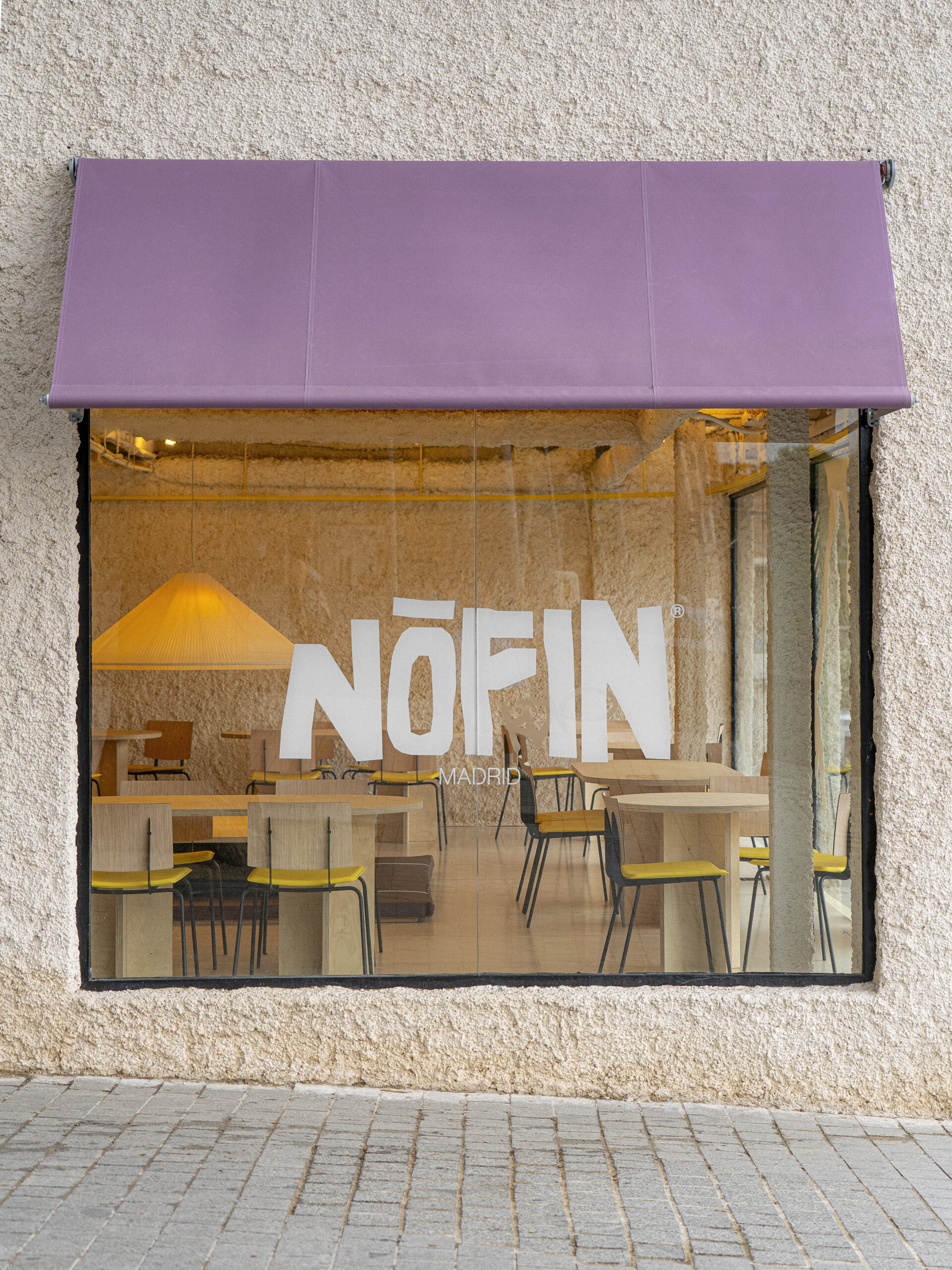
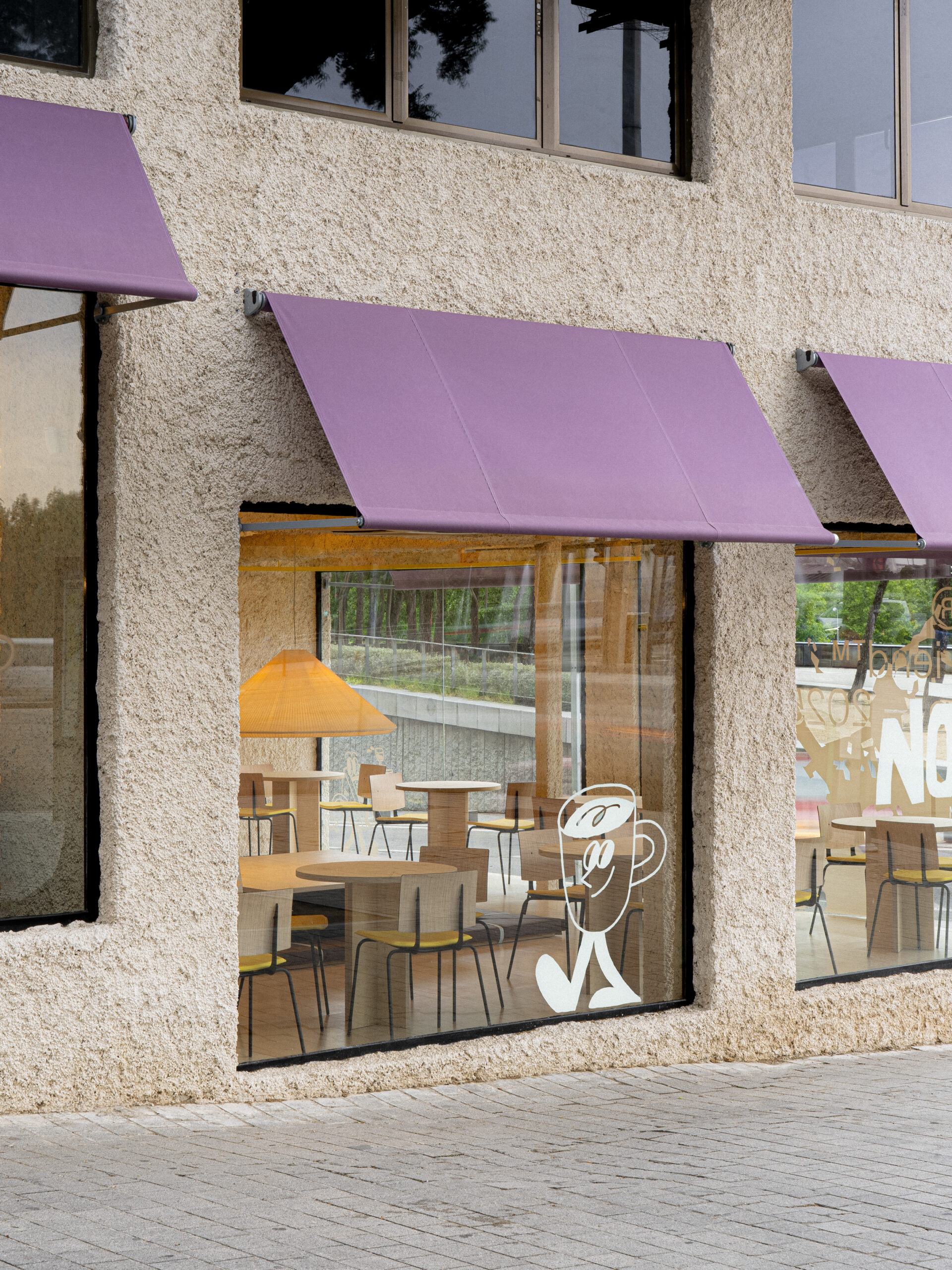
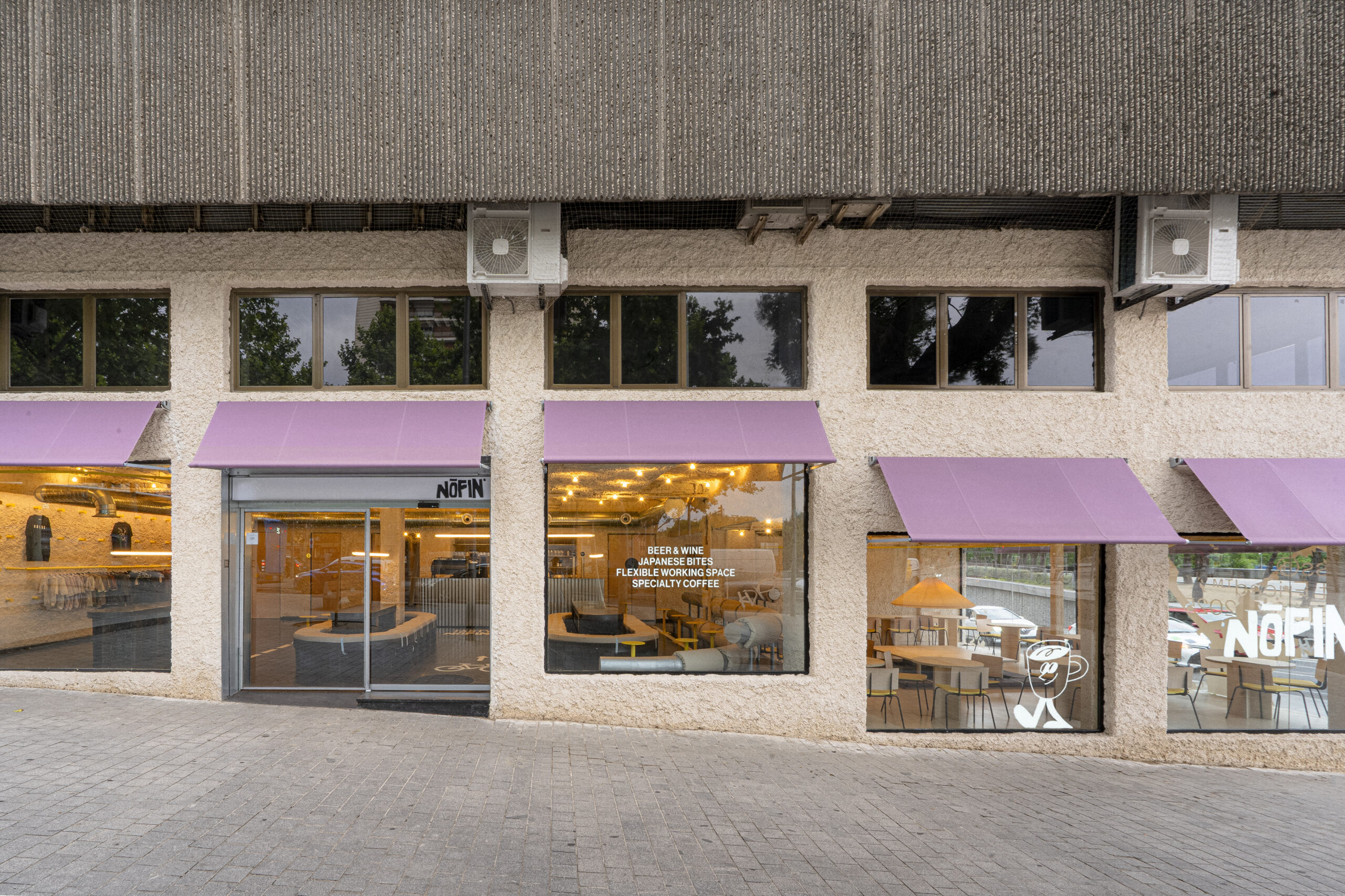
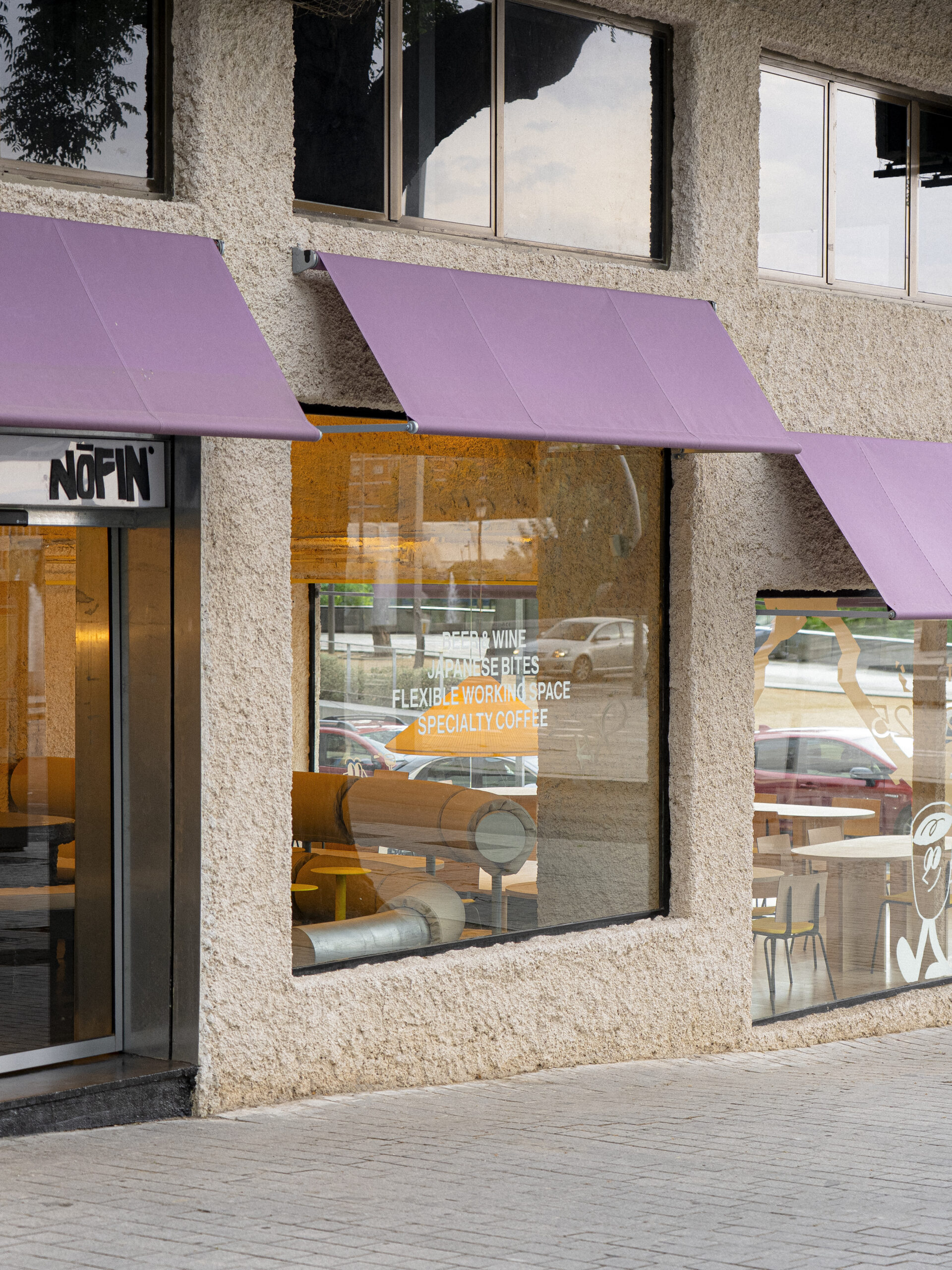
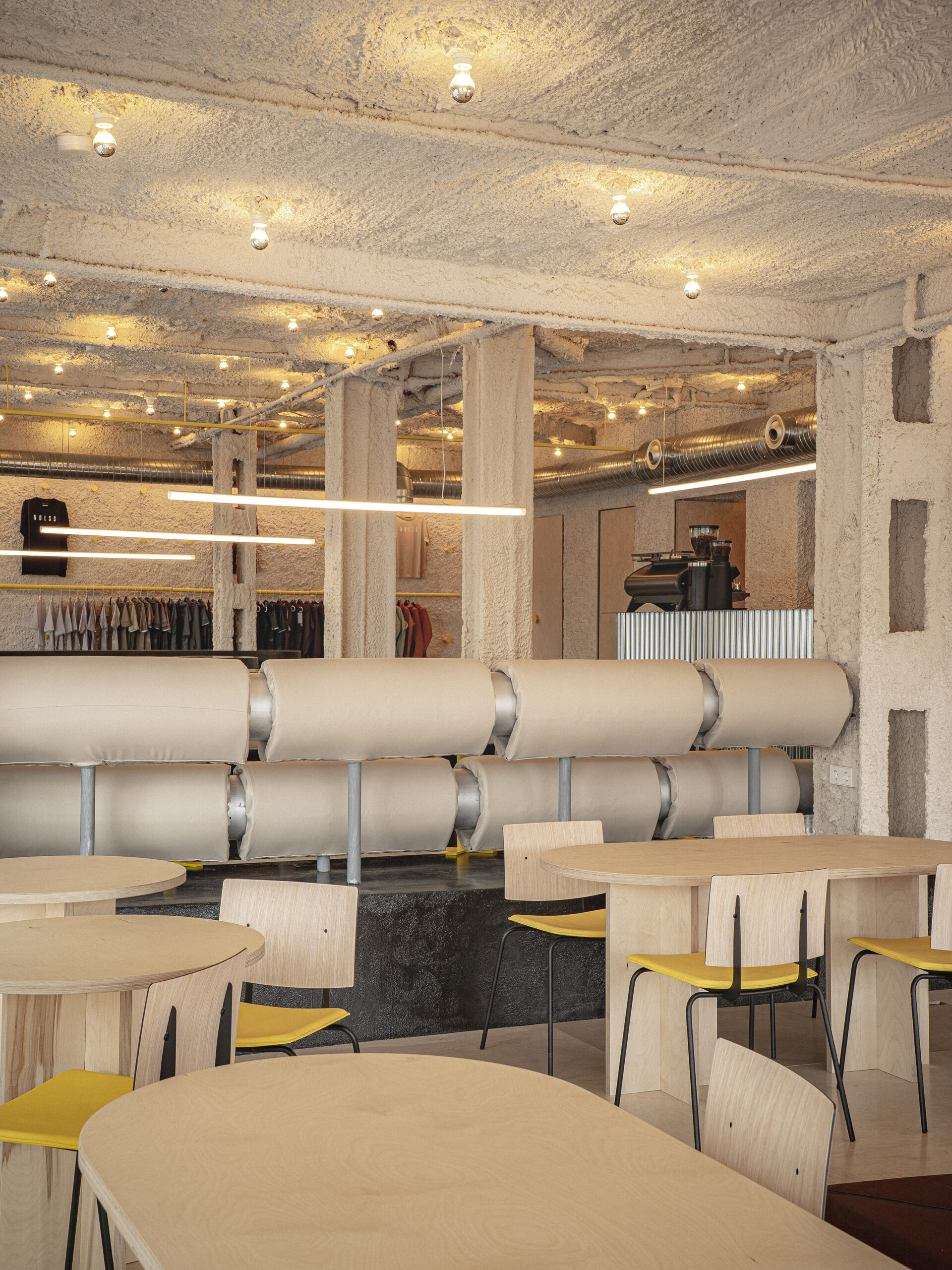
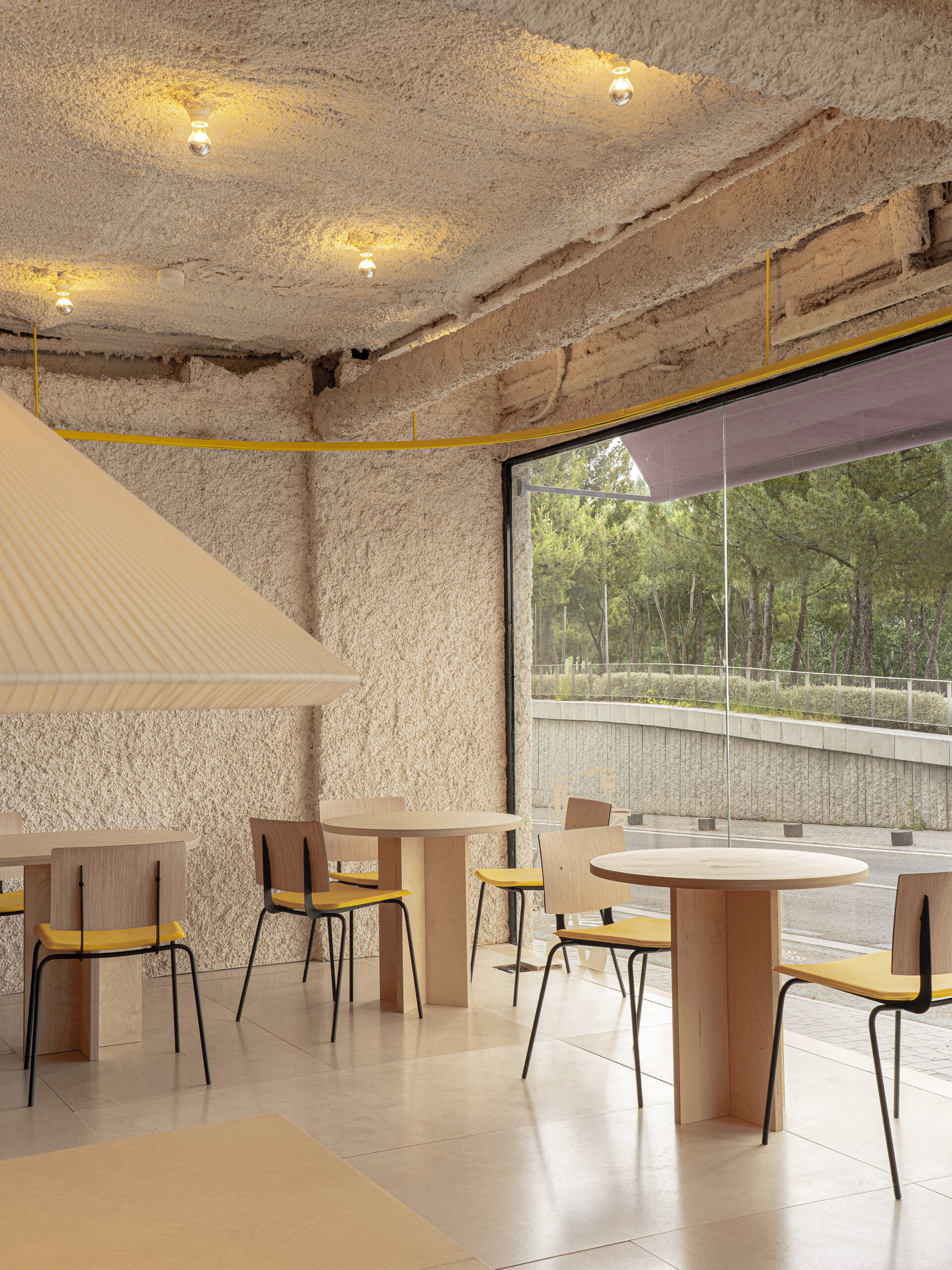
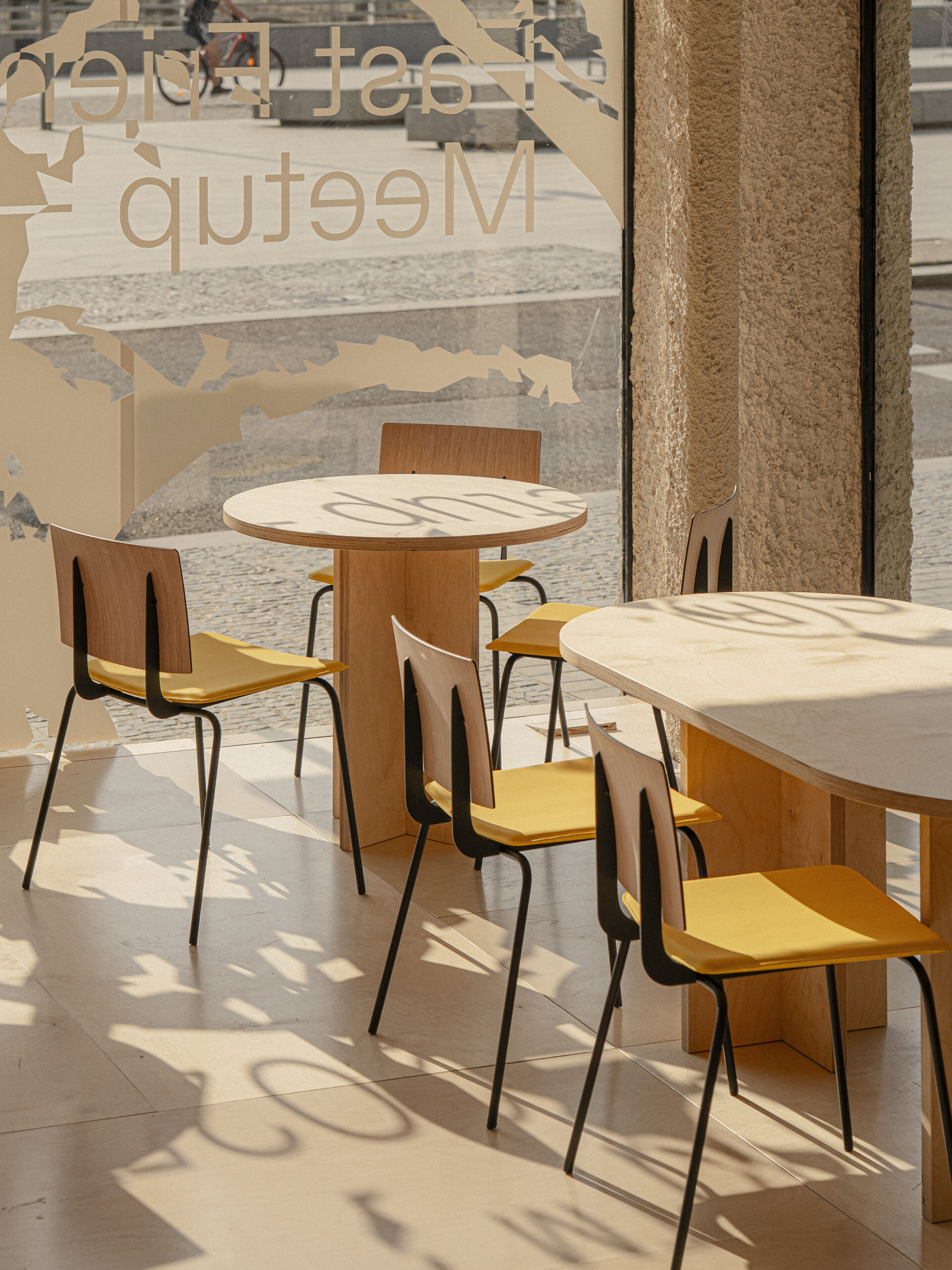
Nofin is a café and cycling apparel store associated with the brand NDLSS. It is located in a singular setting within Madrid: close to Madrid Río, a public space conceived as a route, operating as a piece of everyday infrastructure. The premises therefore take on the condition of a stop, a refuelling point for the constant flow of cyclists moving along the river’s edge. More than a destination, Nofin is understood as a threshold in the midst of movement.
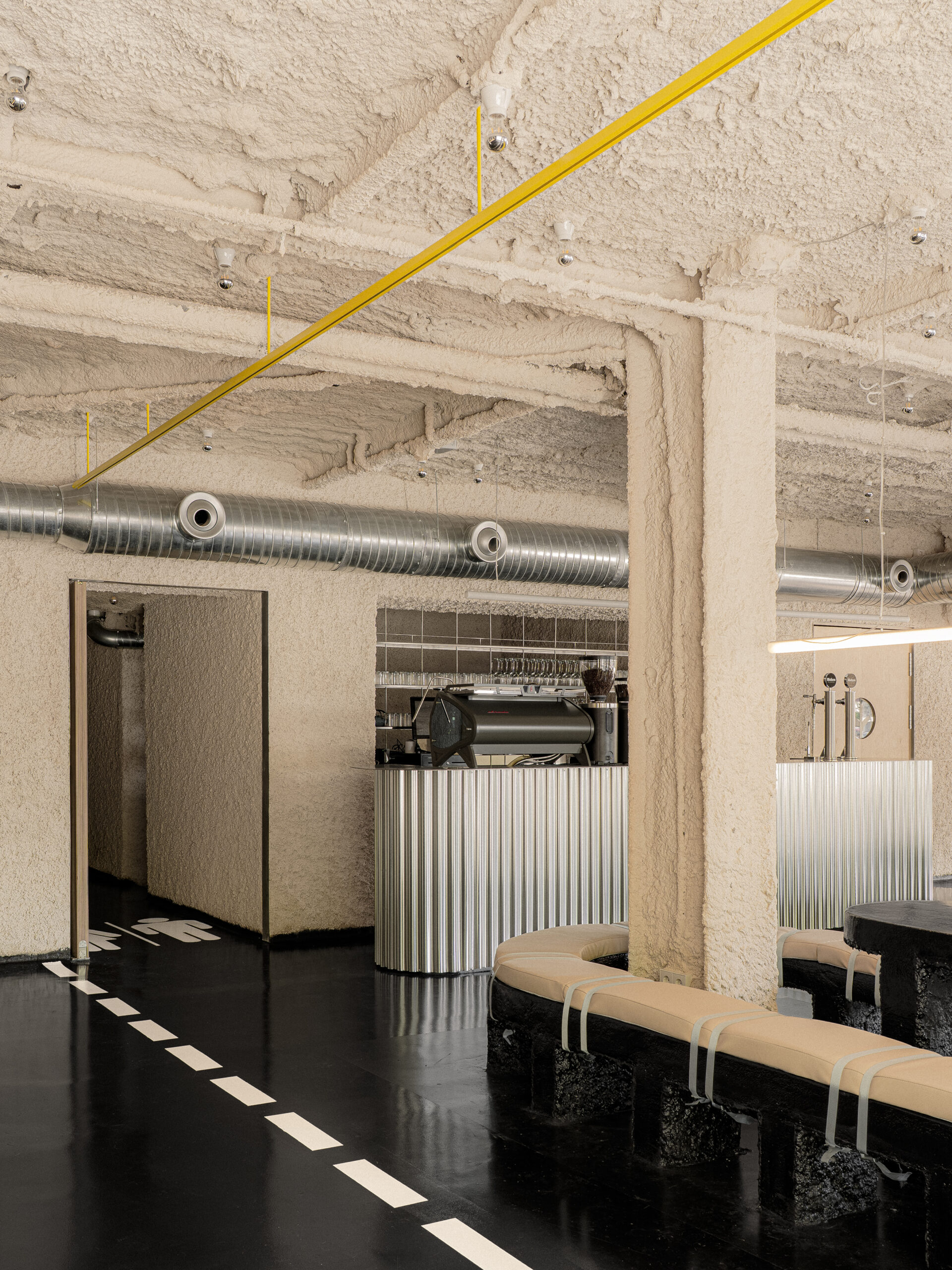
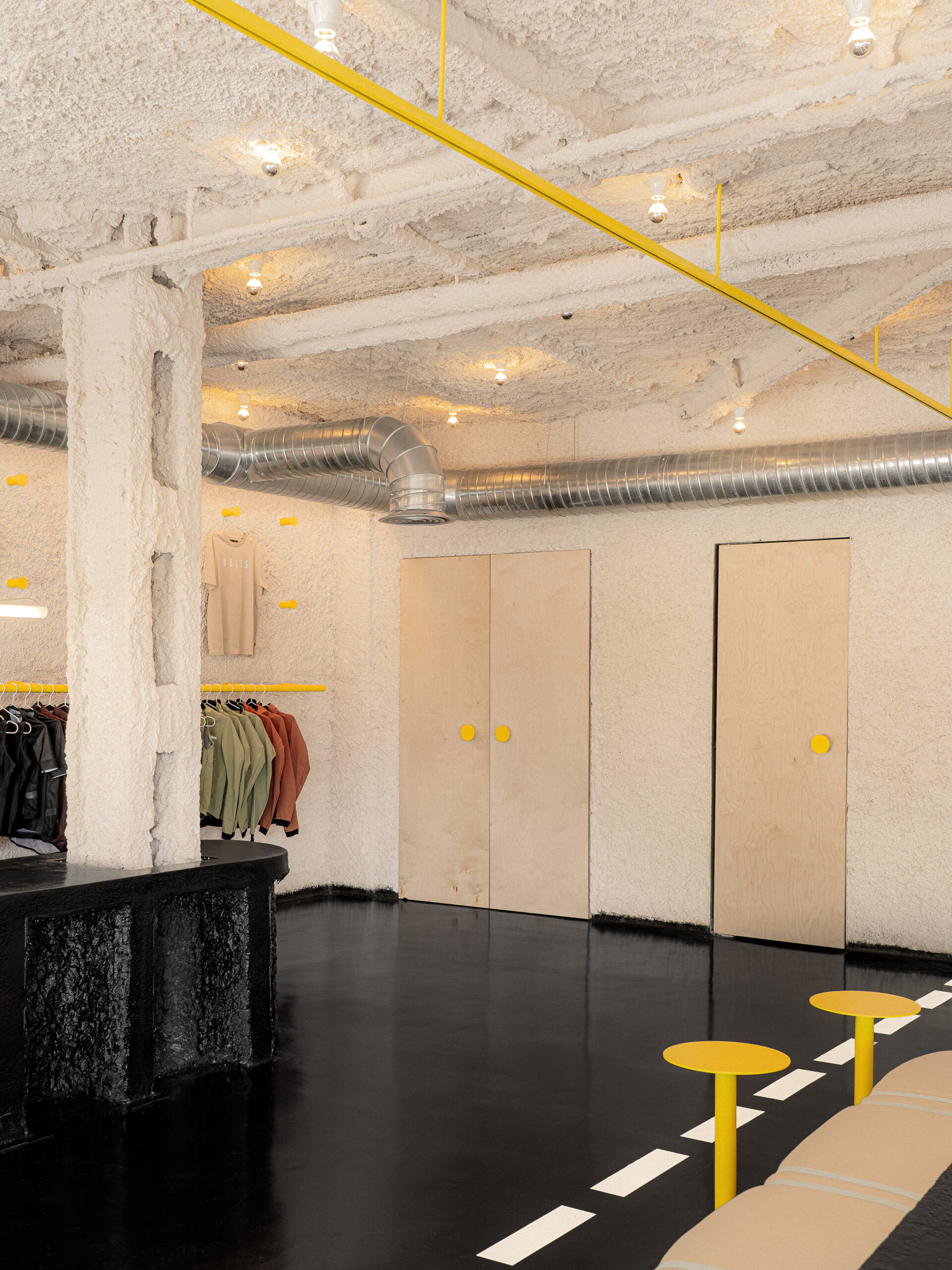
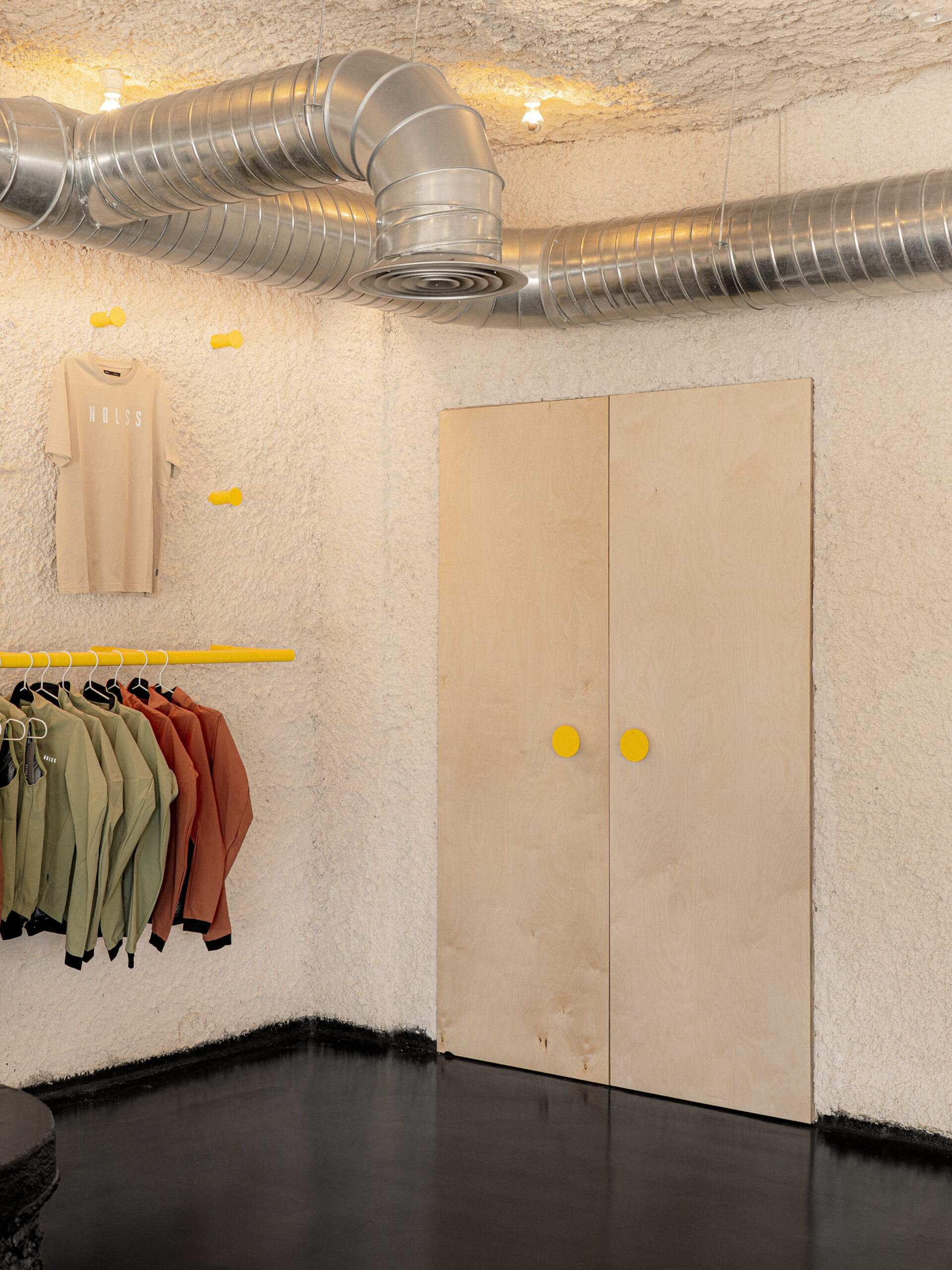
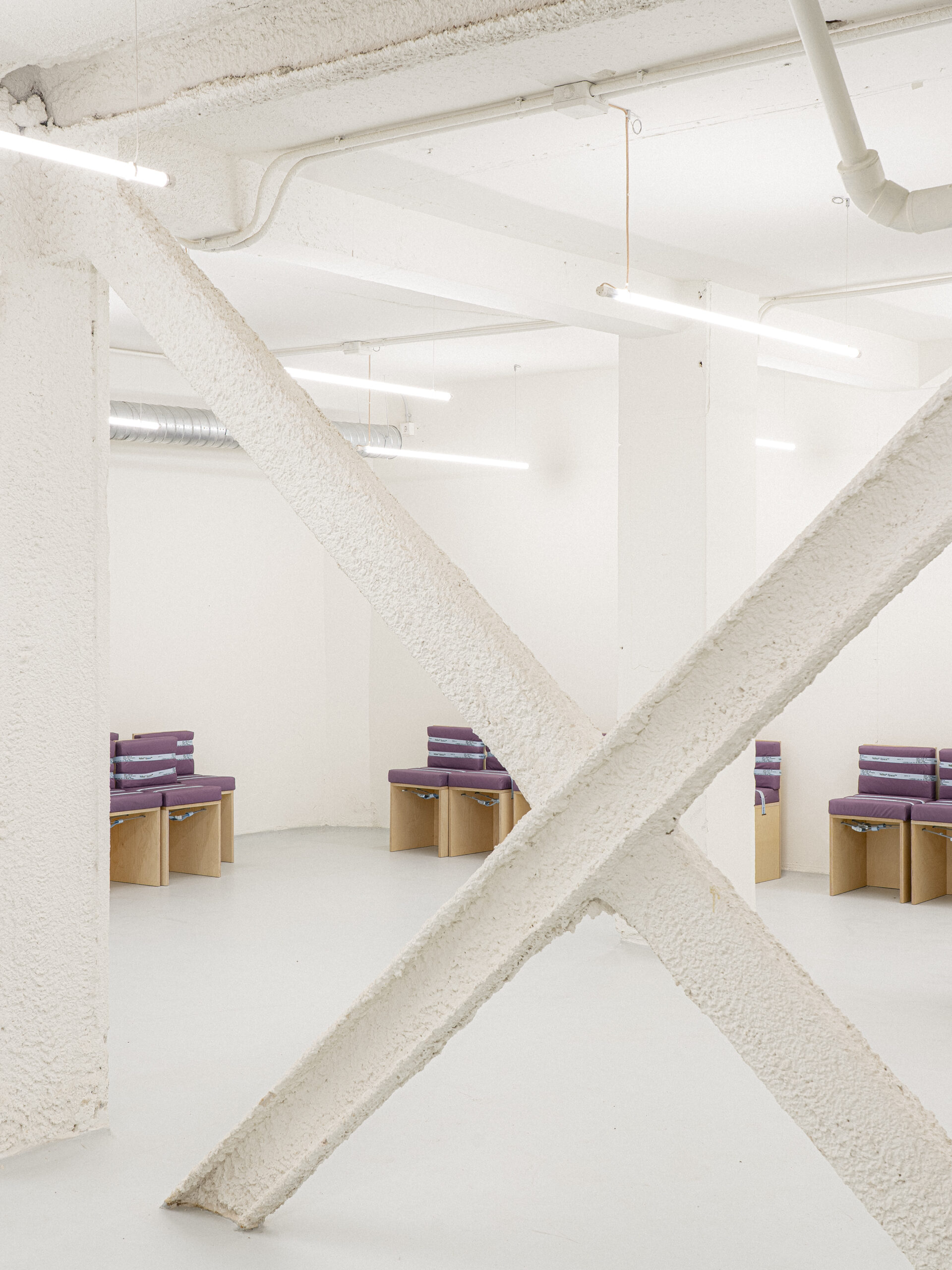
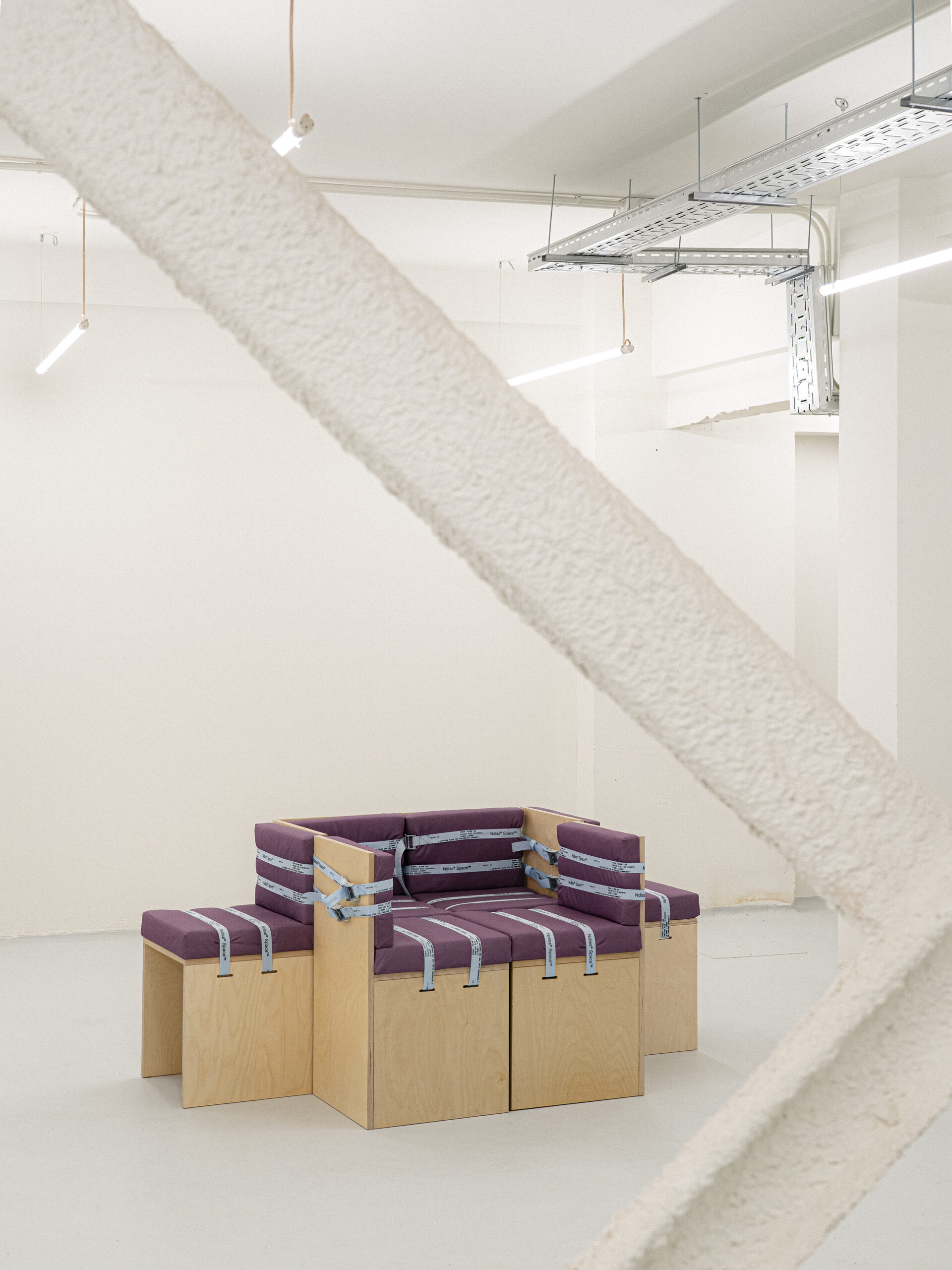
The conceptual proposal takes the experience of road cycling as its point of departure, but shifts it into a more abstract register: the aim is not to illustrate the bicycle or to construct an obvious scenography, but rather to capture the material and spatial atmosphere of the ride: its surfaces, its signs, its elements of protection and pause. In contrast, one part of the space adopts the materiality and ambience of a domestic interior; one that almost invites you to take off your shoes and lie down on the floor. The project is thus constructed as an architecture of two states: exterior and interior, friction and calm, asphalt and tatami. Two superimposed worlds that do not seek to merge completely, but rather to coexist as layers brushing against one another.
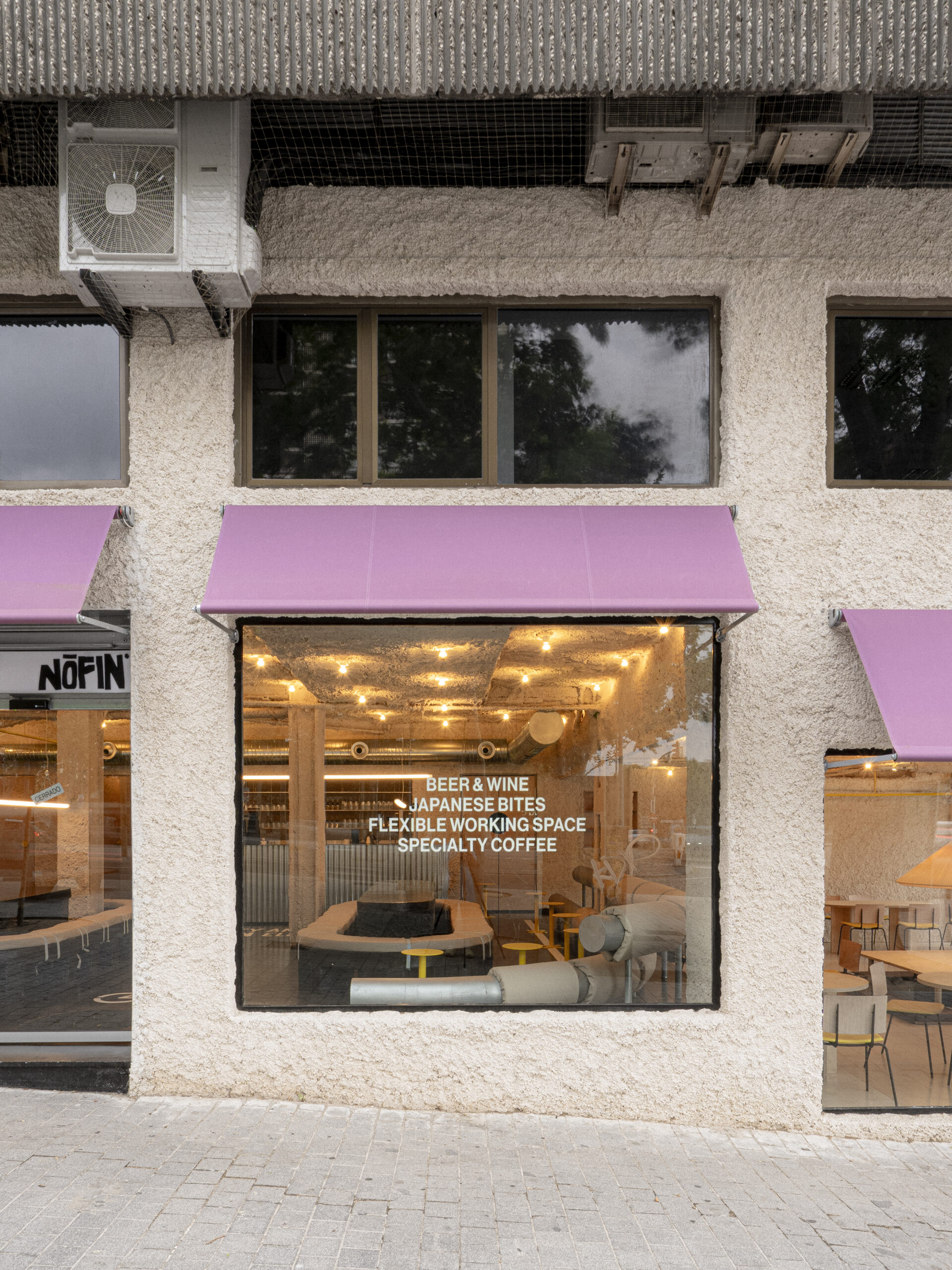
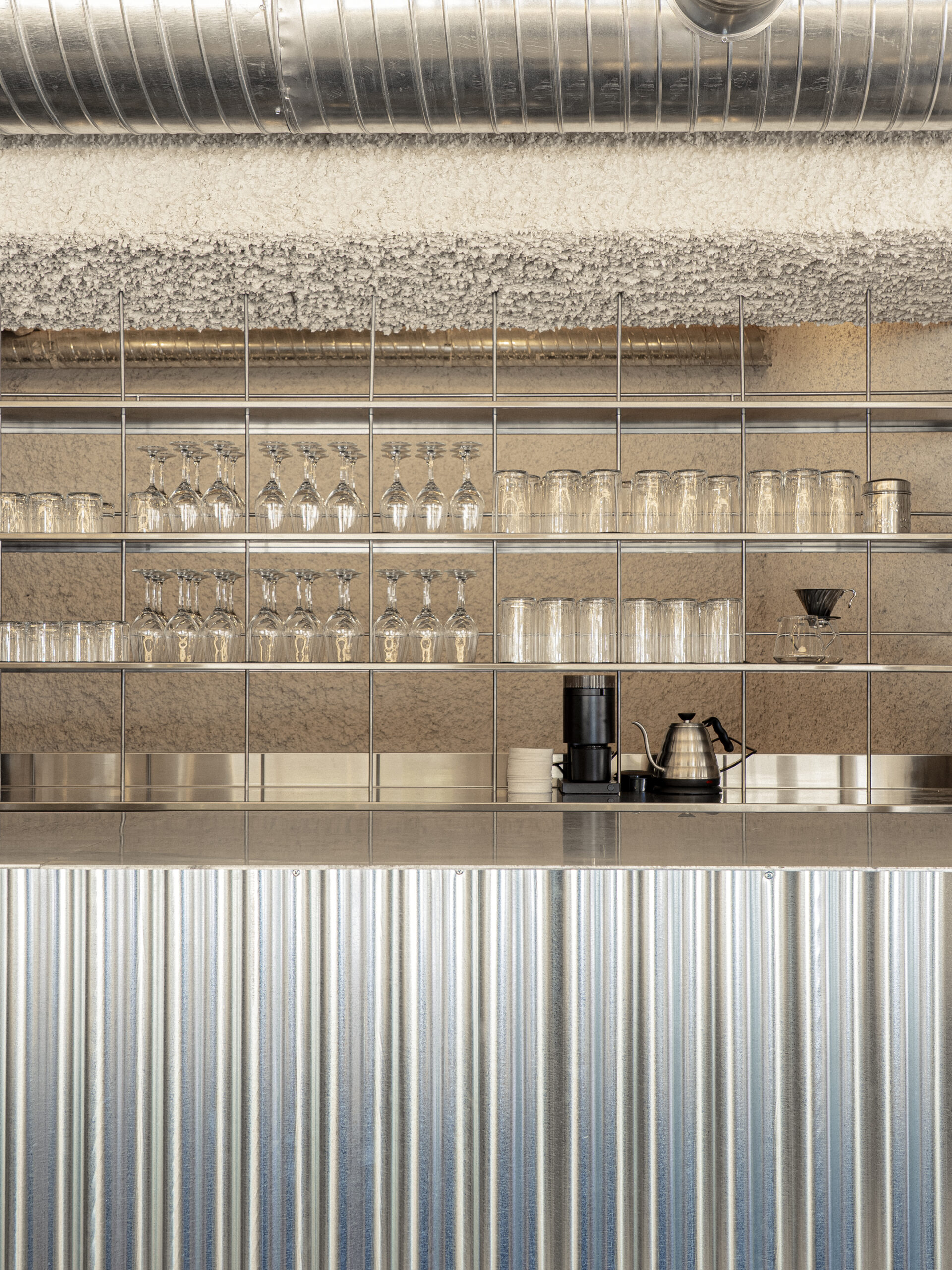
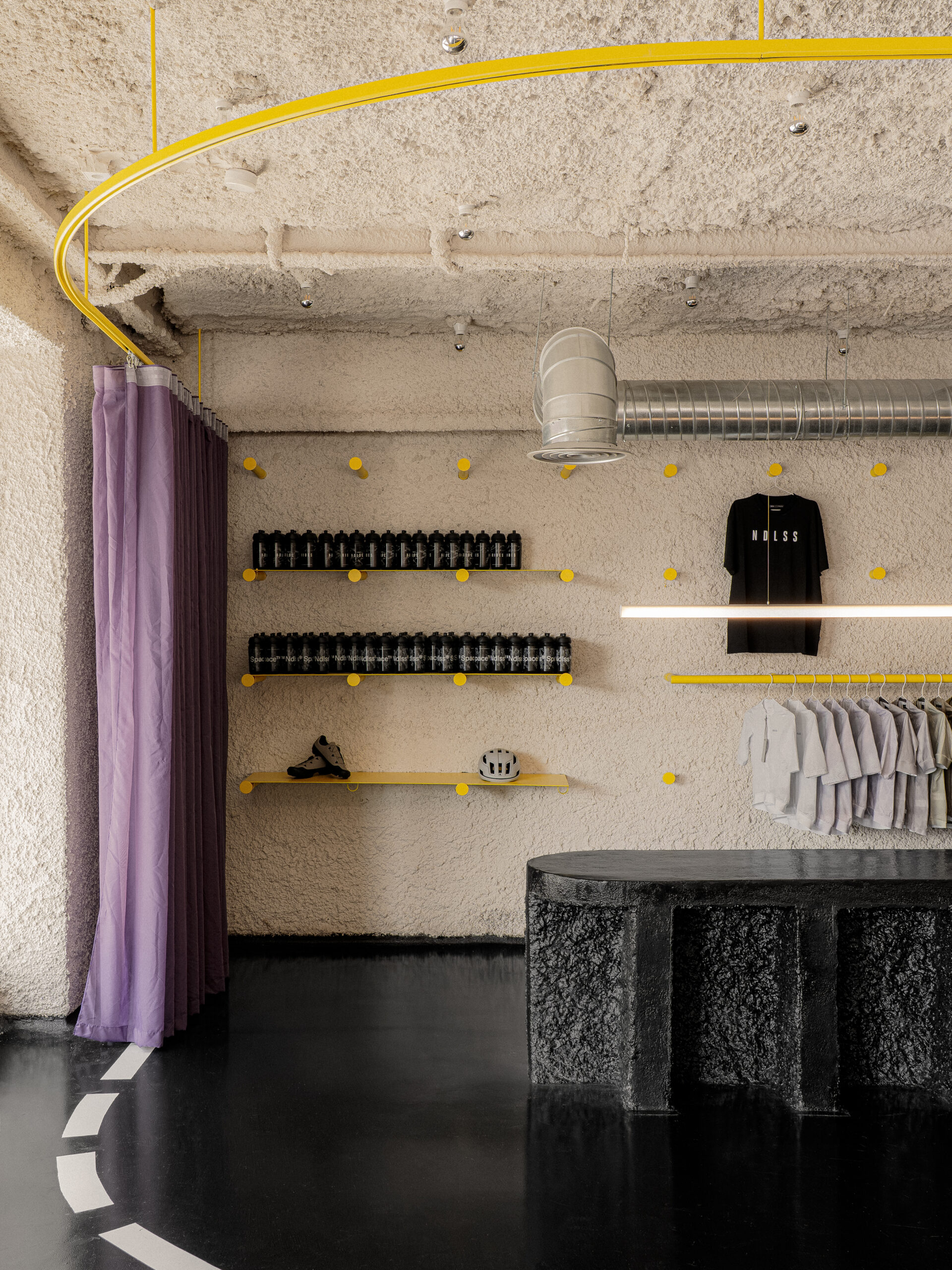
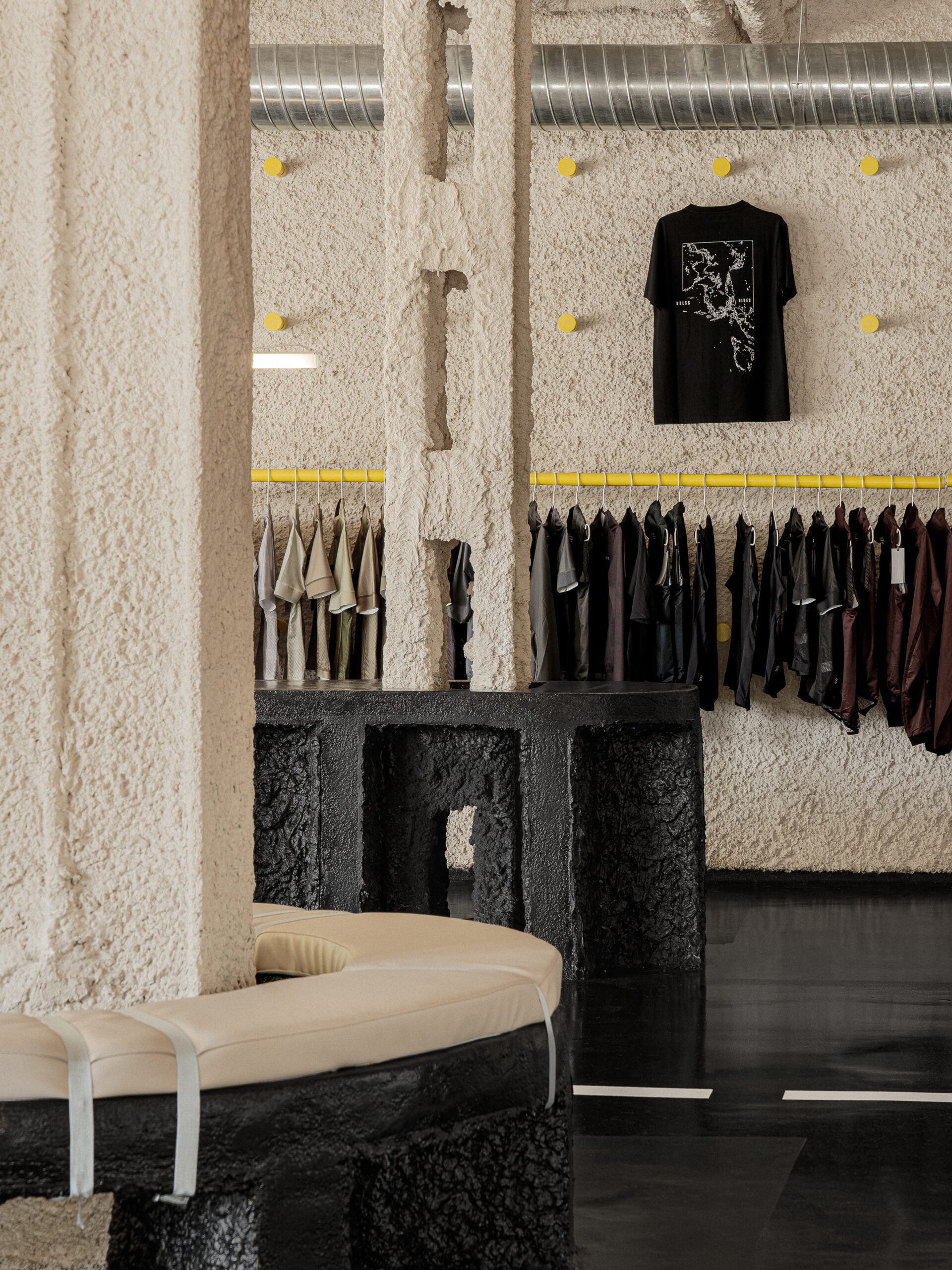
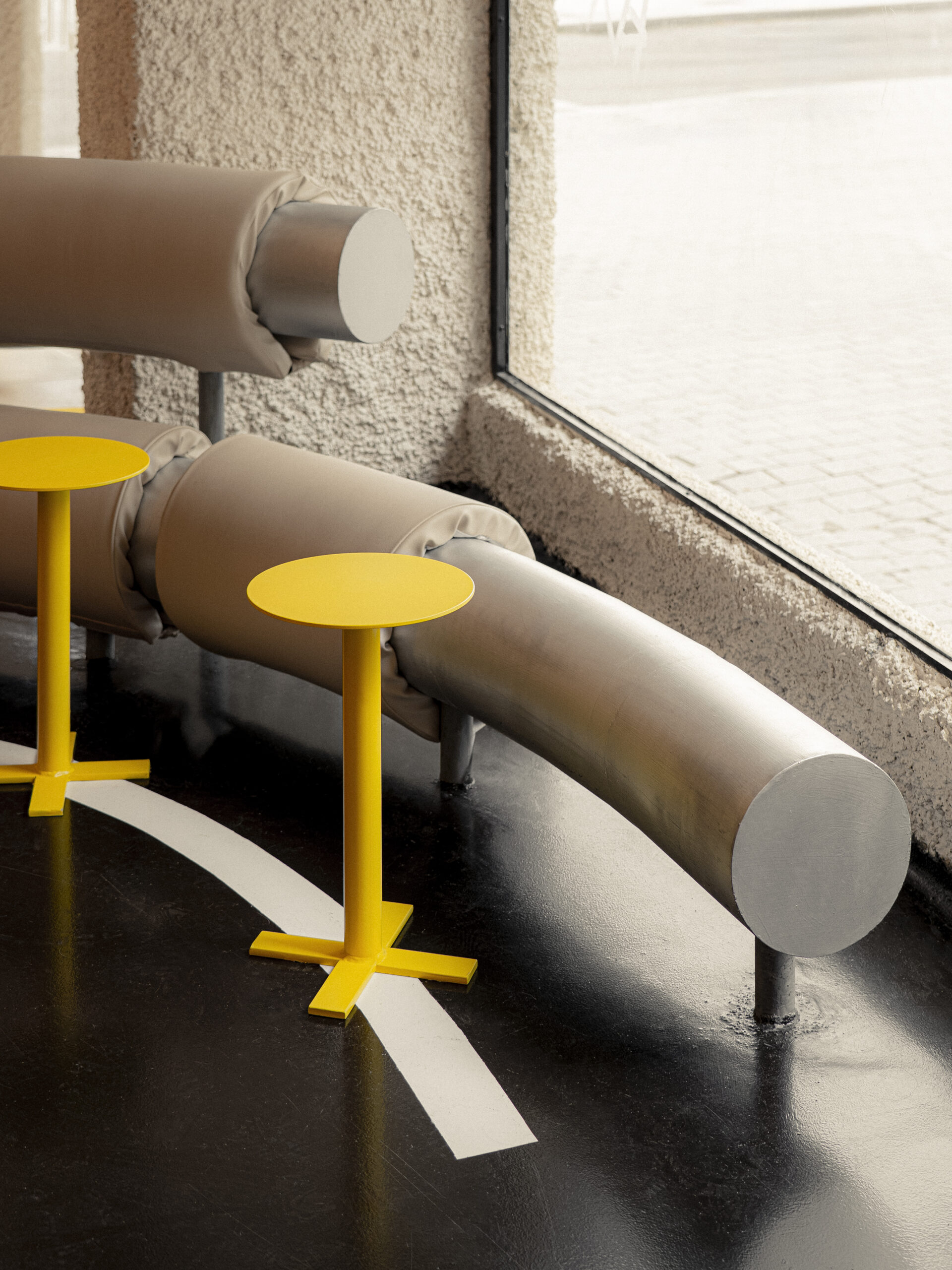
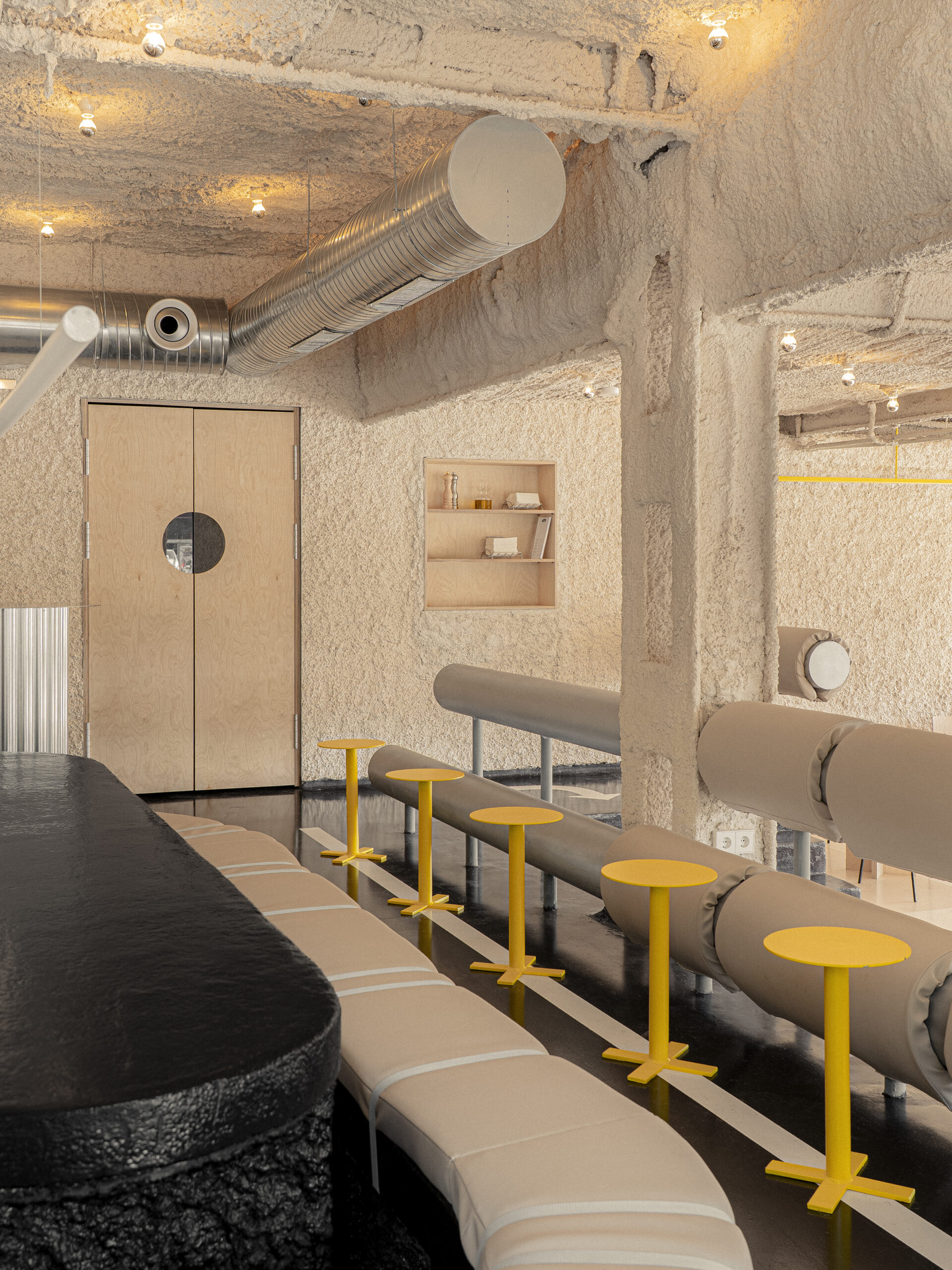
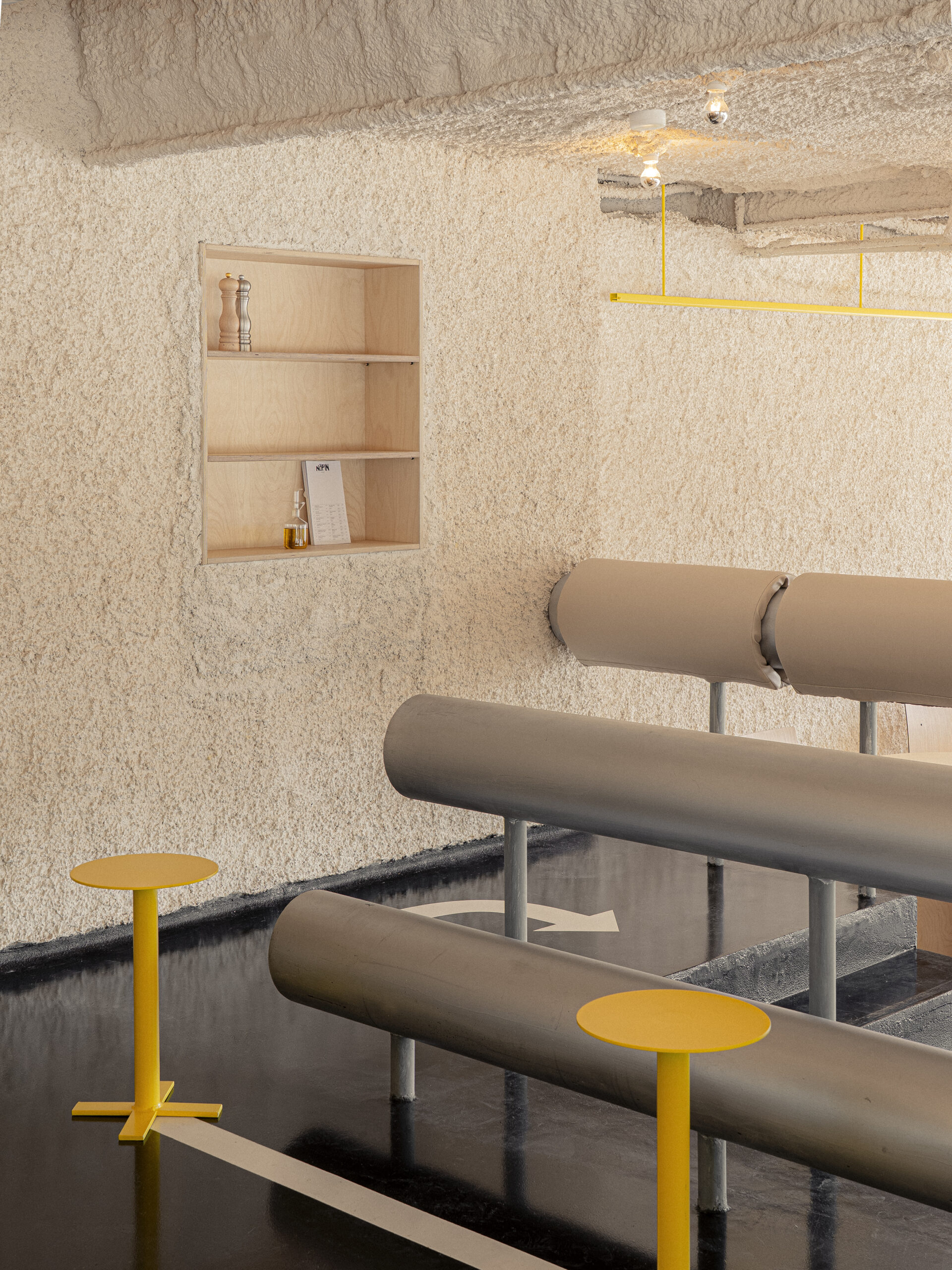
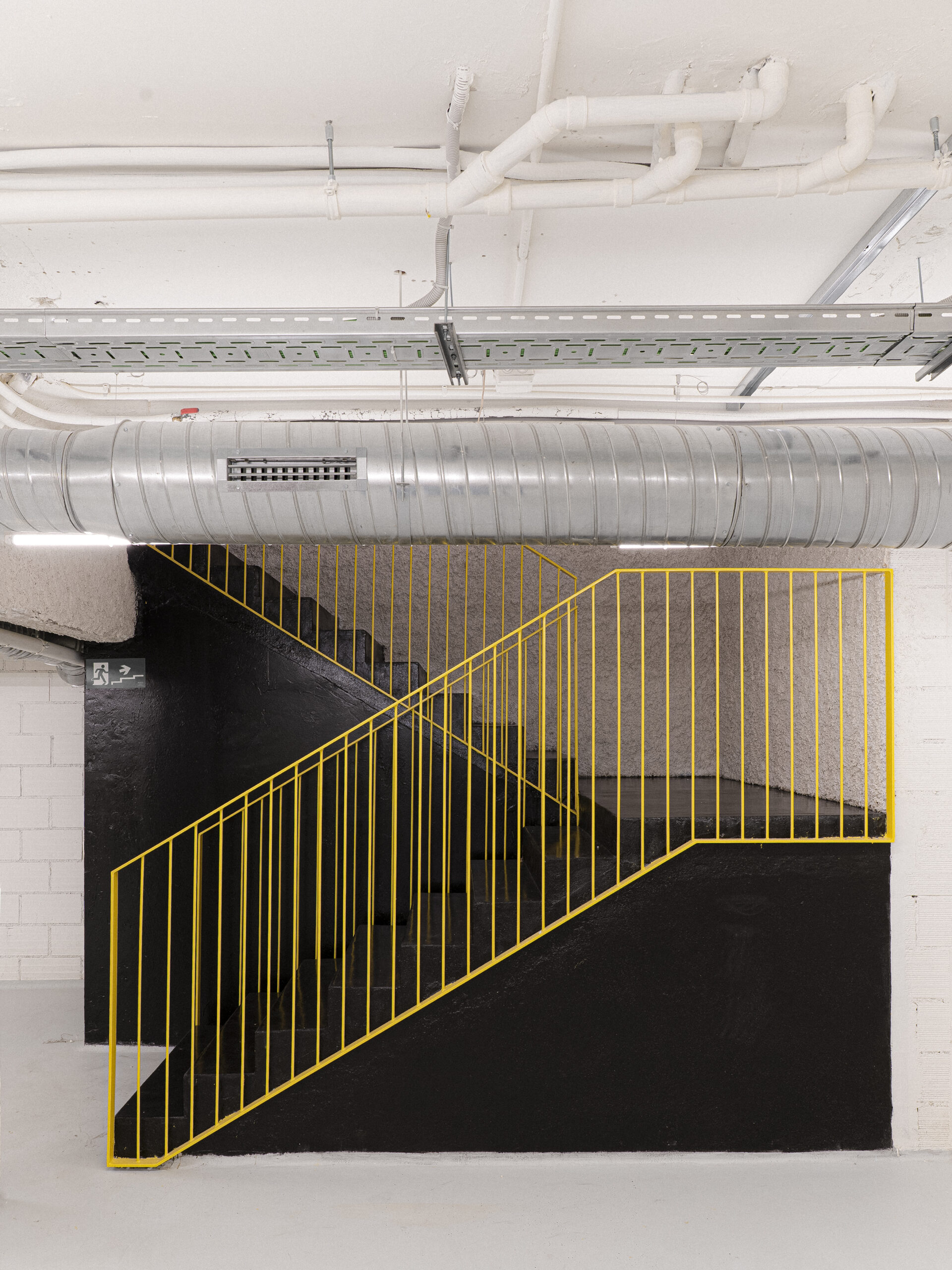
The main space is conceived as a fragment of infrastructure brought indoors. The flooring recalls asphalt: a black, continuous, hard-wearing surface that accepts wear and markings as part of its condition. Signage does not appear as neat corporate graphics, but as trace: words of encouragement, brief utilitarian messages, the improvised writing found along long-distance routes; a language of support and orientation rather than representation. In this area, the furniture refers to the picnic tables found at service stations: robust, direct pieces, devoid of domestic gesture, designed for stopping without settling in. Around them, elements of edge and protection emerge — crash barriers, fences and railings — understood not as decoration, but as devices that organise movement and receive the visitor.
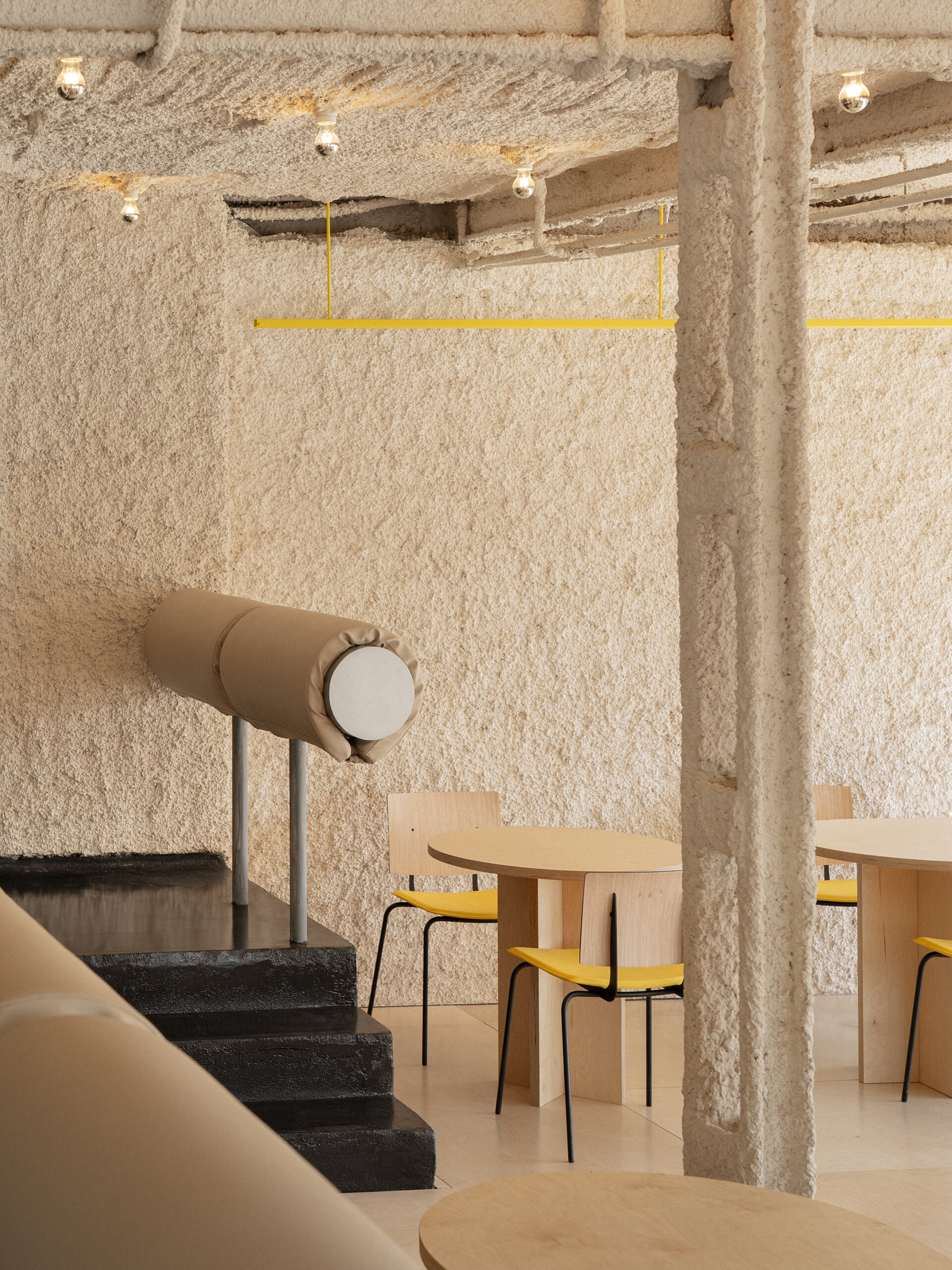
Set against this infrastructural register, the more domestic area operates as an interior of a different nature: one designed for the body, for direct contact with the skin. Materials shift towards the warm and tactile: wood, wicker, textiles; surfaces that absorb light rather than reflect it. References appear not as literal quotations, but as logics of use: the tatami as module and measure, the lamp as a means of controlling atmosphere, the furniture as low and proximate, closer to posture than to gaze.
The project is therefore organised around this controlled friction. It is not a linear narrative, but a montage: the visitor moves through an initial layer that retains something of the street and the route, and gradually enters another that condenses calm and care. The transition between these two worlds is not resolved through a thematic change, but through a gradual shift in density, material temperature and acoustics: from hard to soft, from exposed to sheltered.
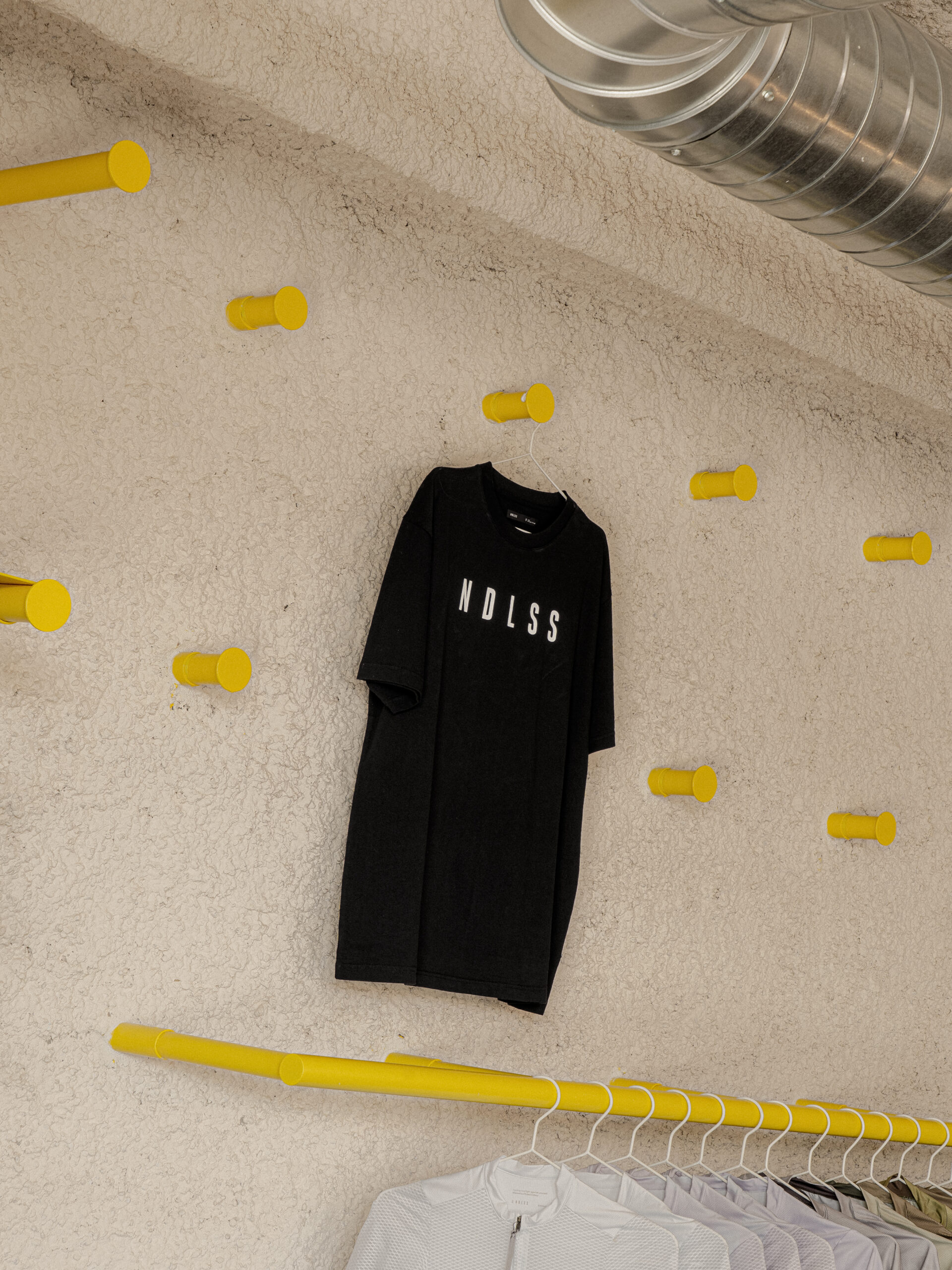
At the same time, the intervention embraces a pragmatic condition: the premises carry the “accidents” of the existing building — irregularities, forced junctions, traces of previous installations. The material strategy is therefore conceived as a system of unification: a material (or a coherent family of finishes) capable of absorbing these incidents, ordering them without entirely concealing them, and constructing continuity where there is currently fragmentation. Rather than “finishing” the space with unnecessary layers, the aim is to establish a clear logic: a continuous base that accepts imperfection as a given, and upon it, a series of precise elements (edges, pieces of furniture, lighting fixtures).
NOFIN was designed and built by BURR (E.Fuertes, R.Martínez, A.Molins, J.Sobejano) in Madrid in 2025. Amanda Bouzada, Jesus Meseguer, Marina van der Linden, Natalia Molina and Guillermo Hernández were part of the team. Hugo Huerga and Diego Andrés López were in charge of creative direction and brand strategy. Visual identiy by Brigade86. Restaurant consulting by Ansón y Bonet. Construction by DASEPA. Ricardo Morcillo was in charge of the lighting.
The outcome was photographed by Maru Serrano.