 BURR
BURR
BURR
BURR
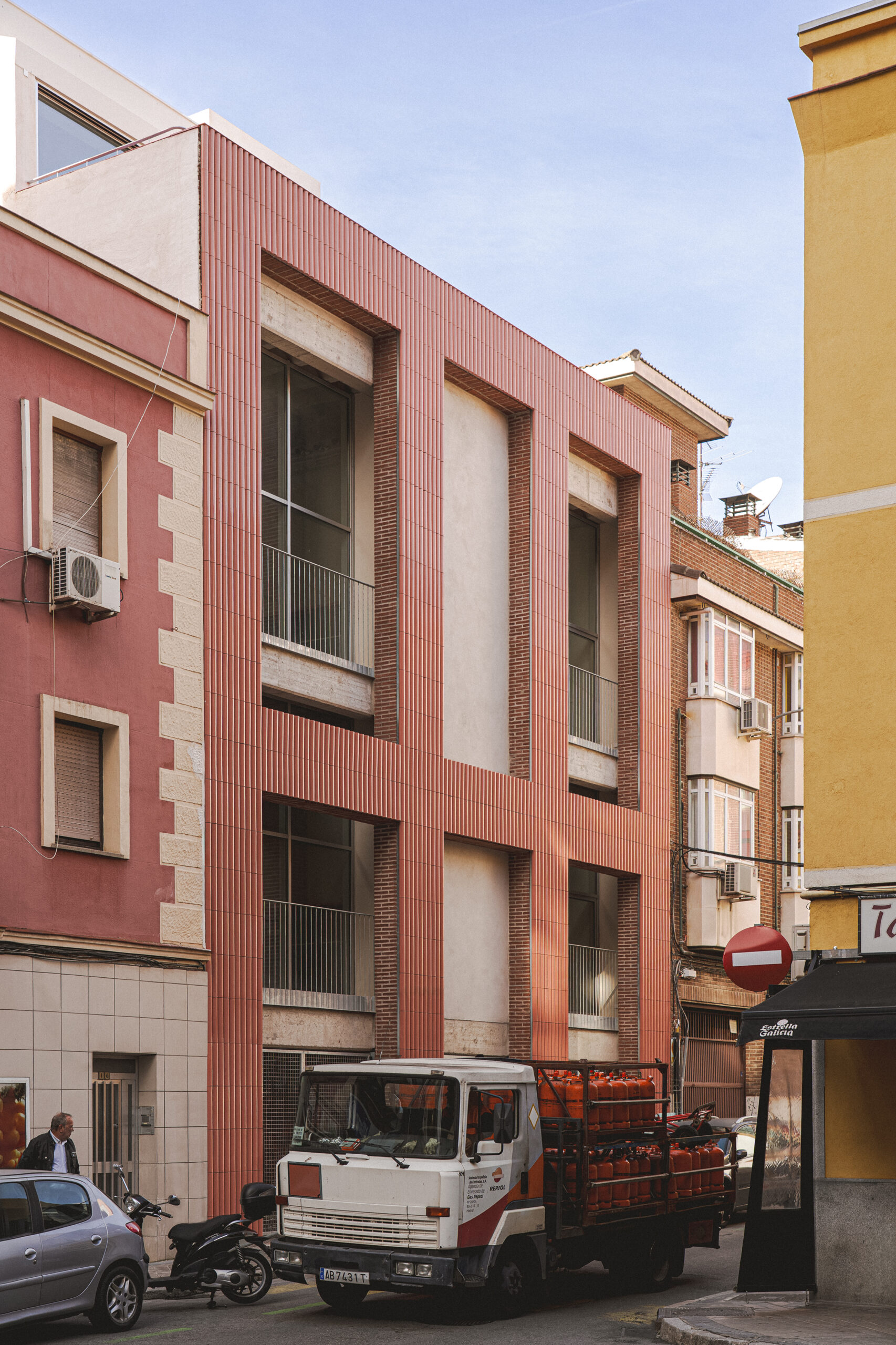
O14 is a residential building on the plot of a former industrial structure: an obsolete urban remnant embedded in Madrid’s urban fabric, which for years sat outside the major real-estate cycles. The pre-existing building, erected in 1933, consisted of a façade of large brick piers with a composition typical of the industrial architecture of the period. Unlike many northern european constructions, where it is common to find complexes built entirely in multi-wythe brick walls, here only the street façade carried that material language, concealing a precarious inner shed made of sheet metal and coarse brick.
The façades of Madrid’s industrial buildings from this era operated as masks: they hid modest interior constructions behind envelopes of greater material and tectonic solidity. In a sense, they were layered architectures in which an apparent dimension and a functional one coexist. This condition, the façade as an urban “face”, capable of suggesting more than what actually lies behind, connects to a broader tradition of false fronts built to adjust proportions, intensify presence or project a volume more monumental than strictly necessary.
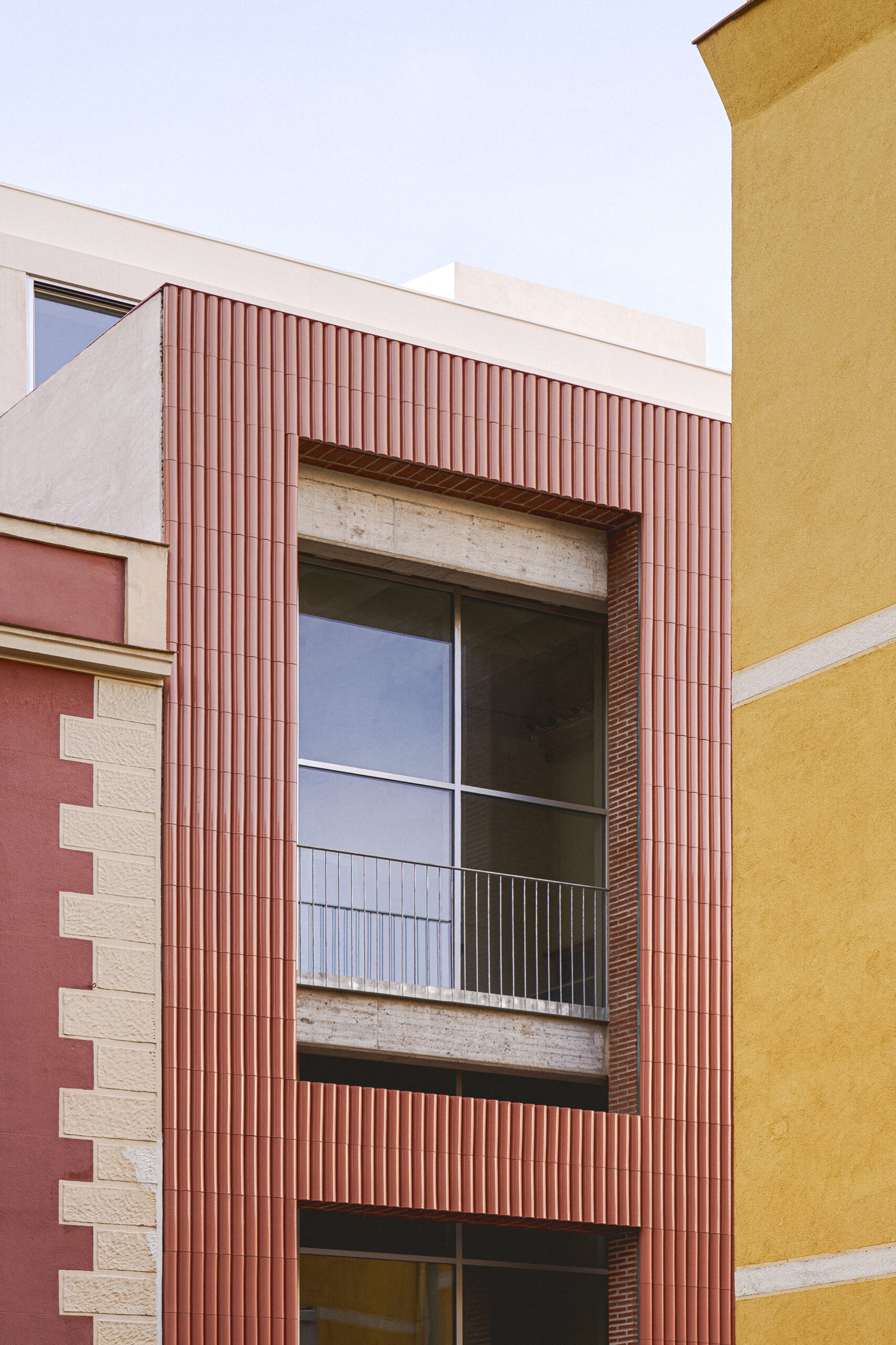
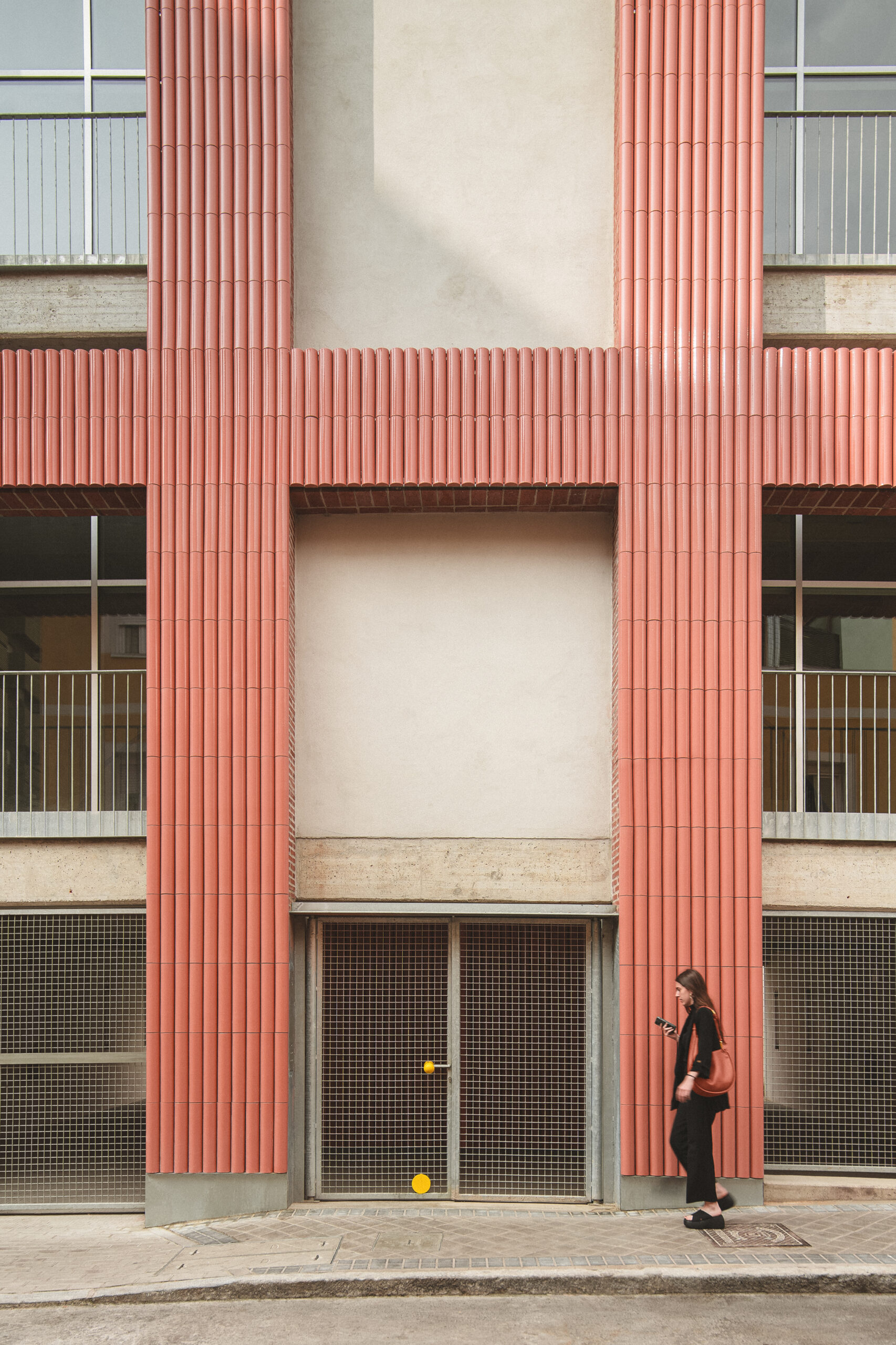
O14 revisits this masked typology and accentuates the distinction between façade and building. The original project involved demolishing the interior structure, which was at risk of collapse, while preserving the main façade. However, the deterioration of this façade required partial demolition for safety reasons. In reaction to this event, a literal reconstruction was ruled out: reproducing exactly what had been lost would have produced a hollow replica, when the façade’s value lay in its condition as a trace. Instead, the decision was to recompose a new façade from the lines, proportions and signals of the original, maintaining the site’s “false front” logic: an envelope that, rather than describing the building, precedes it and distorts it.
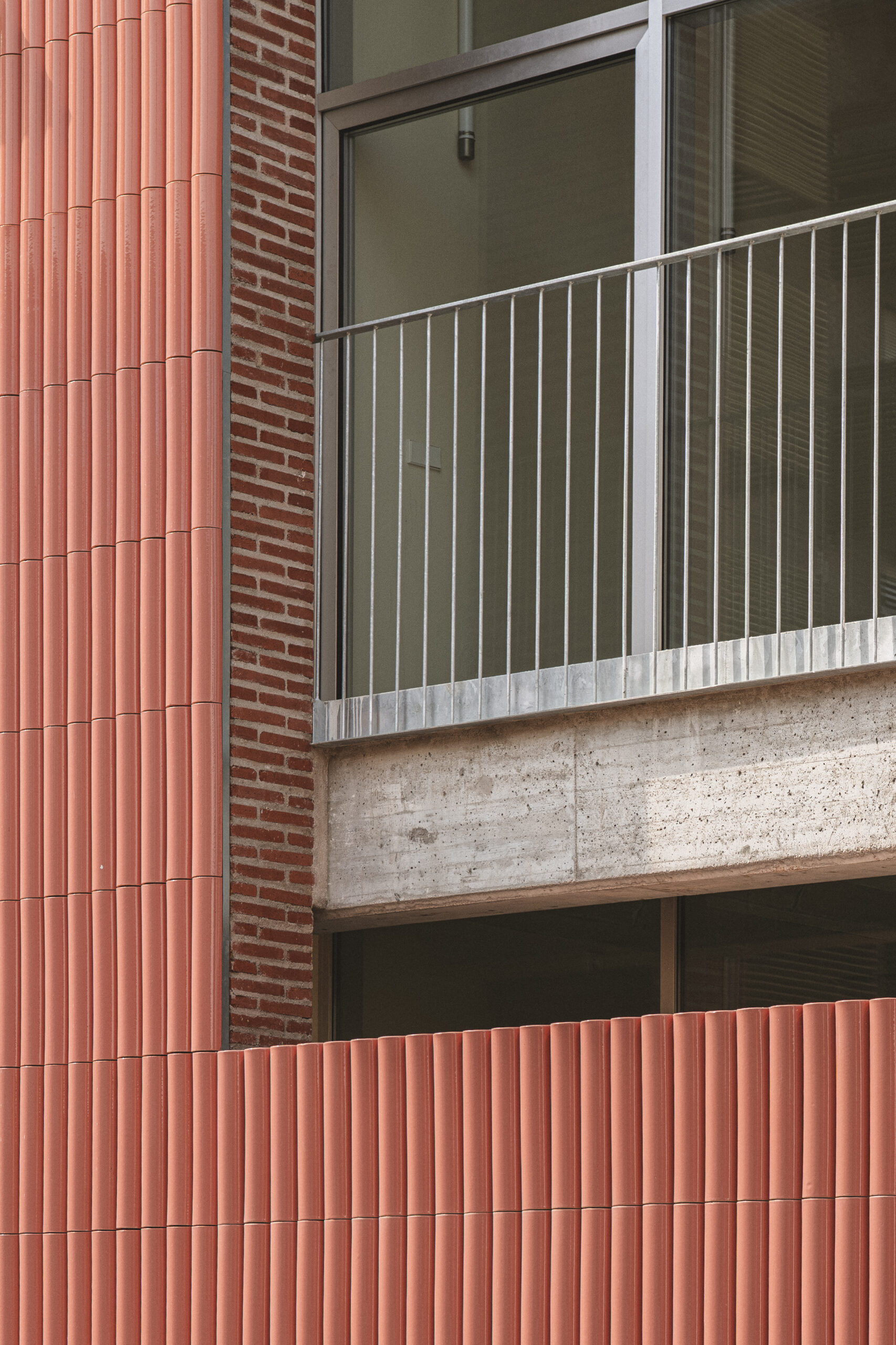
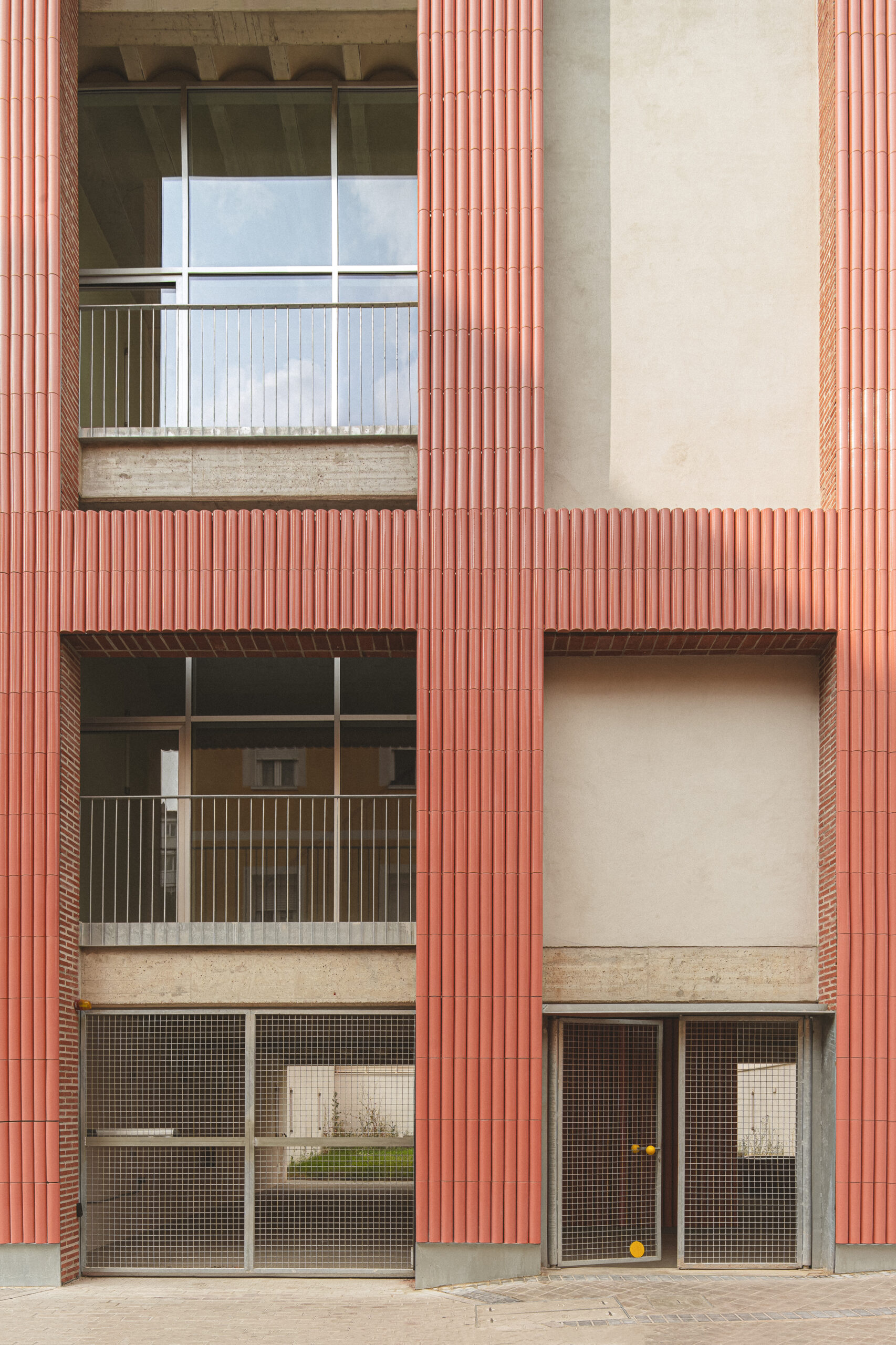
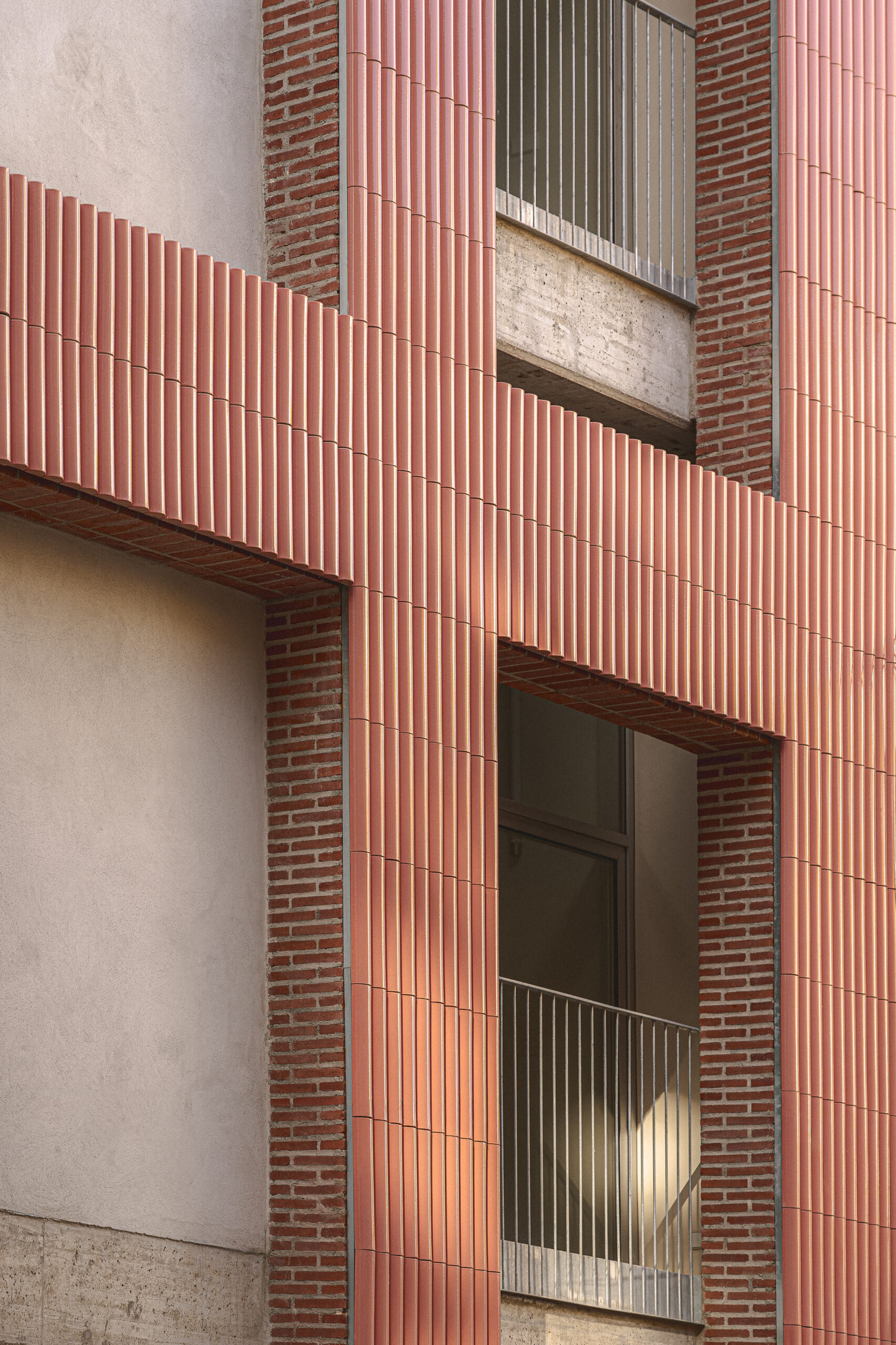
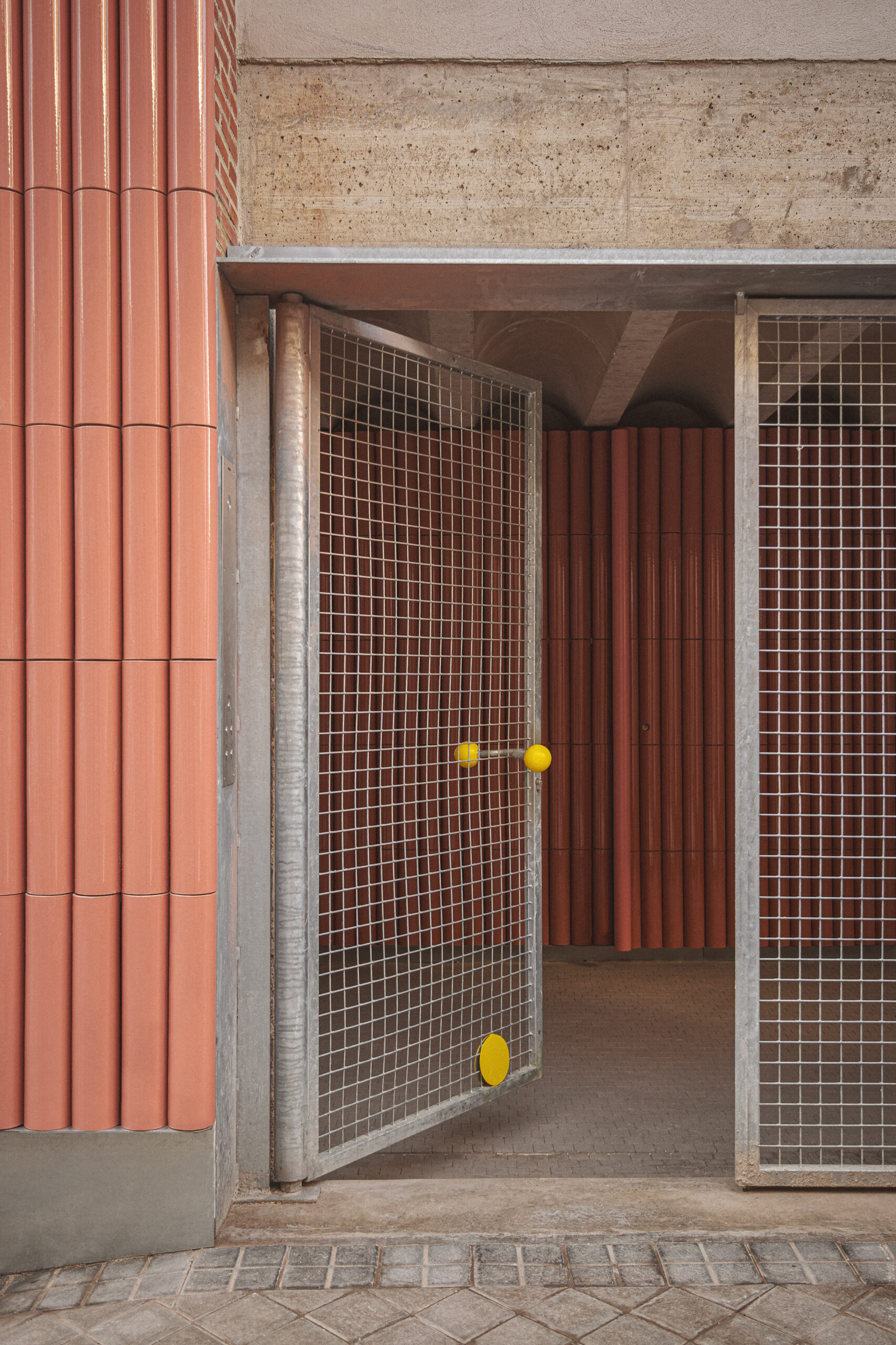
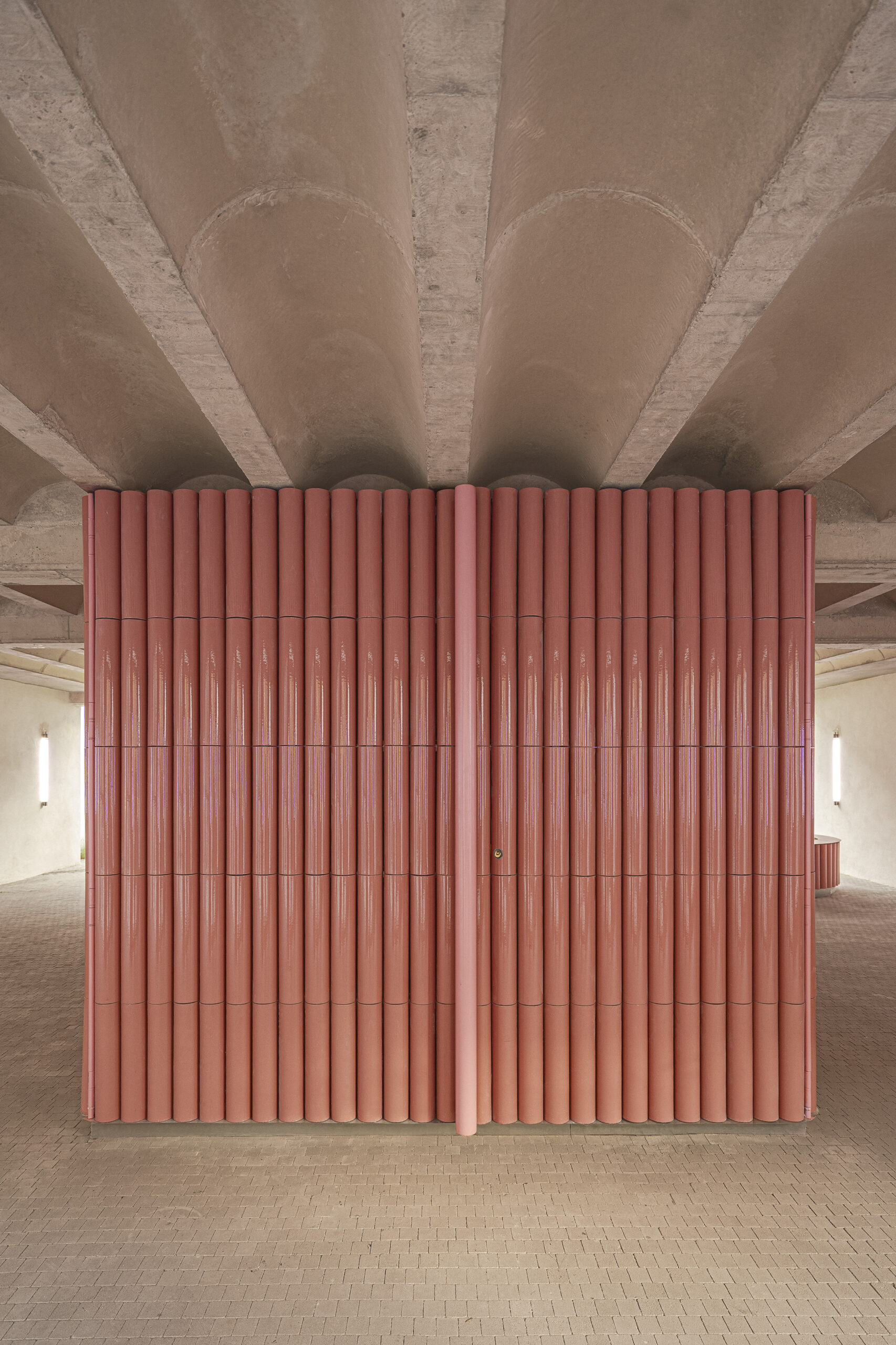
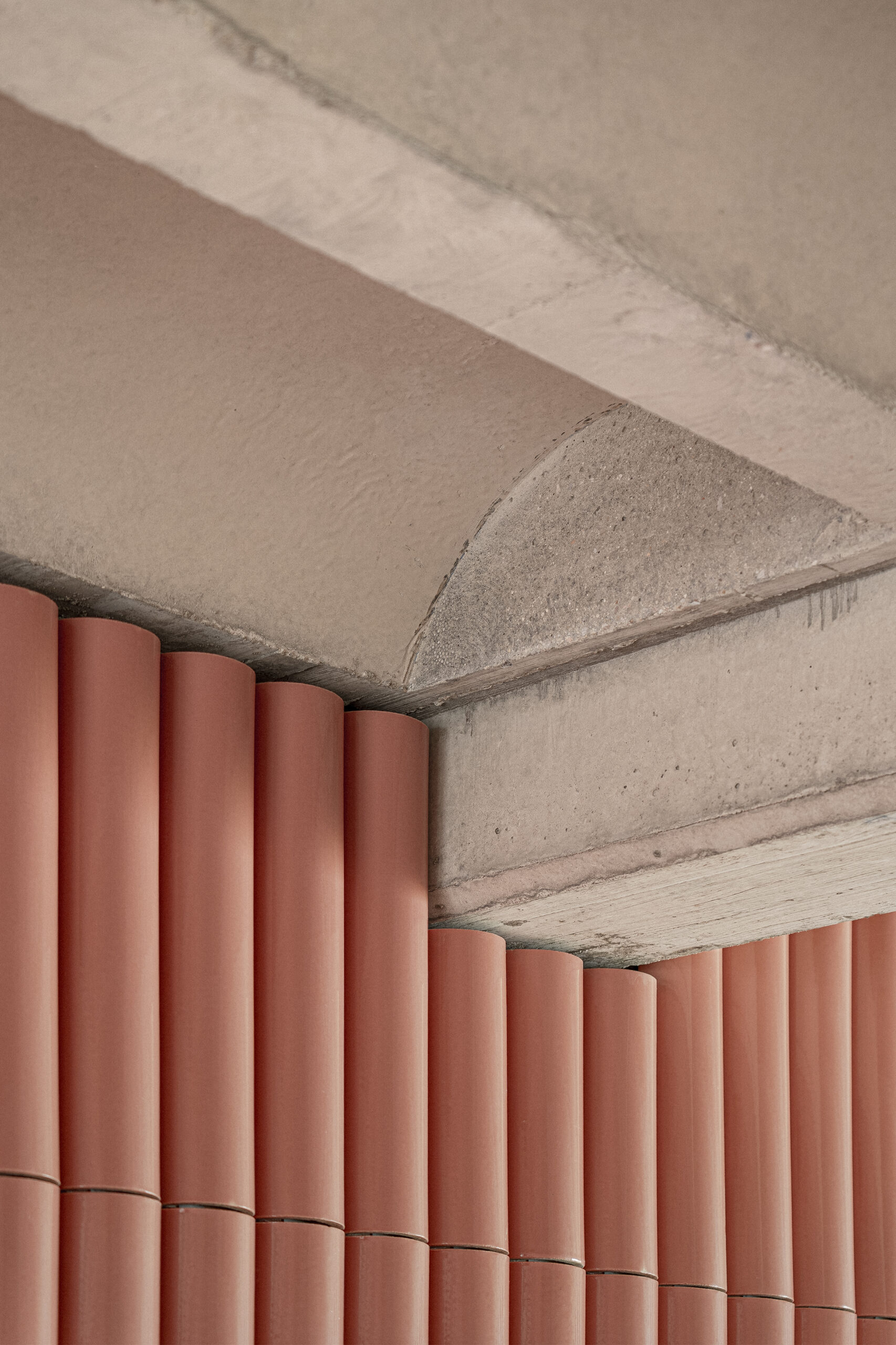
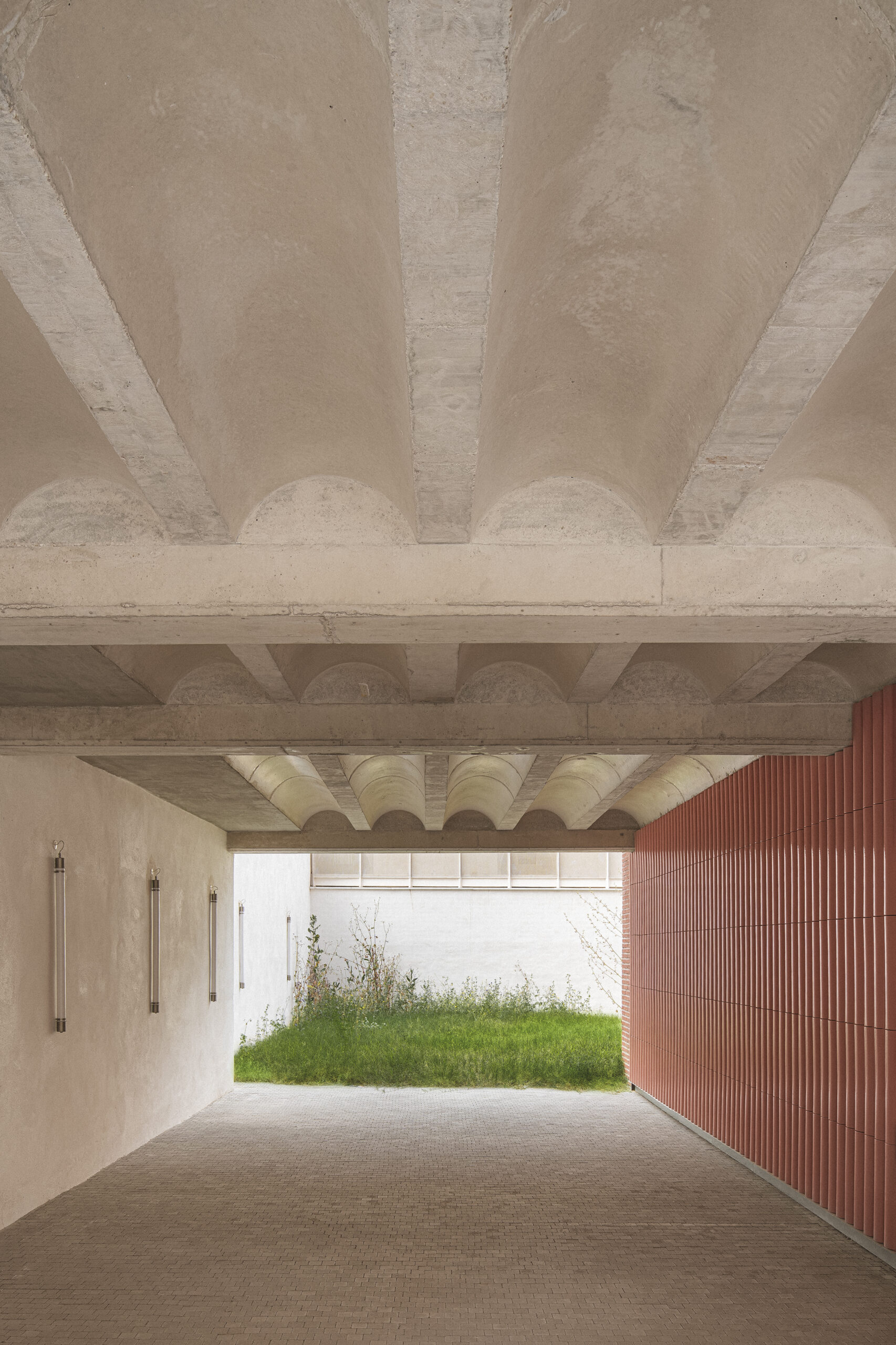
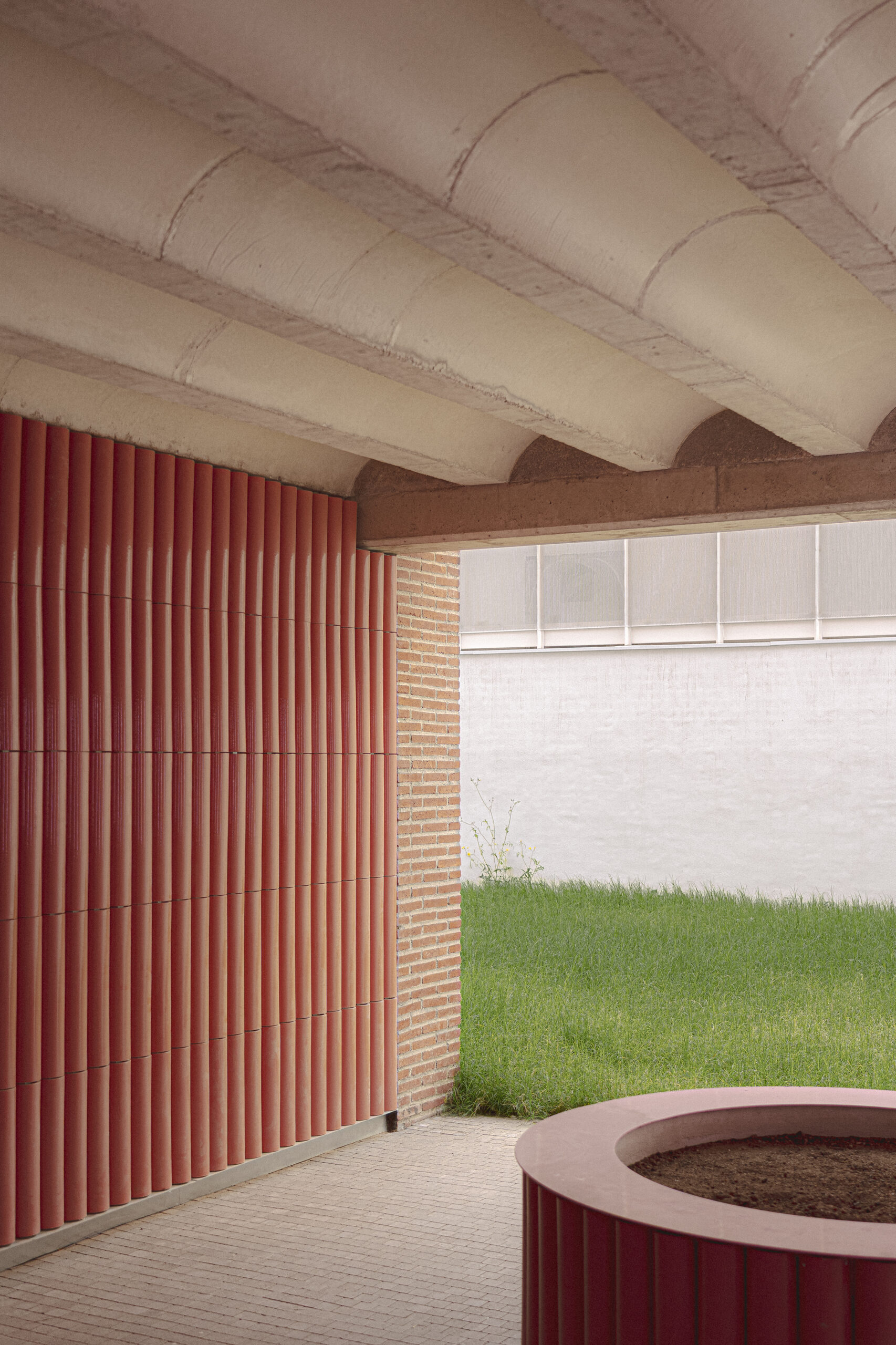
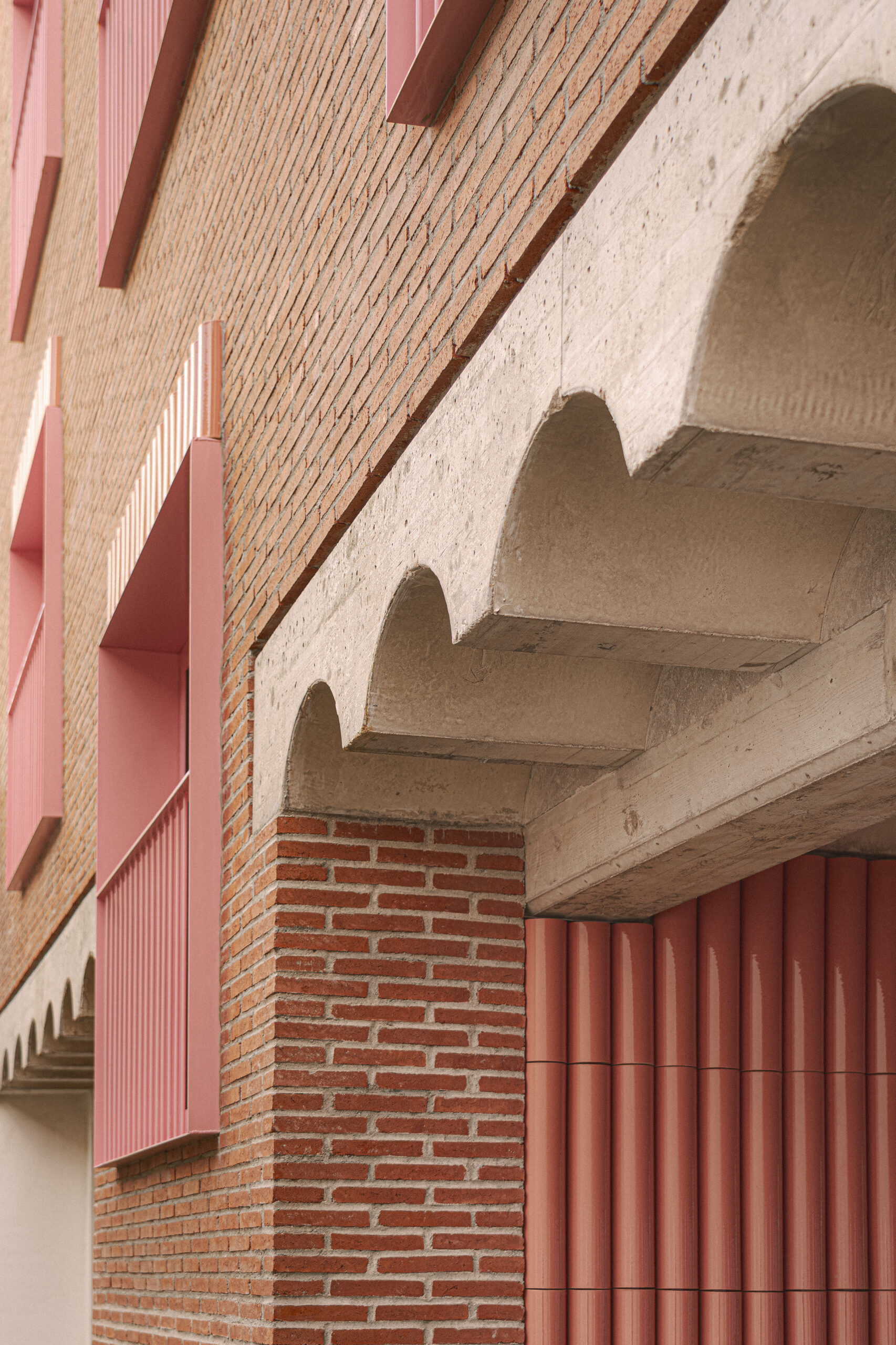
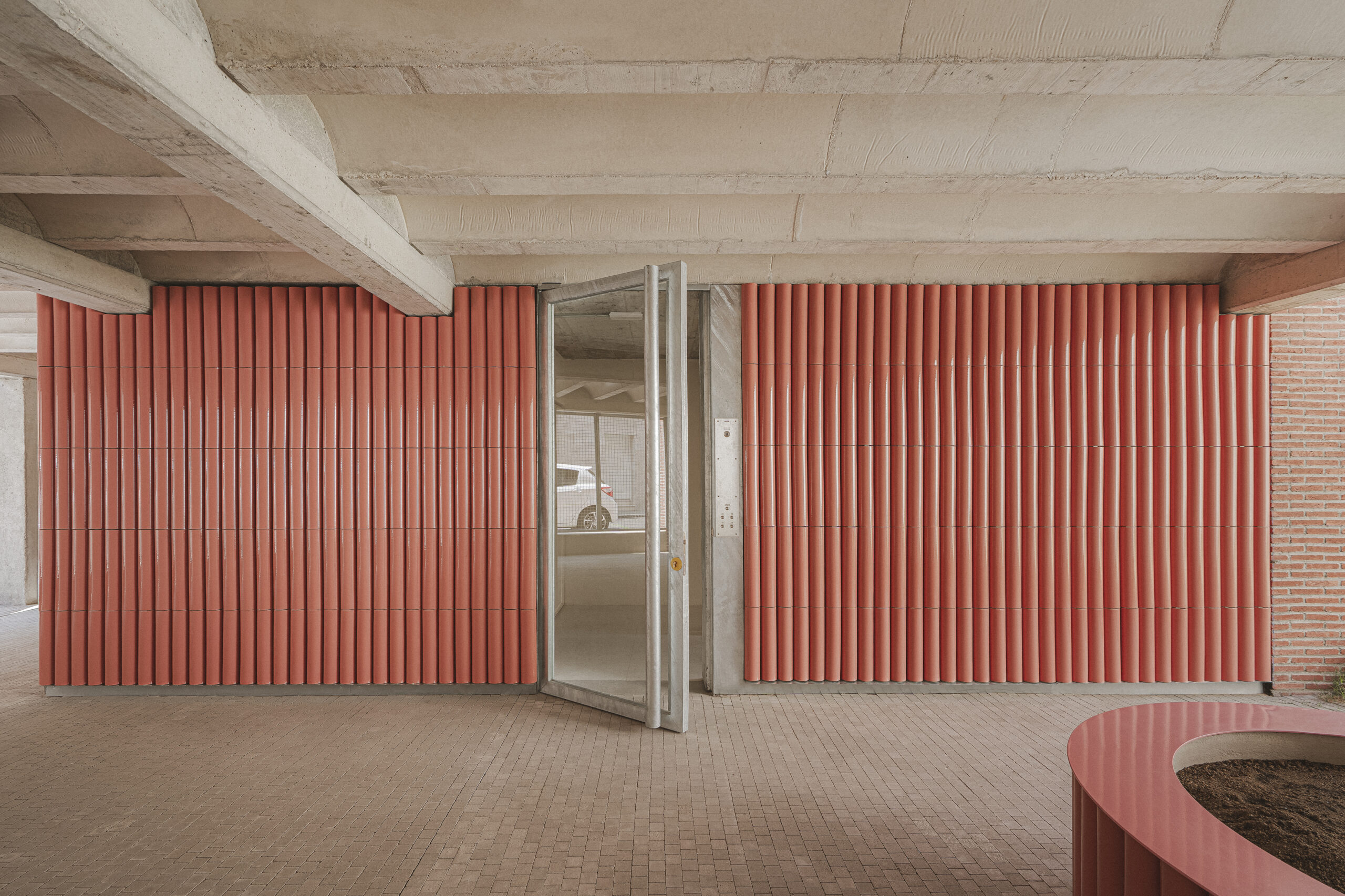
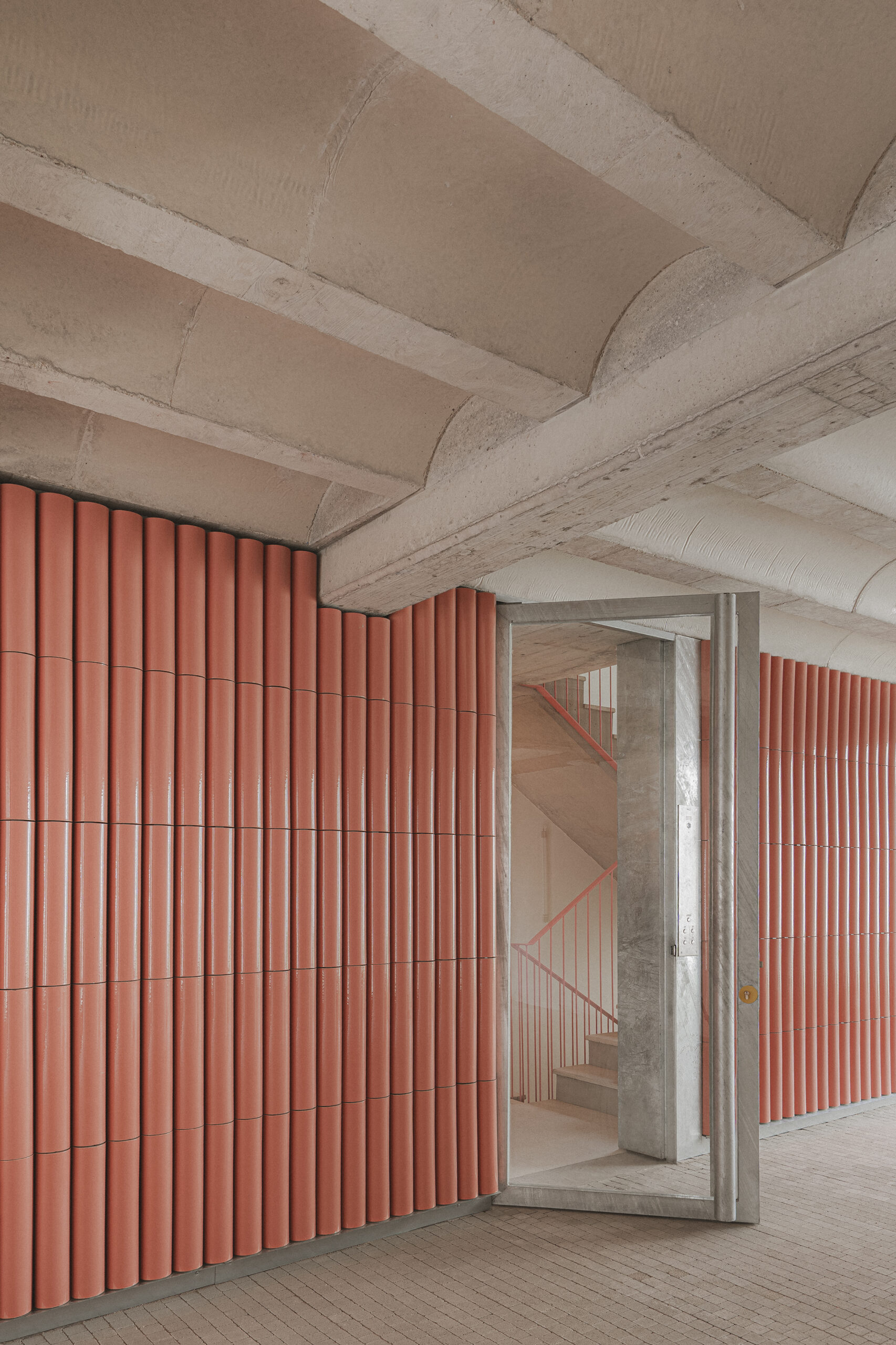
To reinforce the idea of masking, the outer face of the façade was clad in pink-lacquered half-round ceramic pieces. The cladding acts almost like make-up, emphasising its public image. In contrast, only that exterior face is finished: the thickness and the rear side of the façade, usually concealed, are left exposed in their raw materiality. Likewise, the distribution of the new building’s floor slabs does not follow the façade’s compositional logic, but rather the functional needs of the dwellings it contains, producing a misalignment with the openings in the envelope. These dissonances reveal the coexistence of two superimposed and divergent constructions: the urban mask on one hand, and the domestic structure on the other.
In volumetric terms, the building starts from the maximum outline allowed by regulations, but reorganises its heights to introduce an internal spatial hierarchy. Instead of stacking equivalent floors, the upper levels are compacted to free up a shared space for residents at ground level.
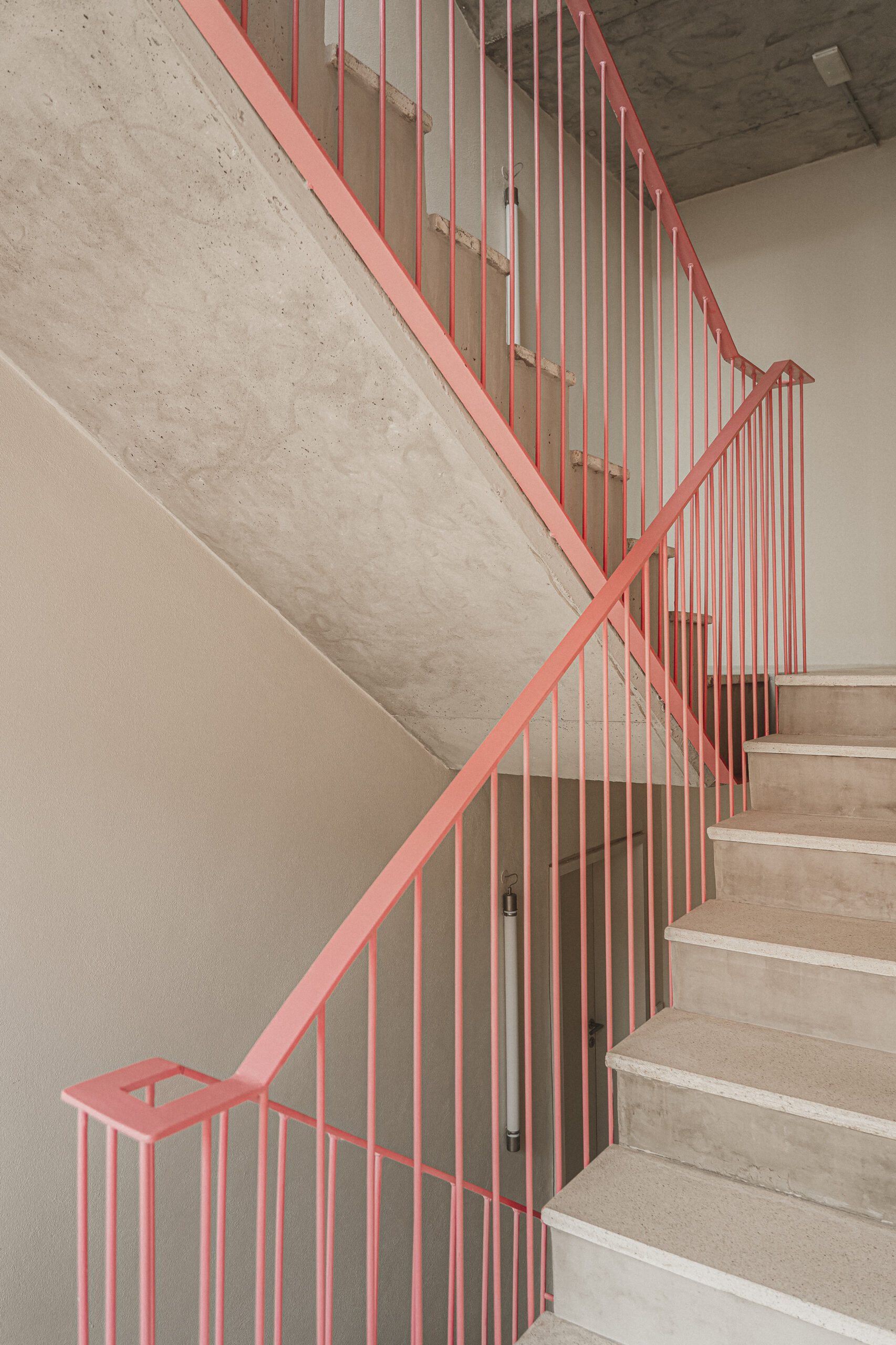
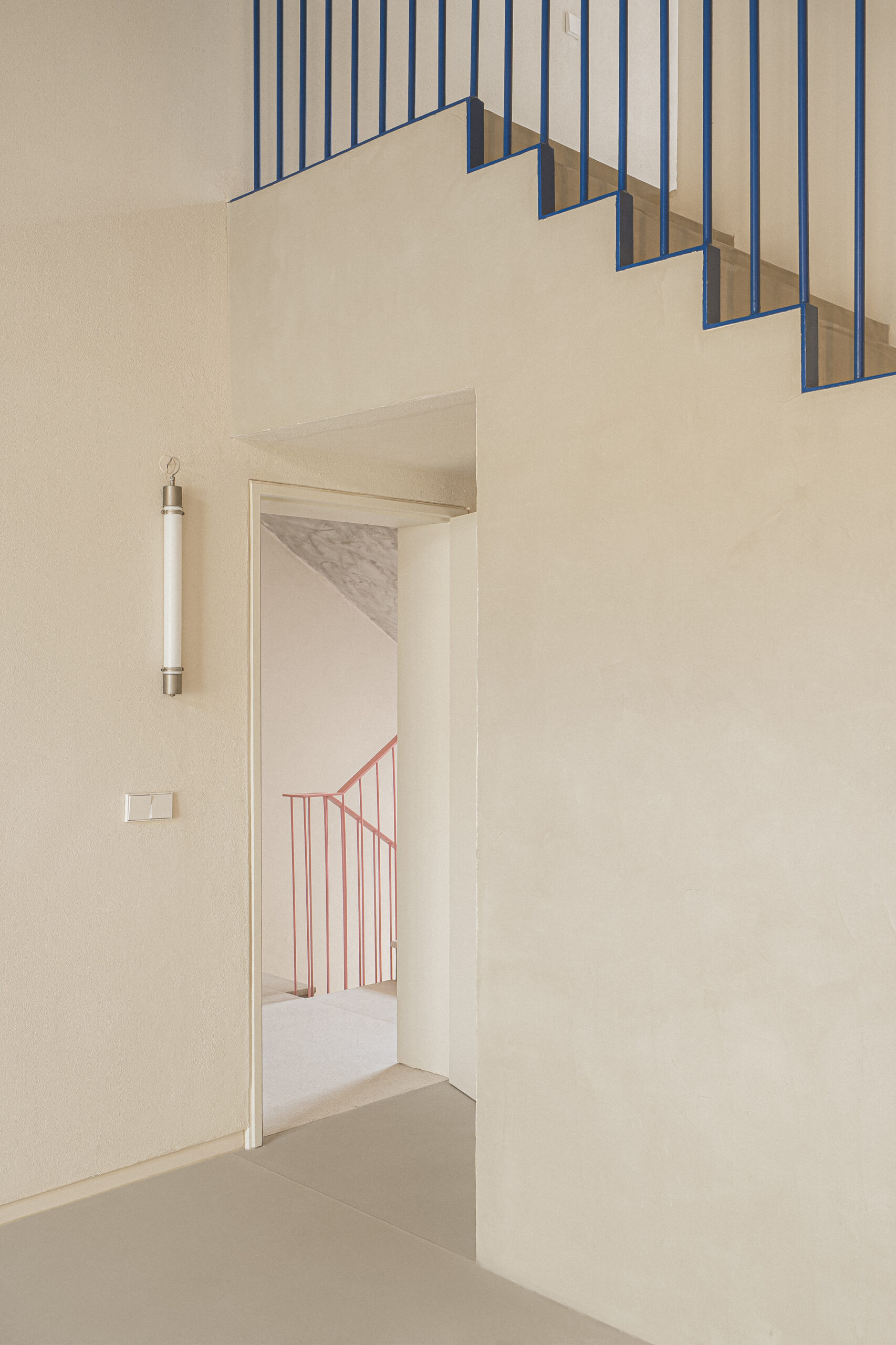
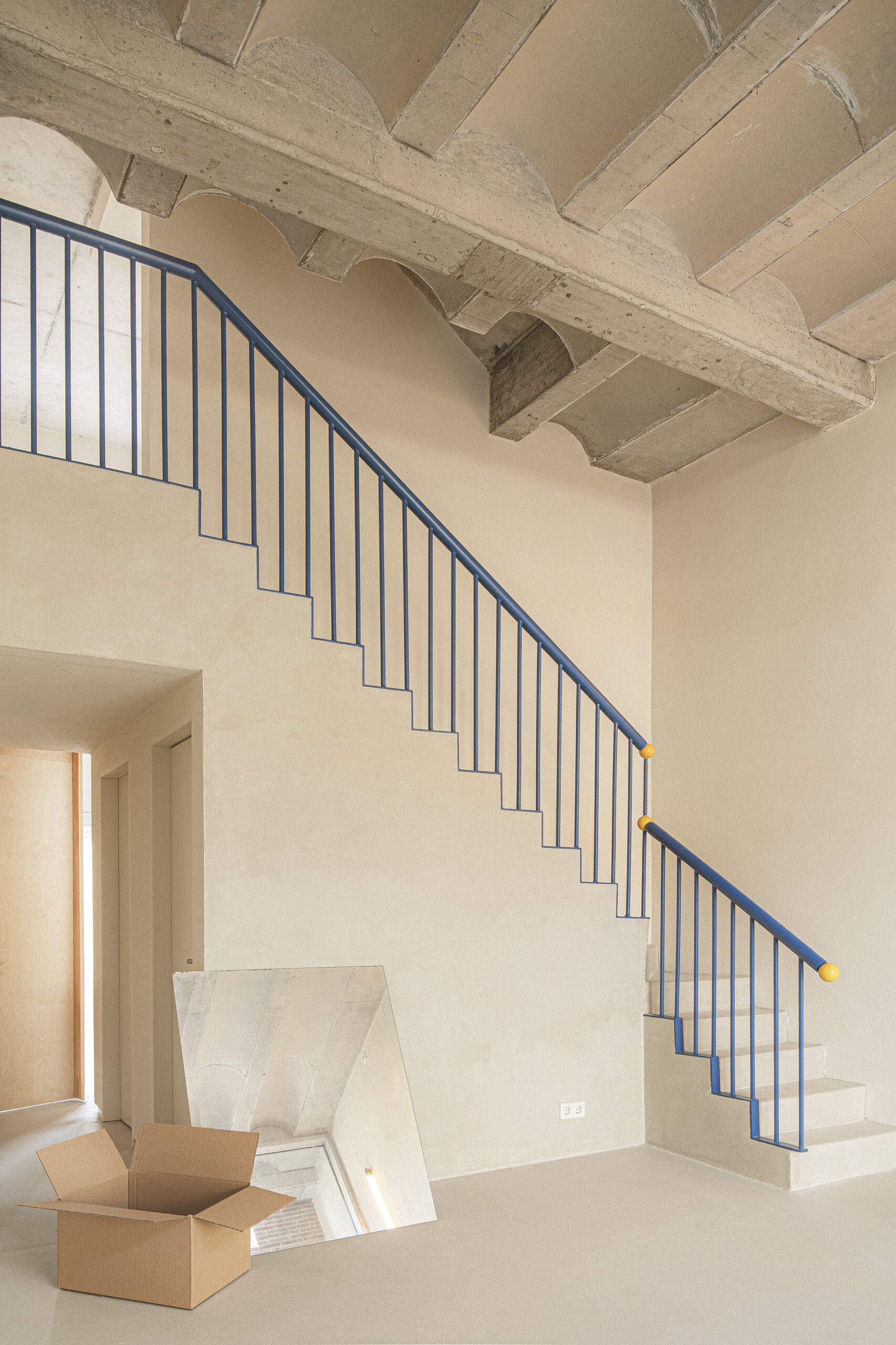
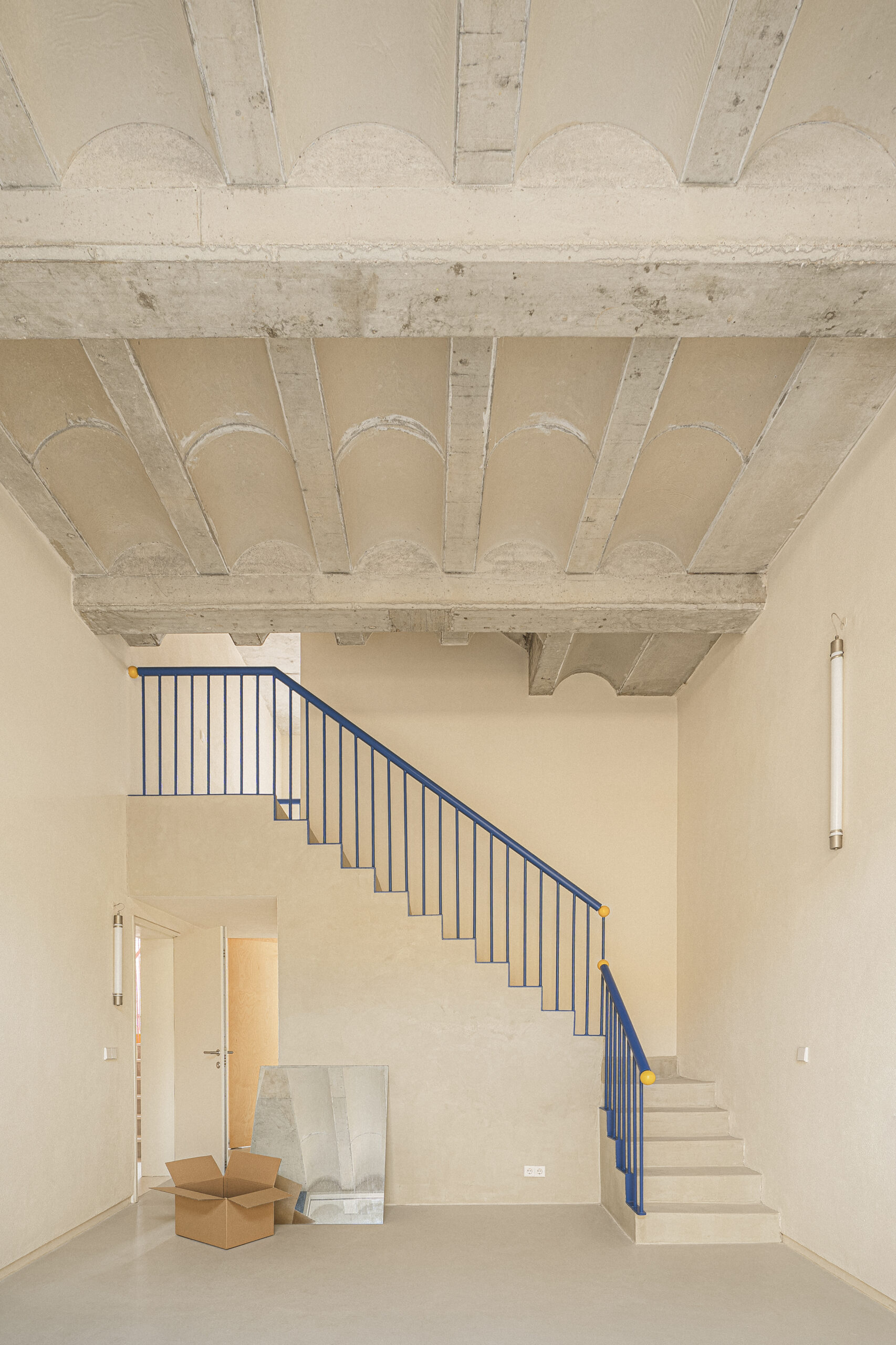
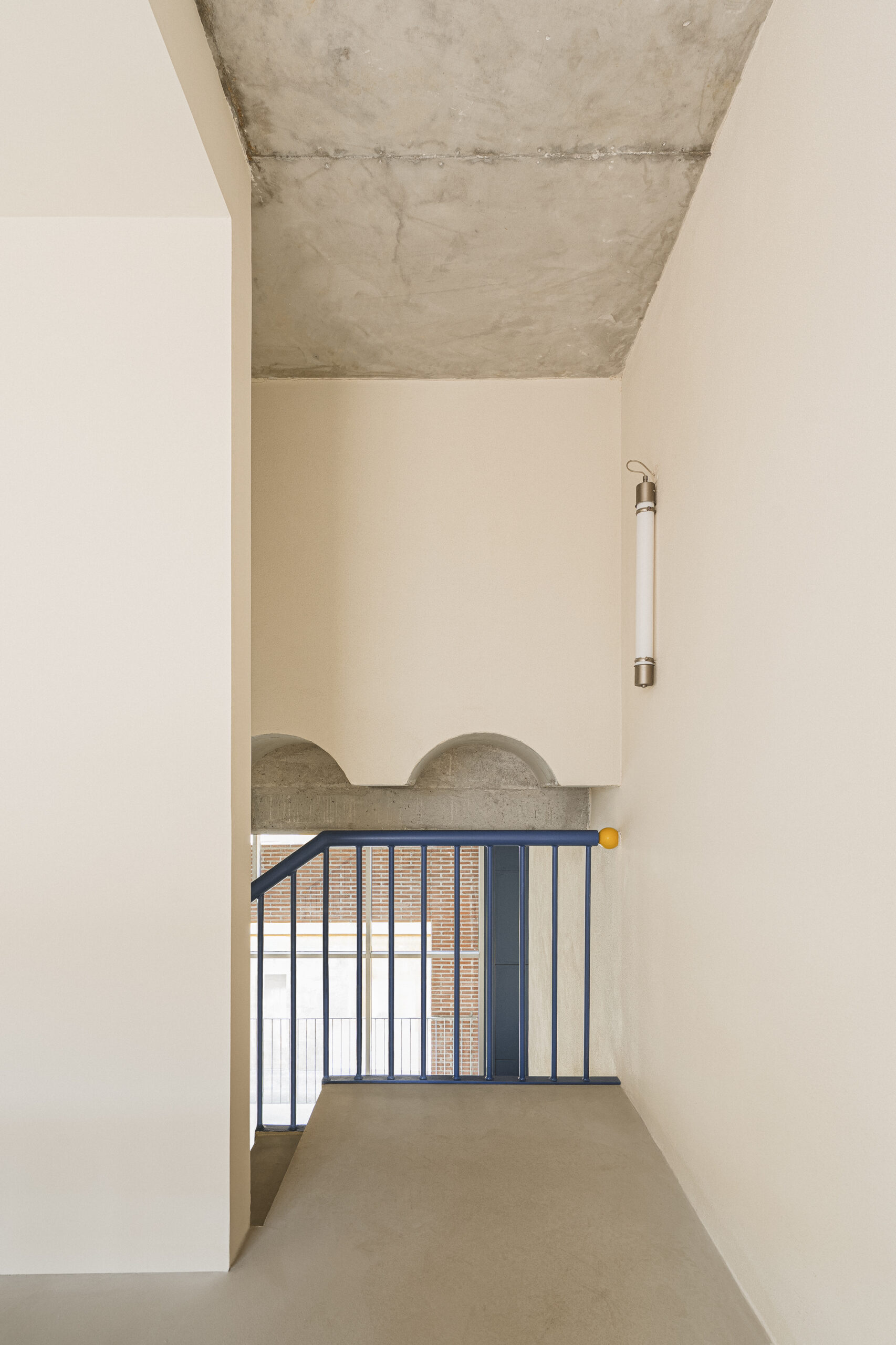
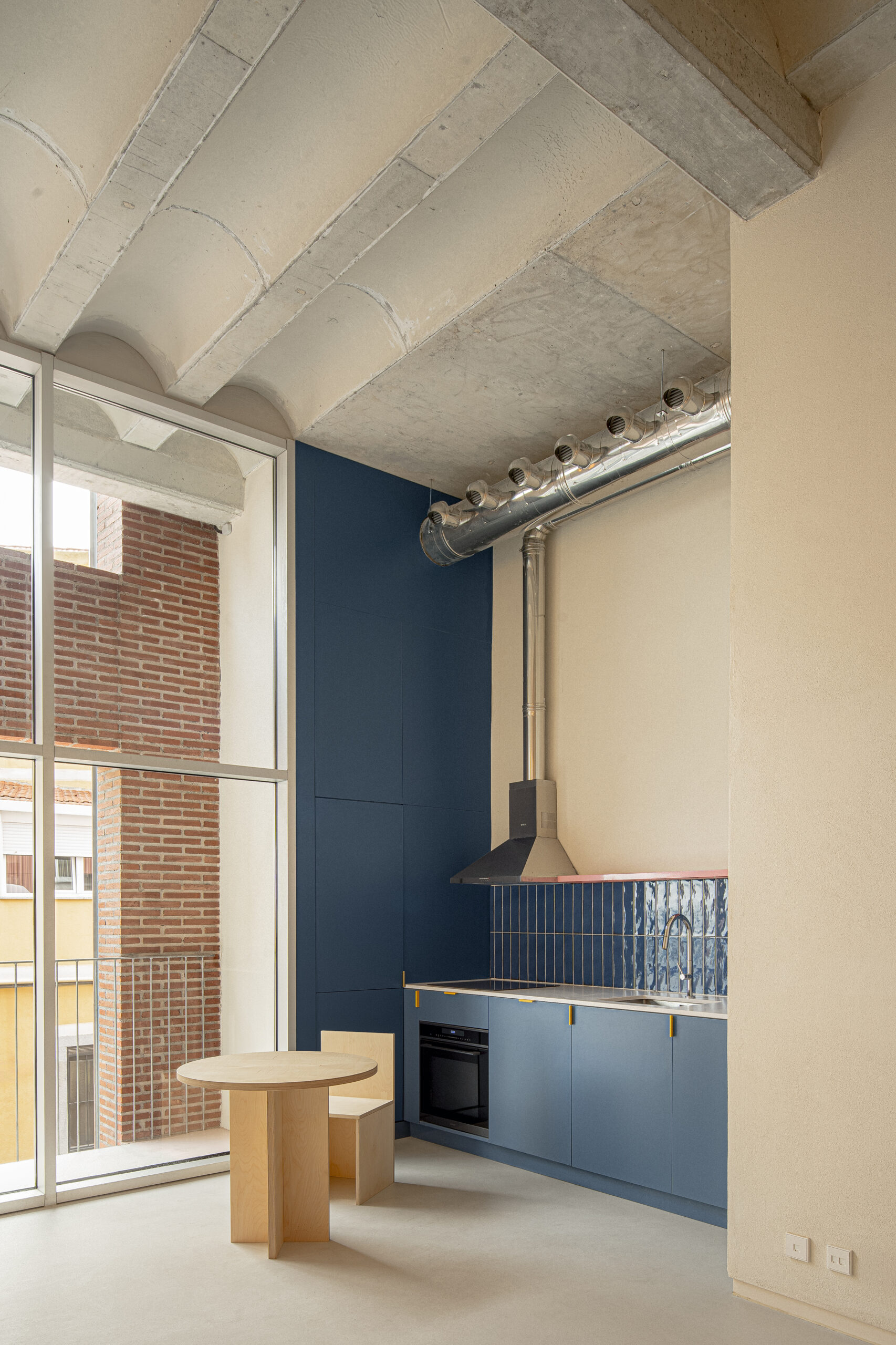
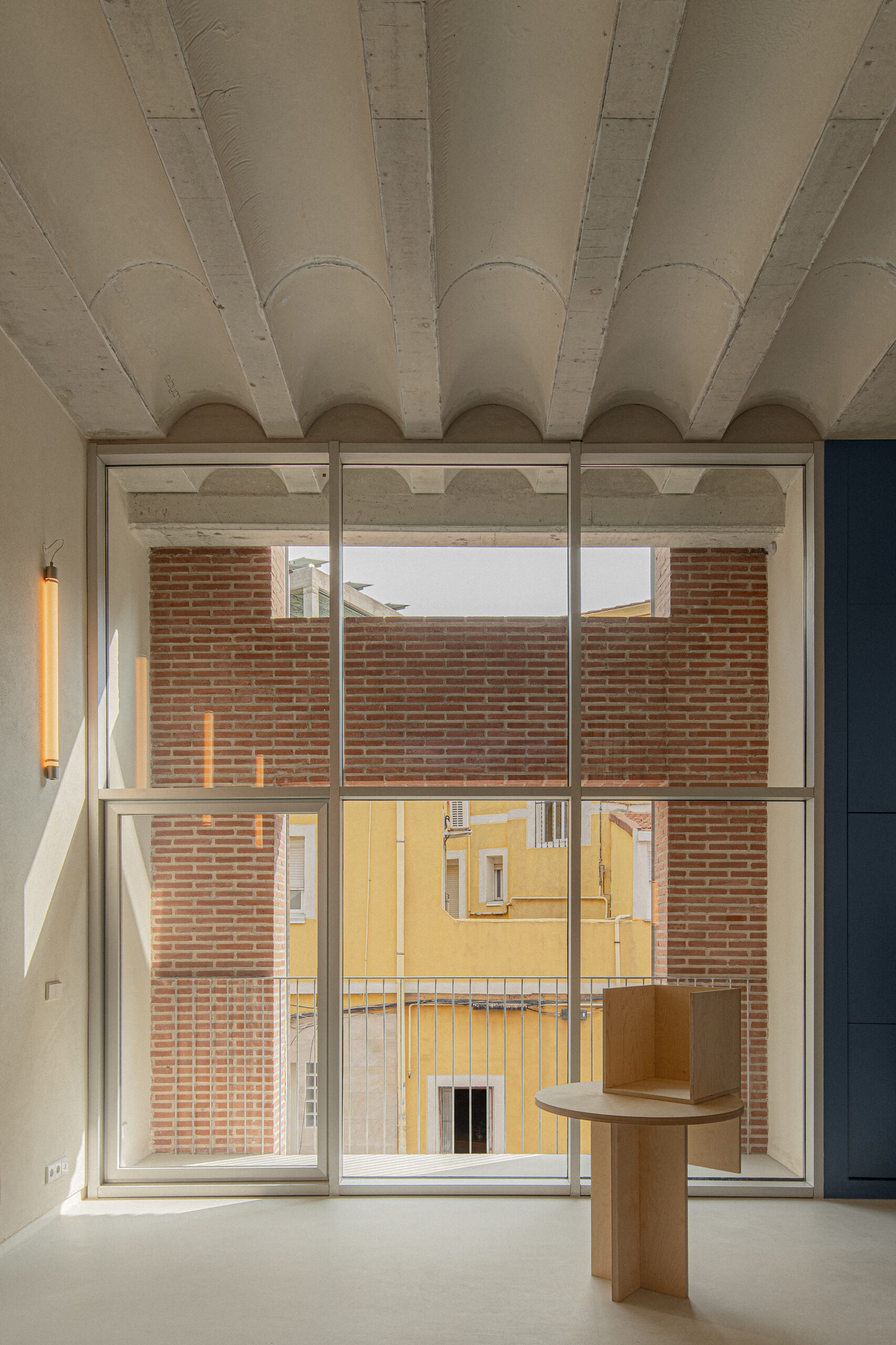
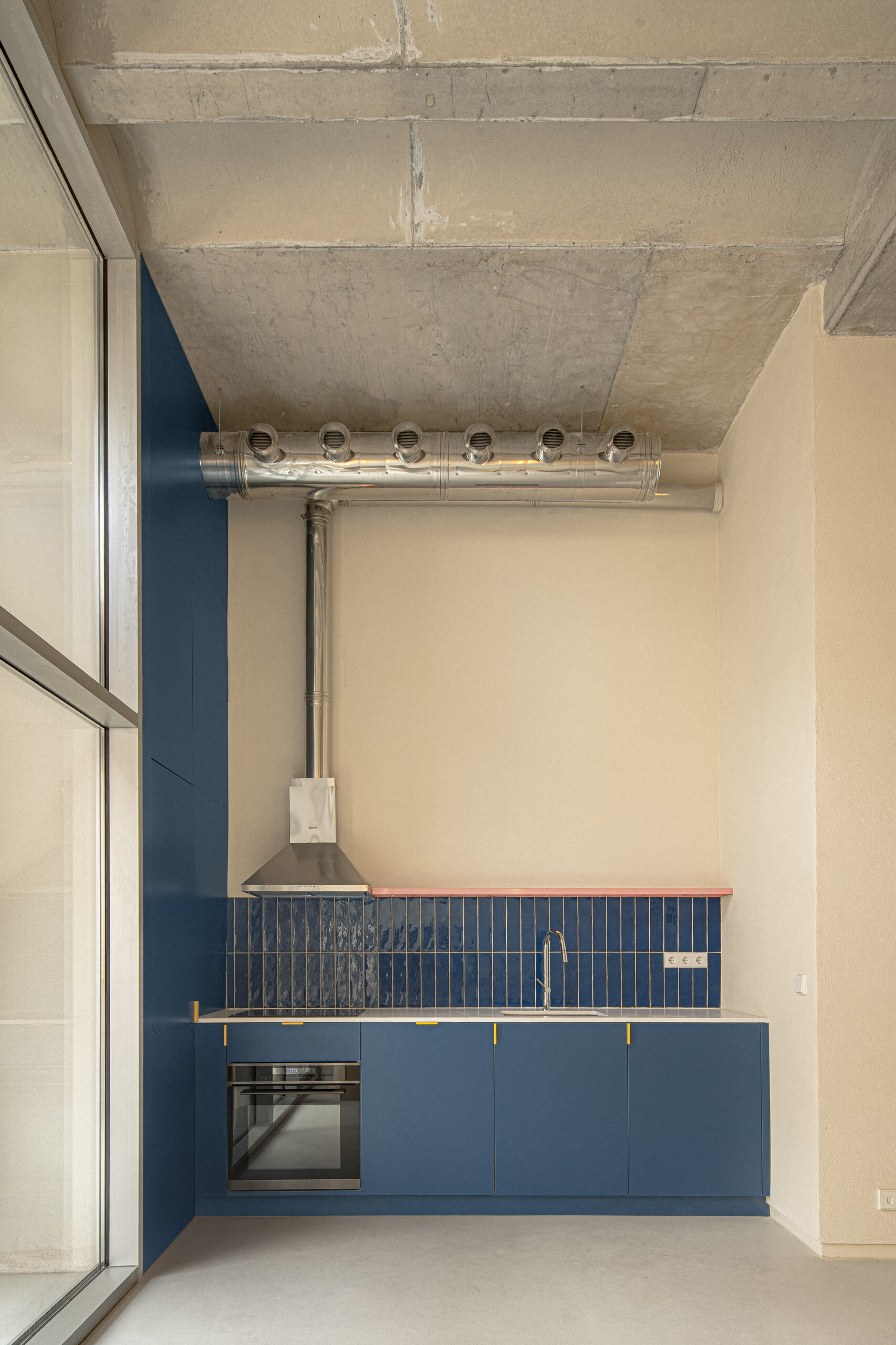
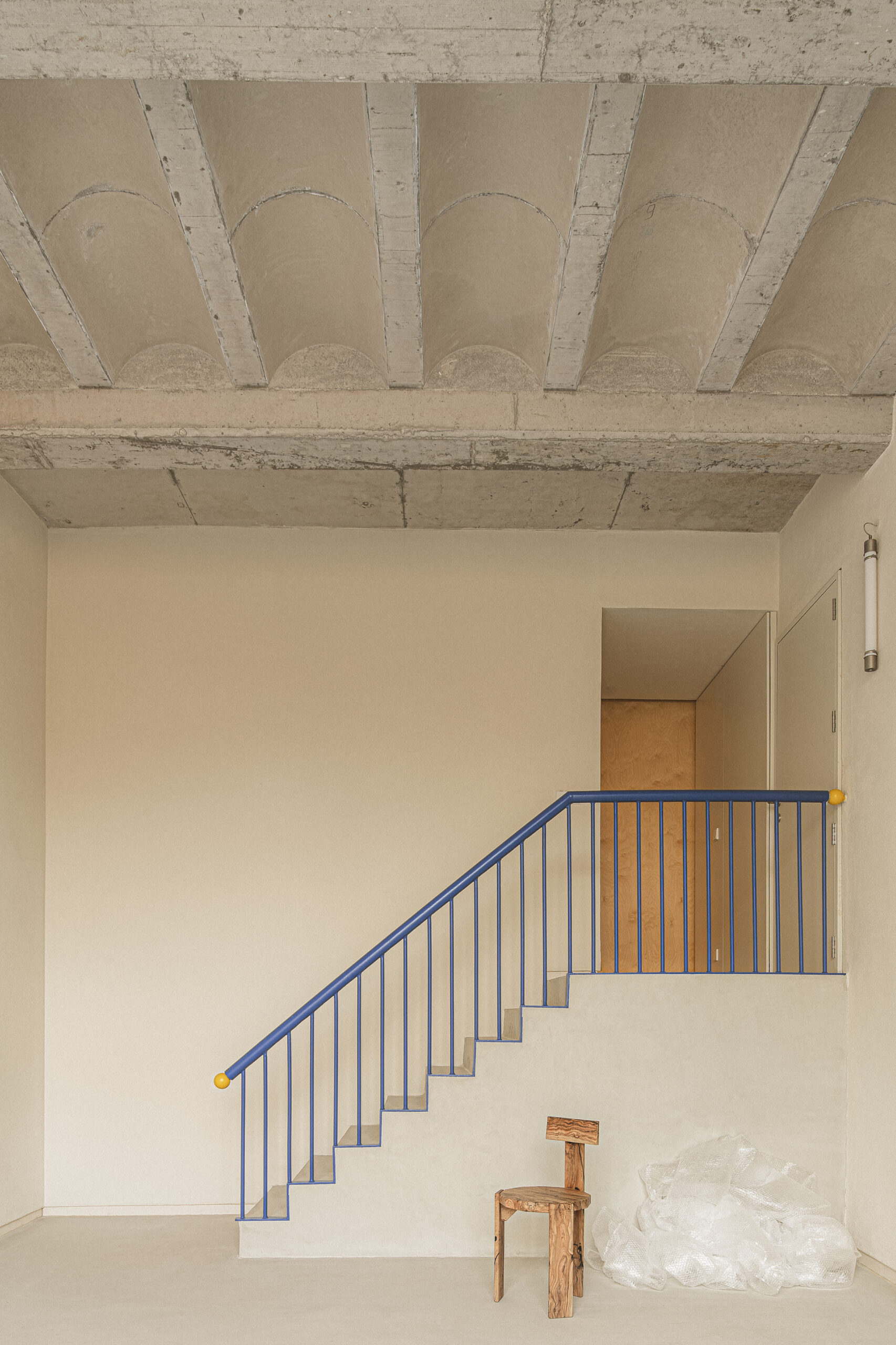
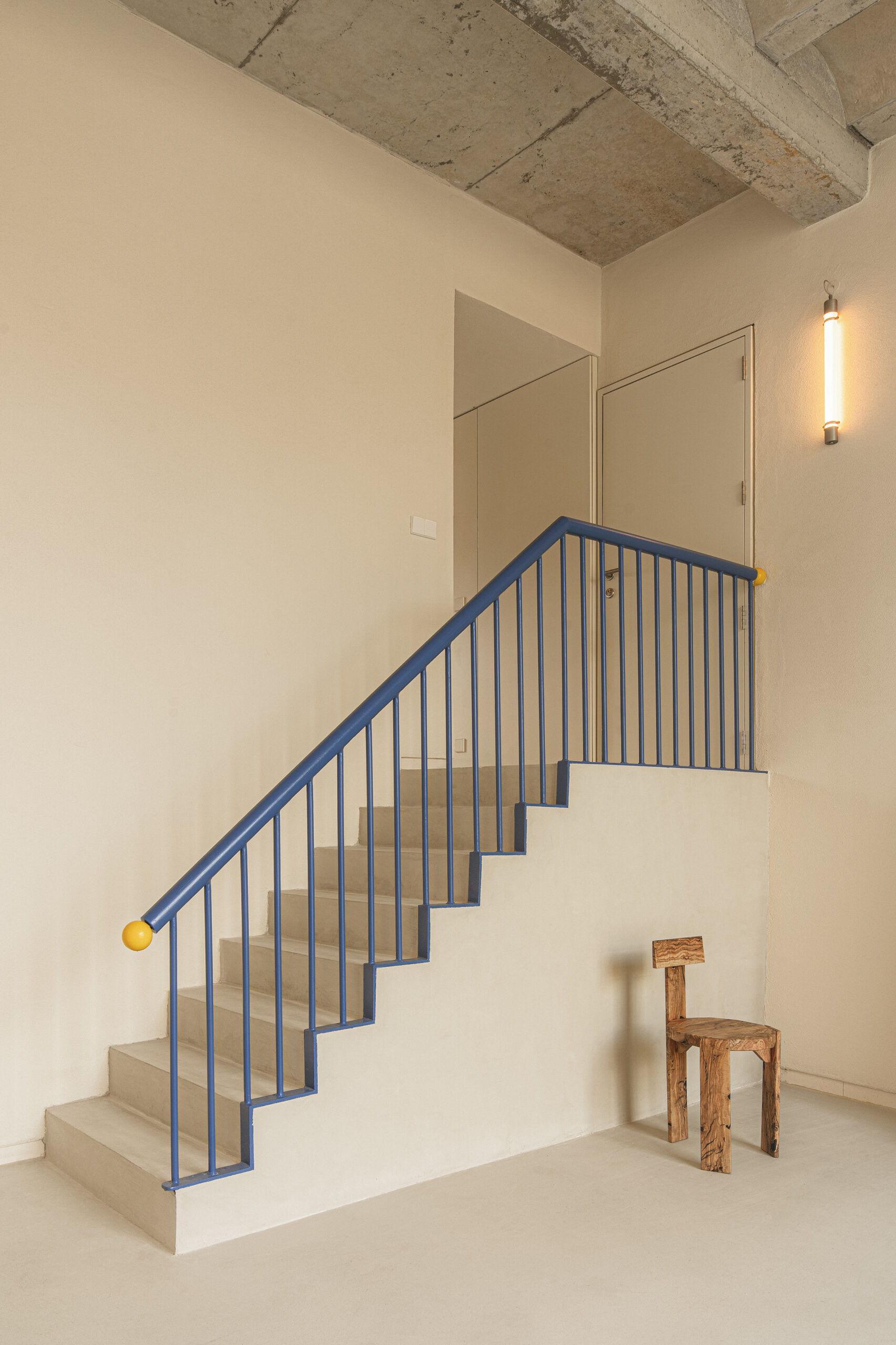
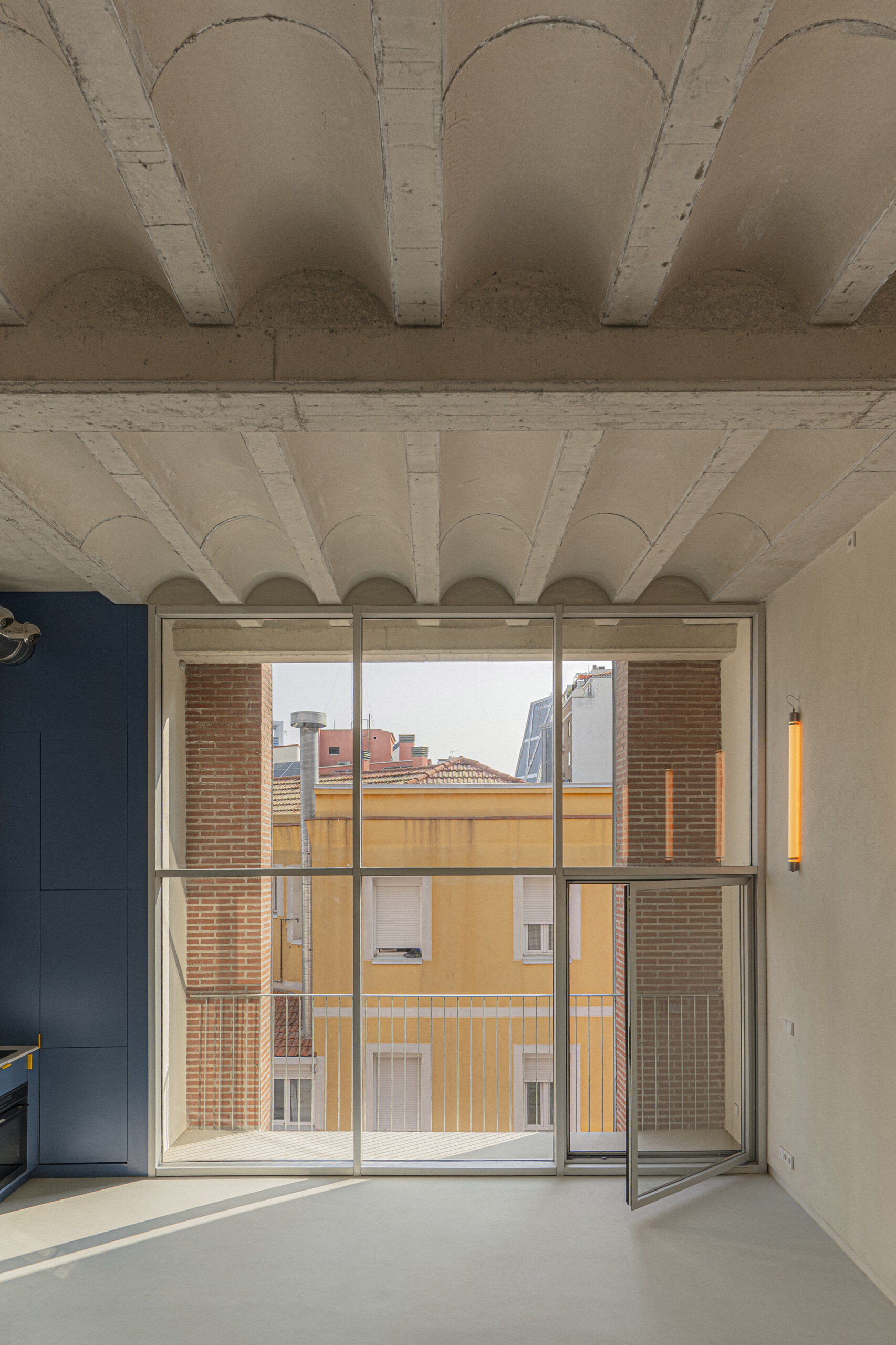
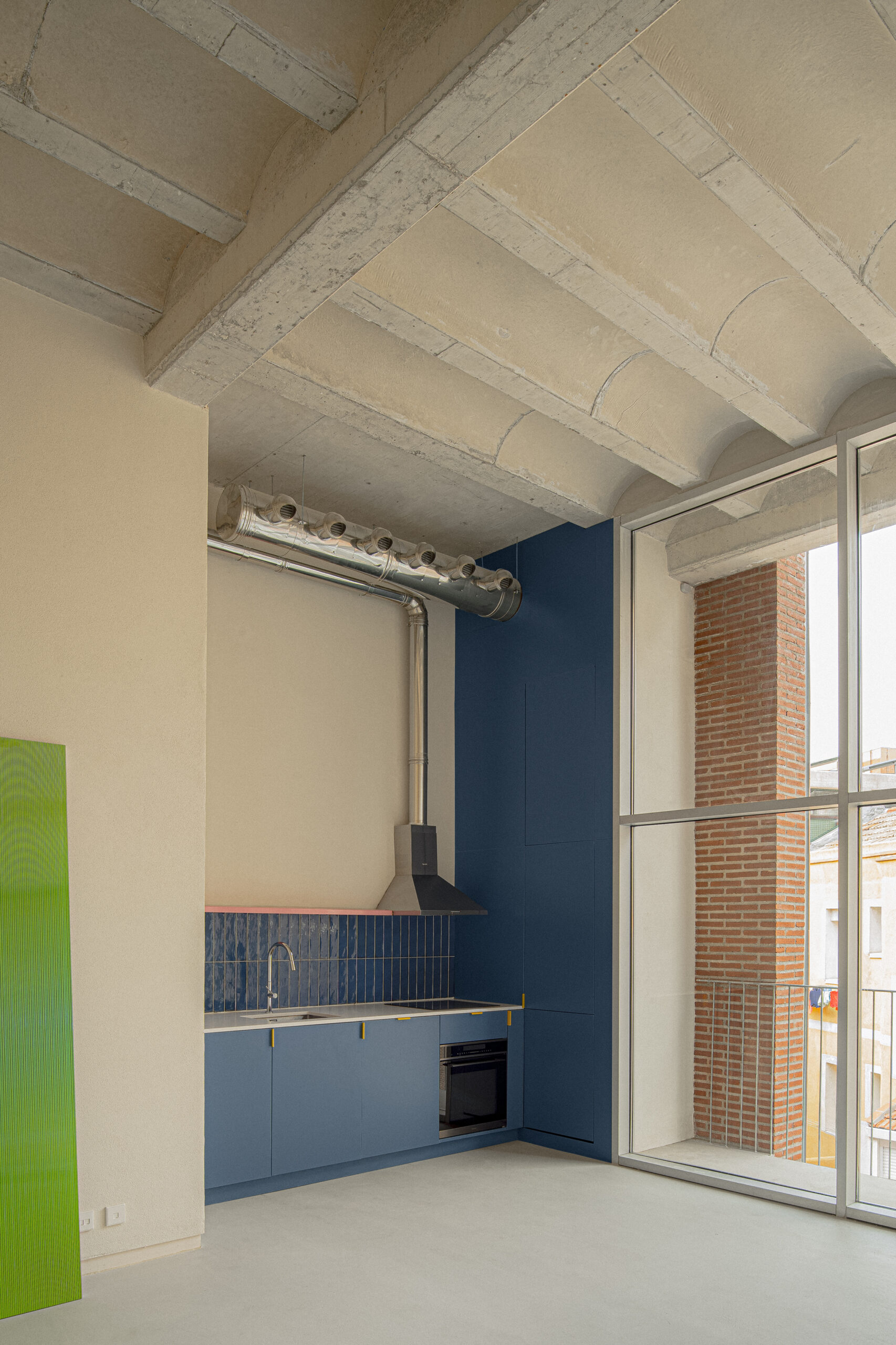
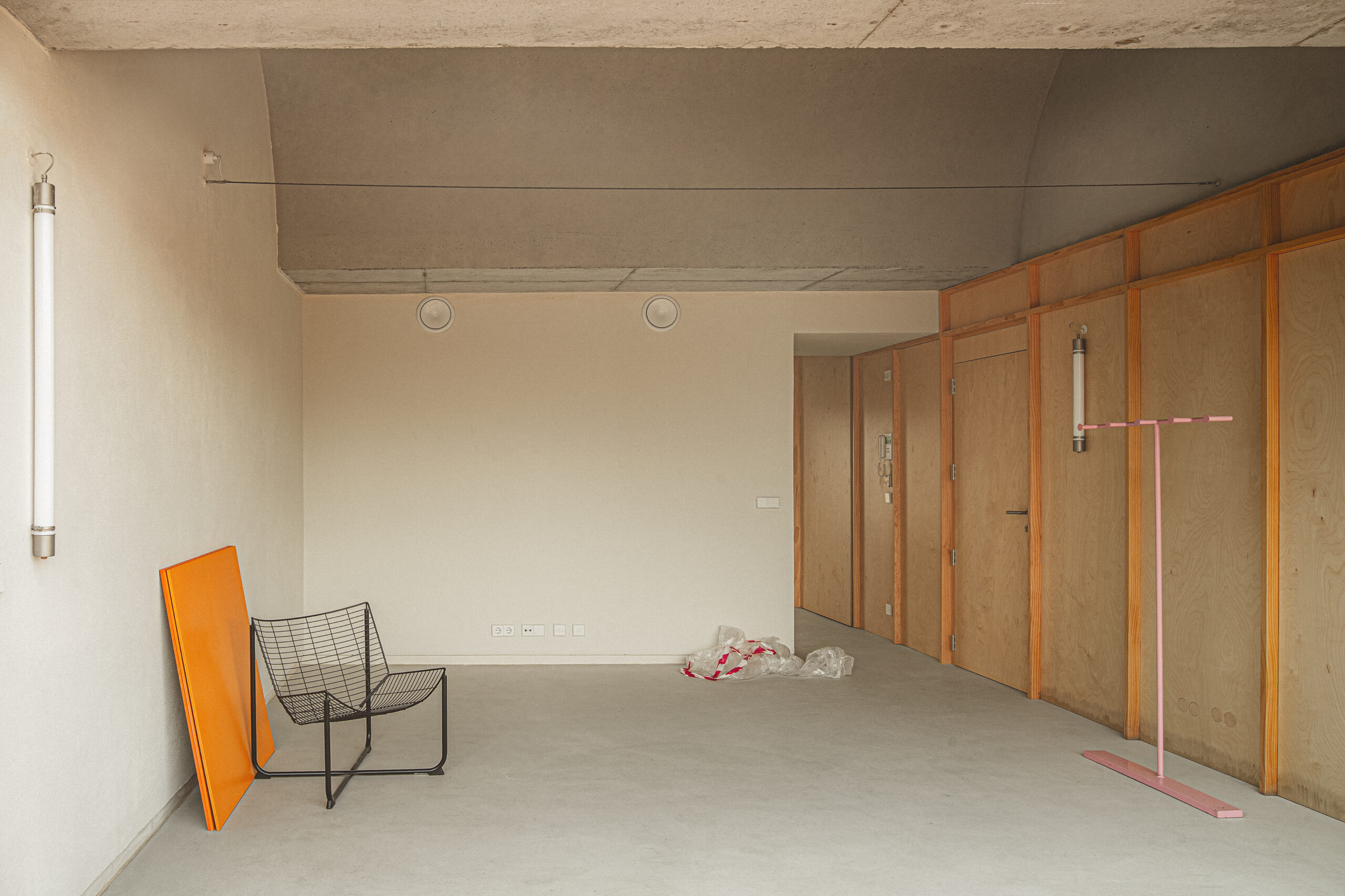
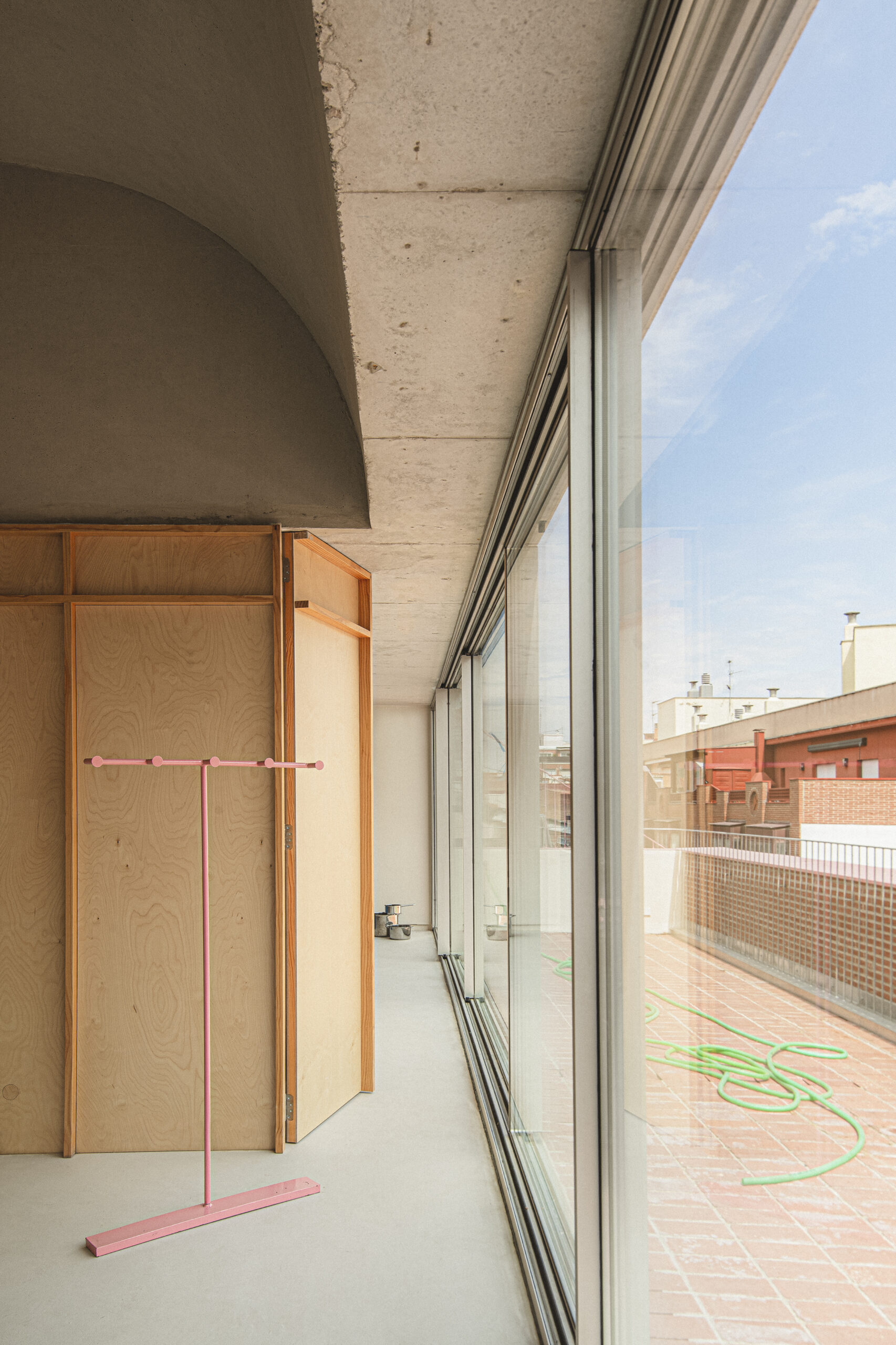
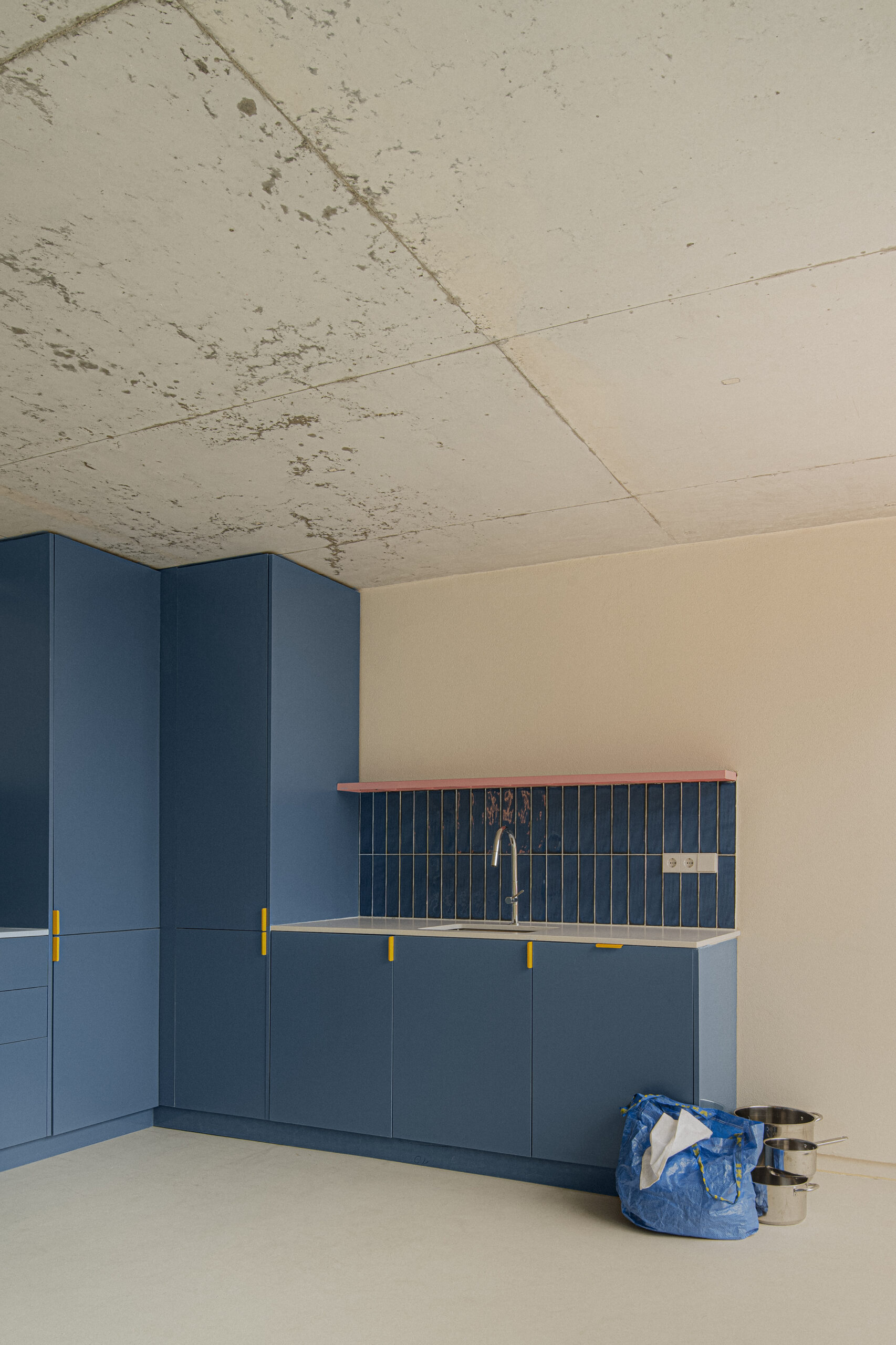
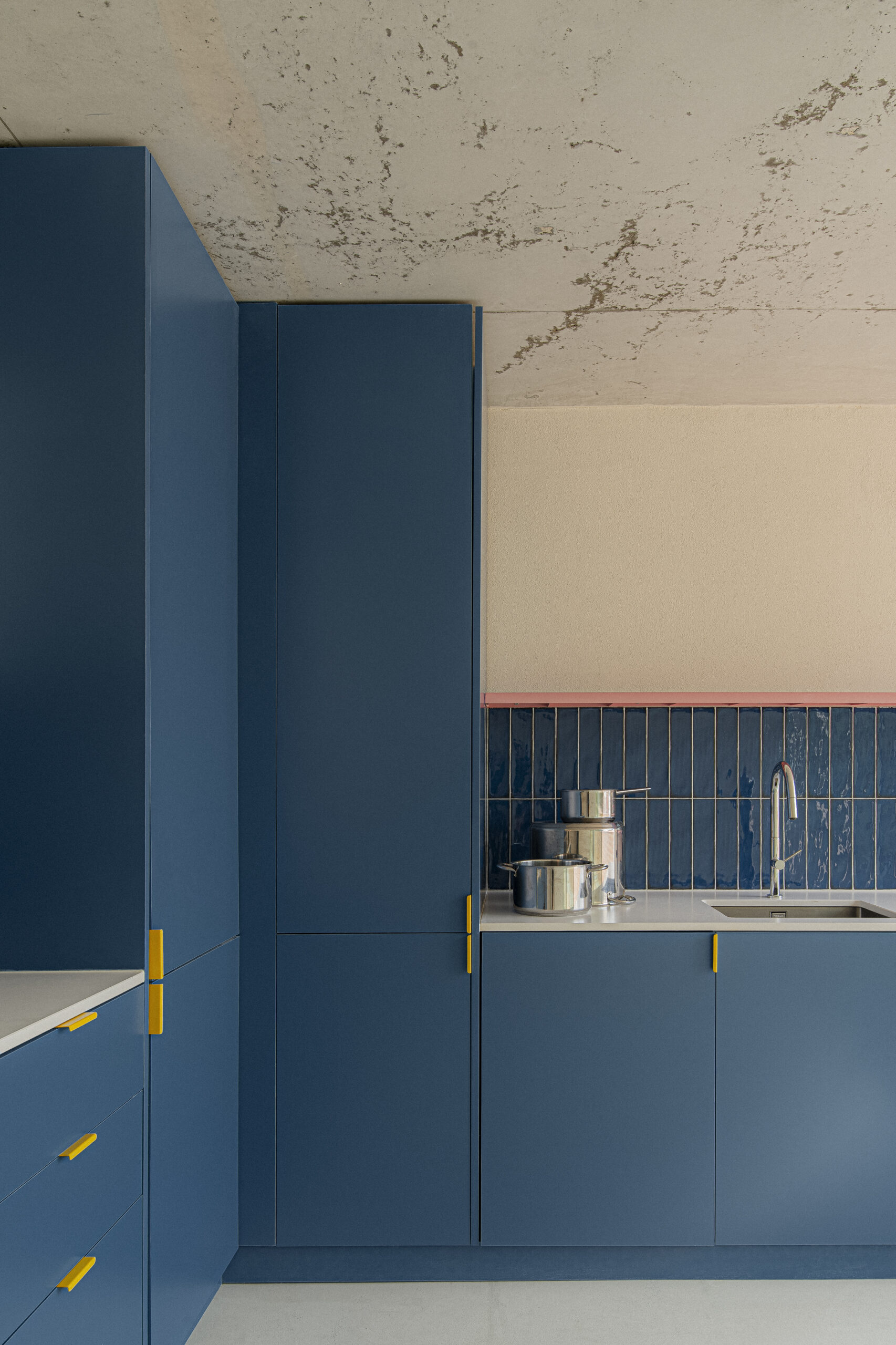
At the same time, the more public areas of the homes (living room and kitchen) are expanded, while the more private spaces (bedrooms and bathrooms) are compressed through a system of mezzanines. The building is arranged in a section split into two parts. At the front, dedicated to the more public spaces, the clear height reaches close to 4 metres, always interposed through the windows with the external false front that filters light and views. At the rear, where bedrooms and bathrooms are located, a mezzanine system is used to compact and optimise space. These changes in height create intermediate levels linked by internal staircases that remain exposed, making these spatial shifts explicit.
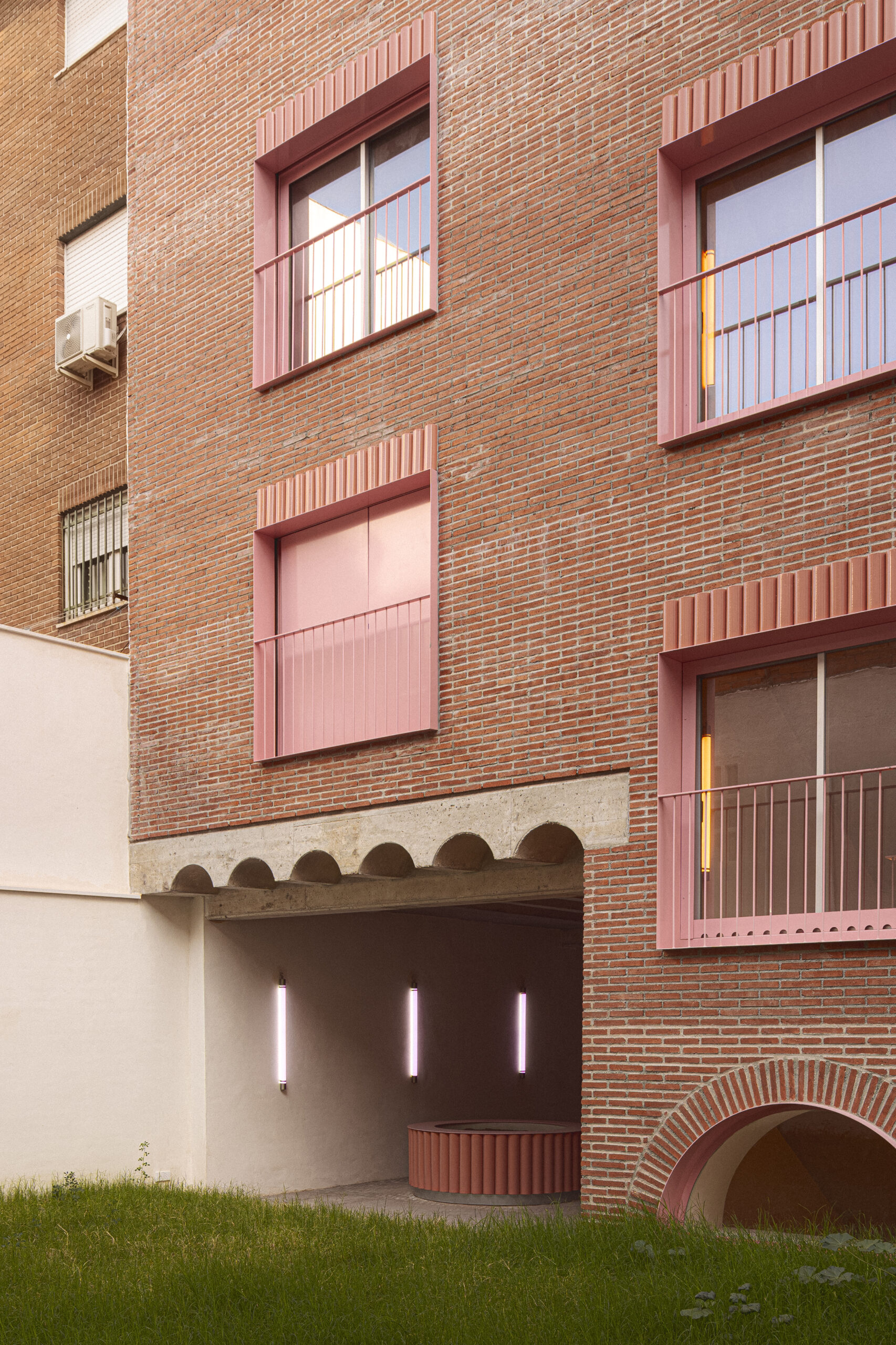
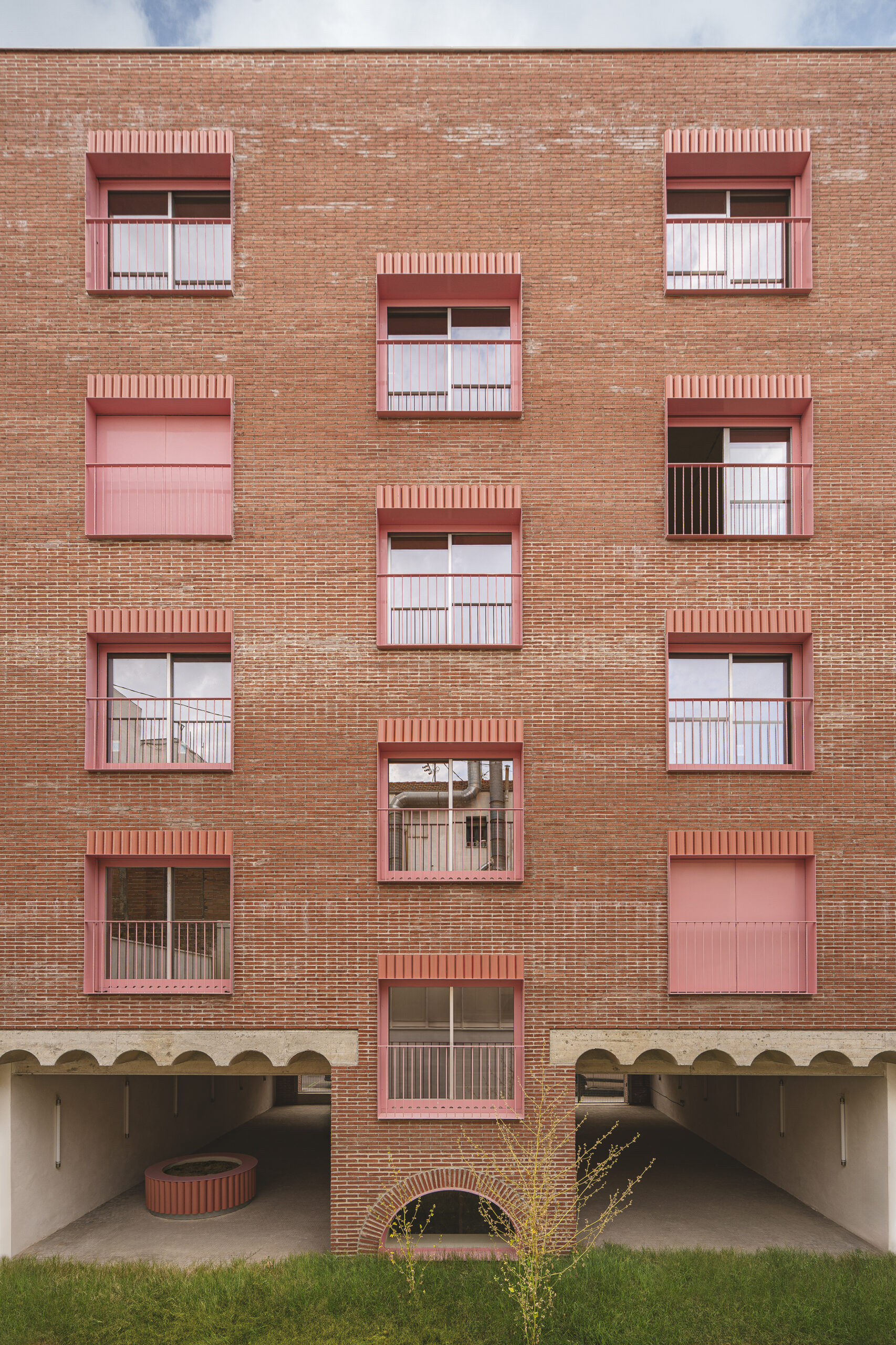
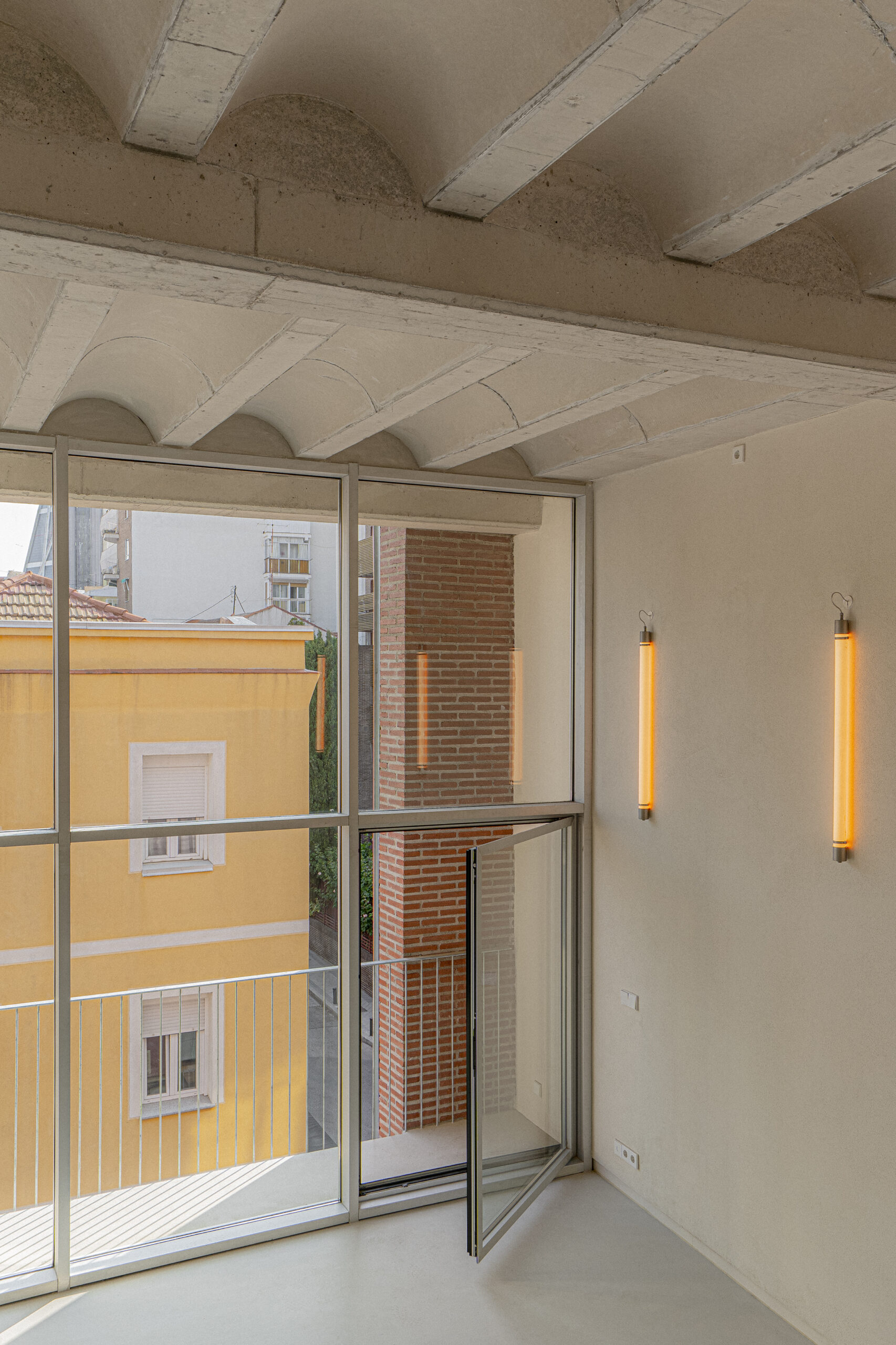
The rear façade reflects this organisation with an opening composition more typical of residential building typologies. On this inner face the brick is left exposed, except for the window lintels, which are clad with the same ceramic used on the main façade. The openings are finished with metal frames lacquered in the same tone as the ceramic, integrating sliding shutters to darken the interiors.
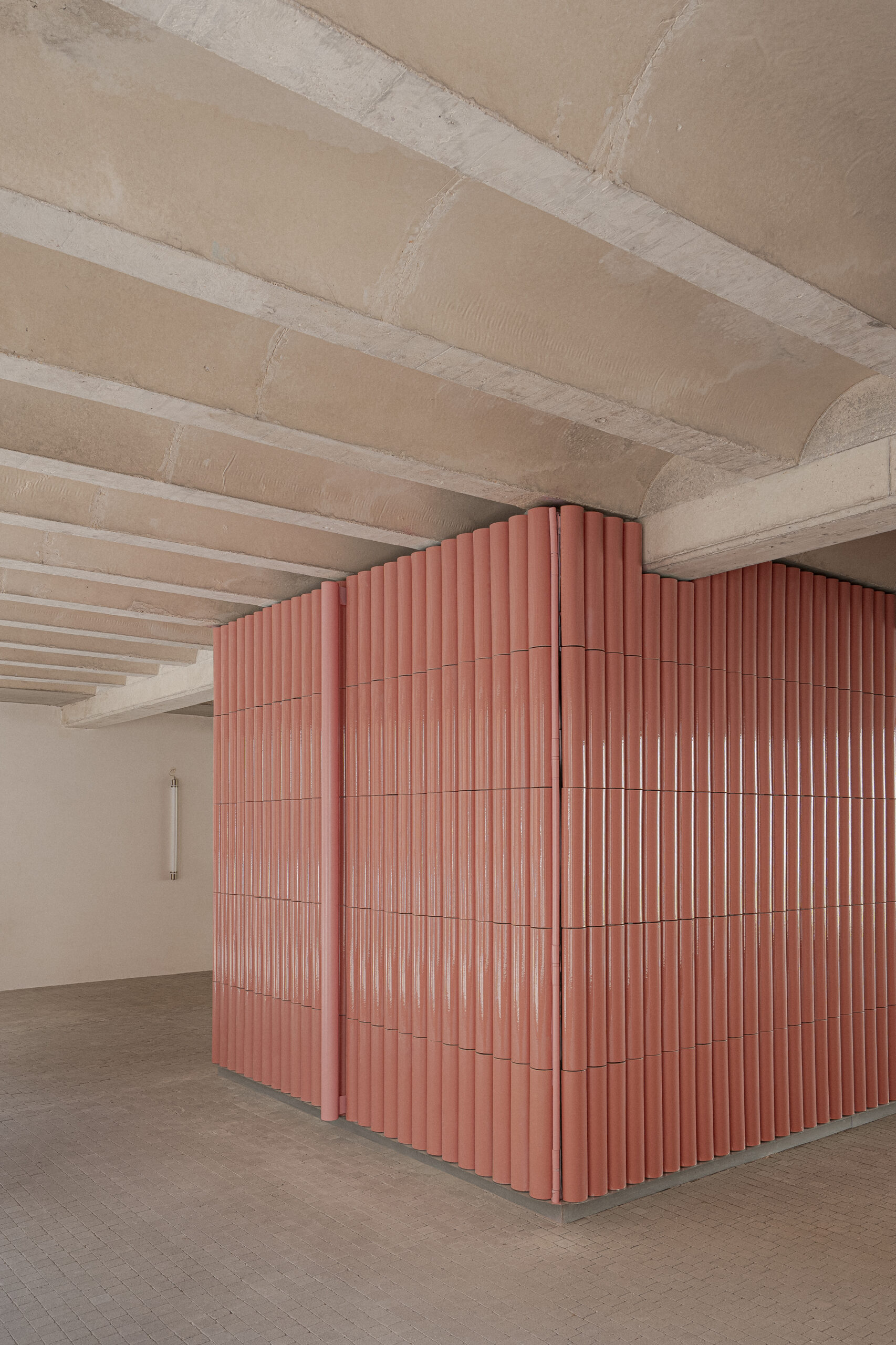
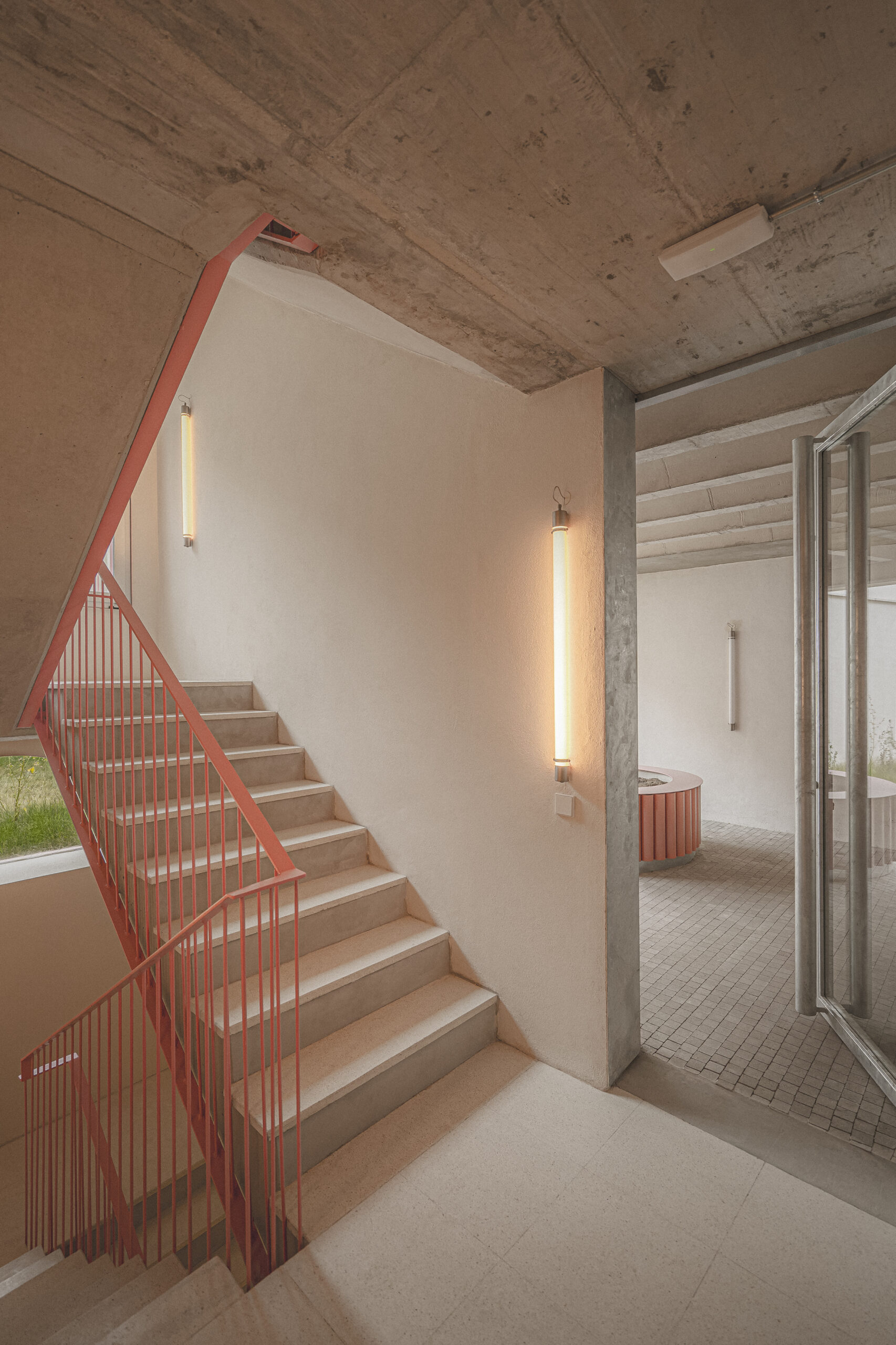
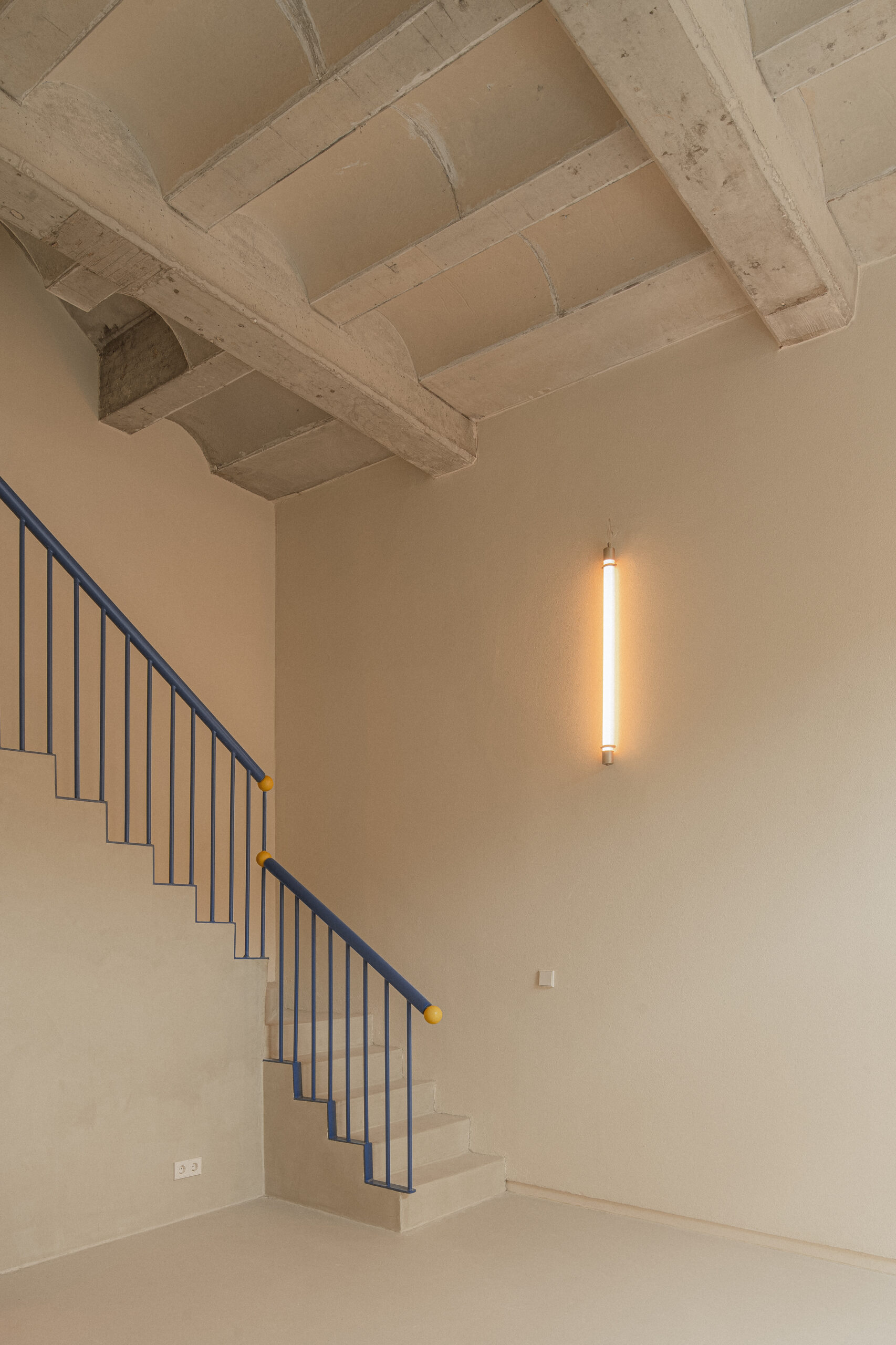
Finally, the building’s structure recovers the industrial character of the original use through exposed concrete ribbed slabs, extended towards the rear façade, where they remain visible. This vaulted system running through the building culminates at the penthouse level in a barrel vault over the living room of the upper dwelling.
O14 was designed and built by BURR (E.Fuertes, R.Martínez, A.Molins, J.Sobejano) in Madrid in 2025. Teresa Martínez Pagés, Matías Rico, Amanda Bouzada, Marina van der Linden, Natalia Molina and Guillermo Hernández were part of the team. Project management by Jose Juan Sopena. Site/Quantity surveying and direction by Dirtec Arquitectos Técnicos. Legal architecture and permits: García de los Muros. Arkilum was in charge of the lighting.
The outcome was photographed by Maru Serrano.